
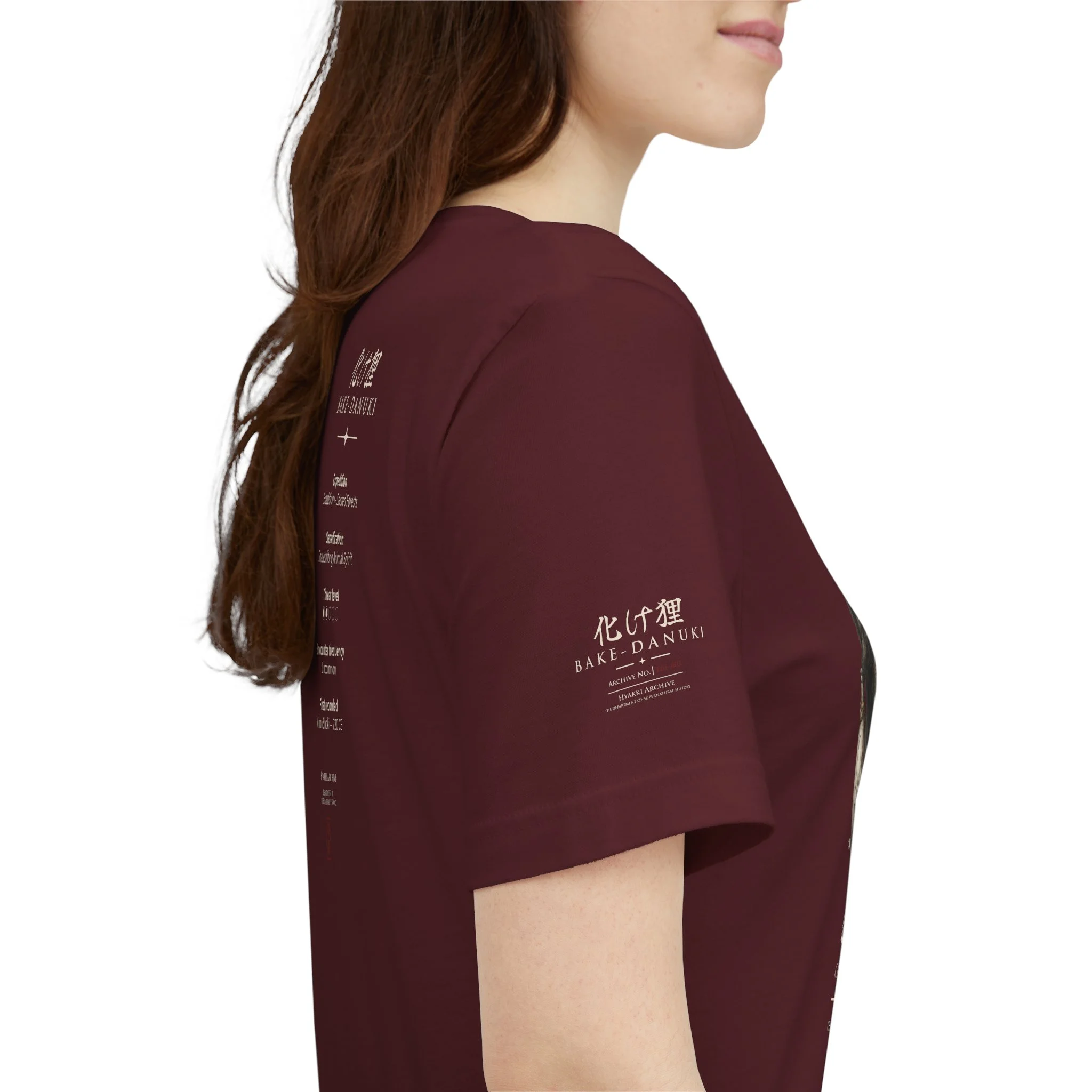

E01 – 003 Bake-Danuki

The Shape-Shifter Beside the Road

Japanese Name 化け狸
Romanization Bake-danuki
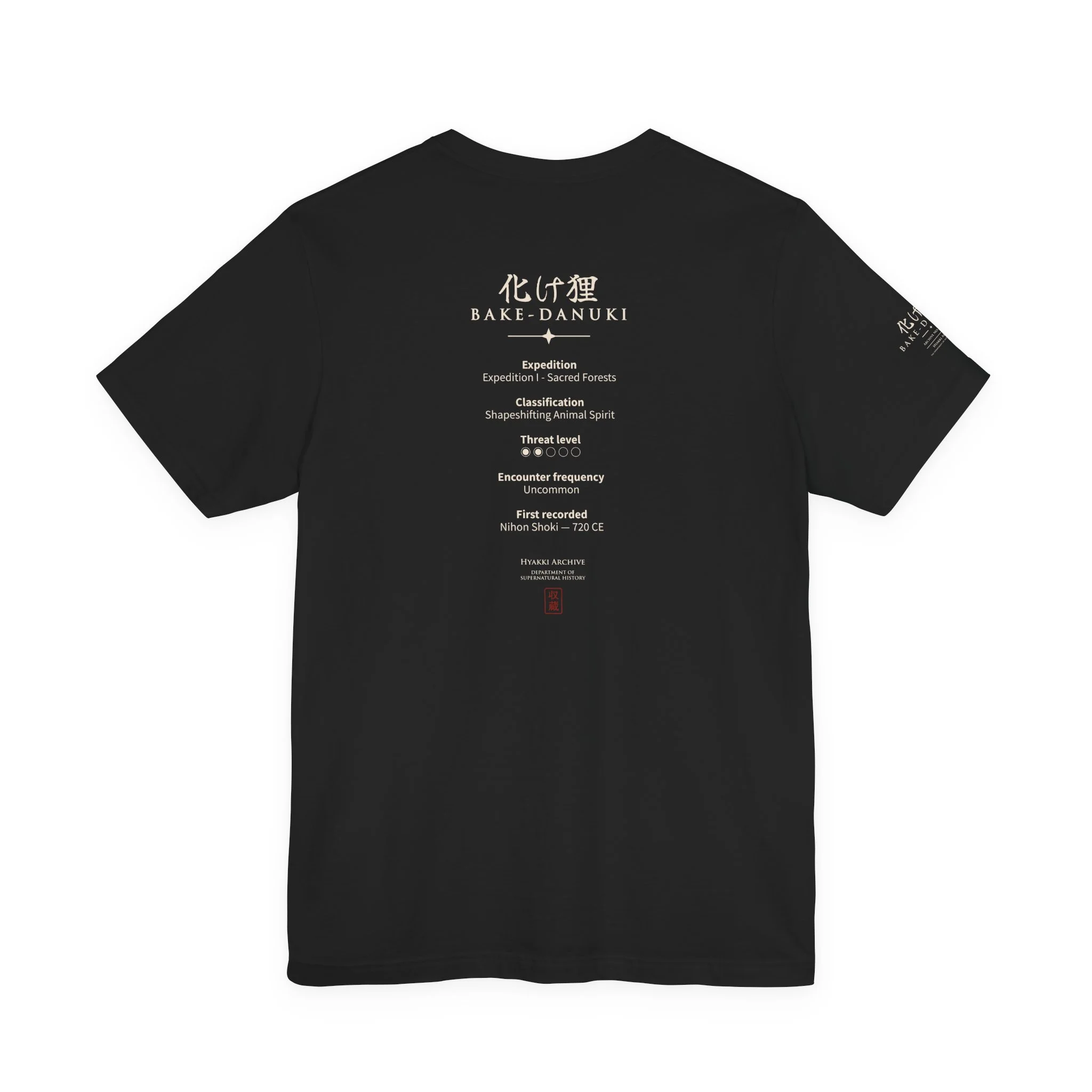
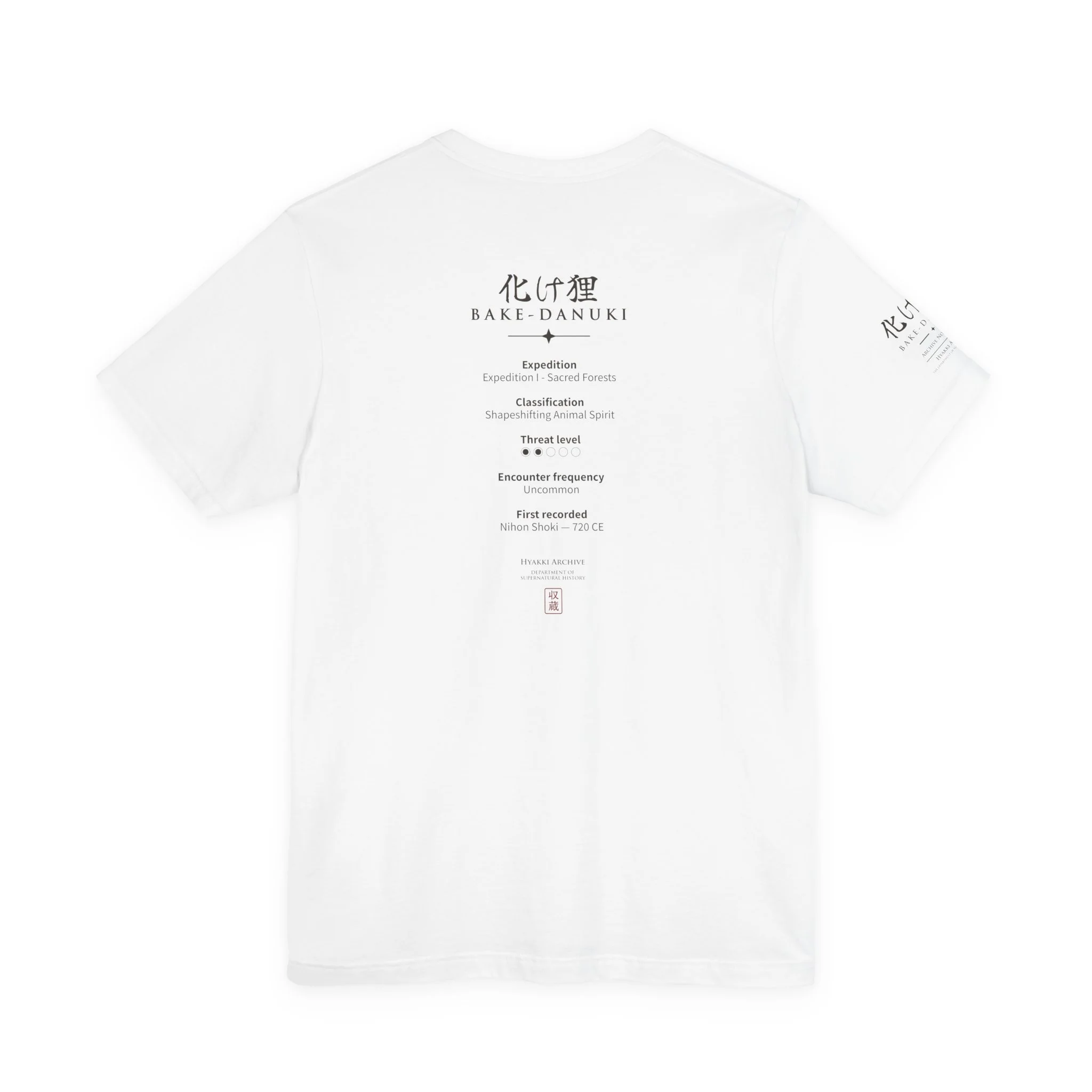
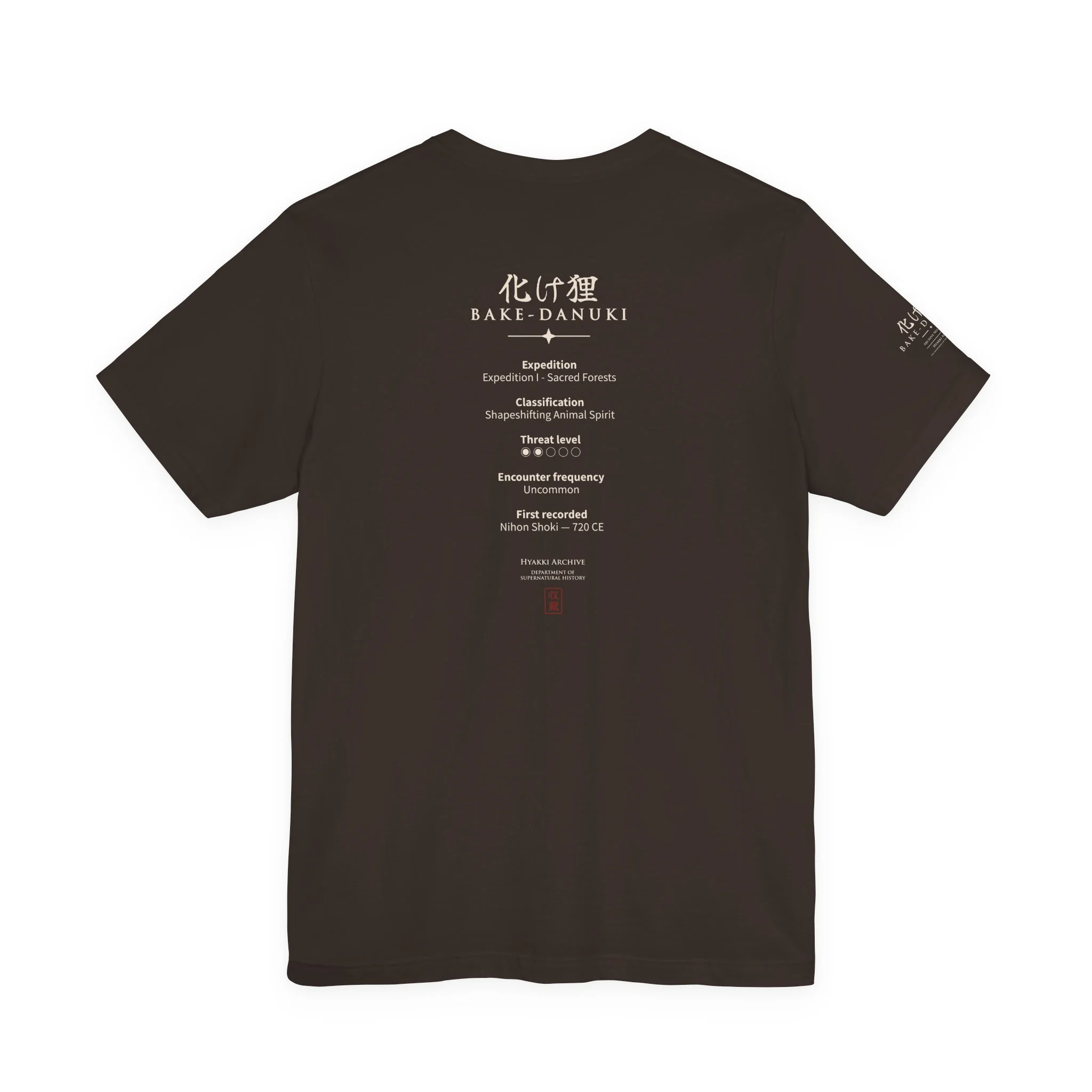
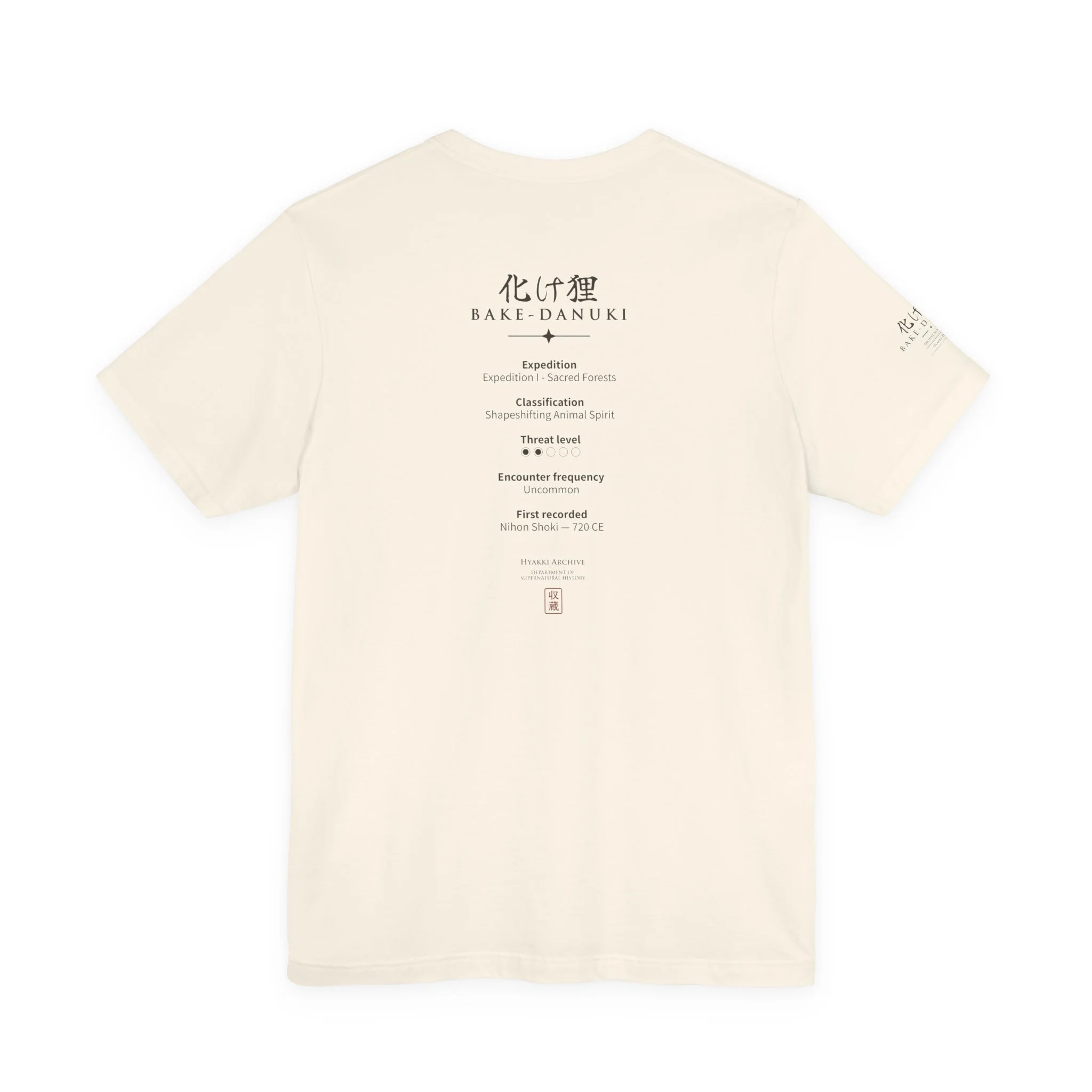
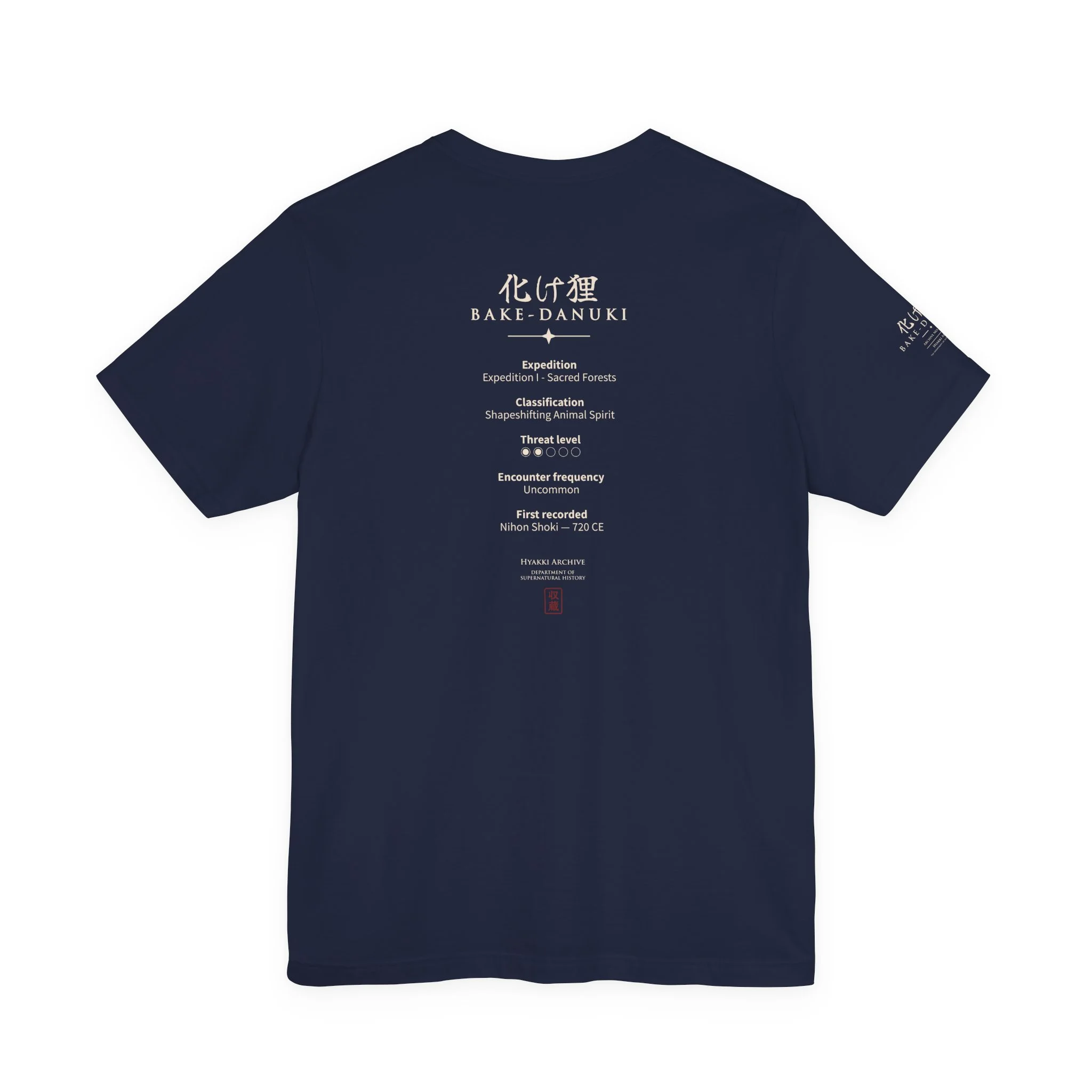
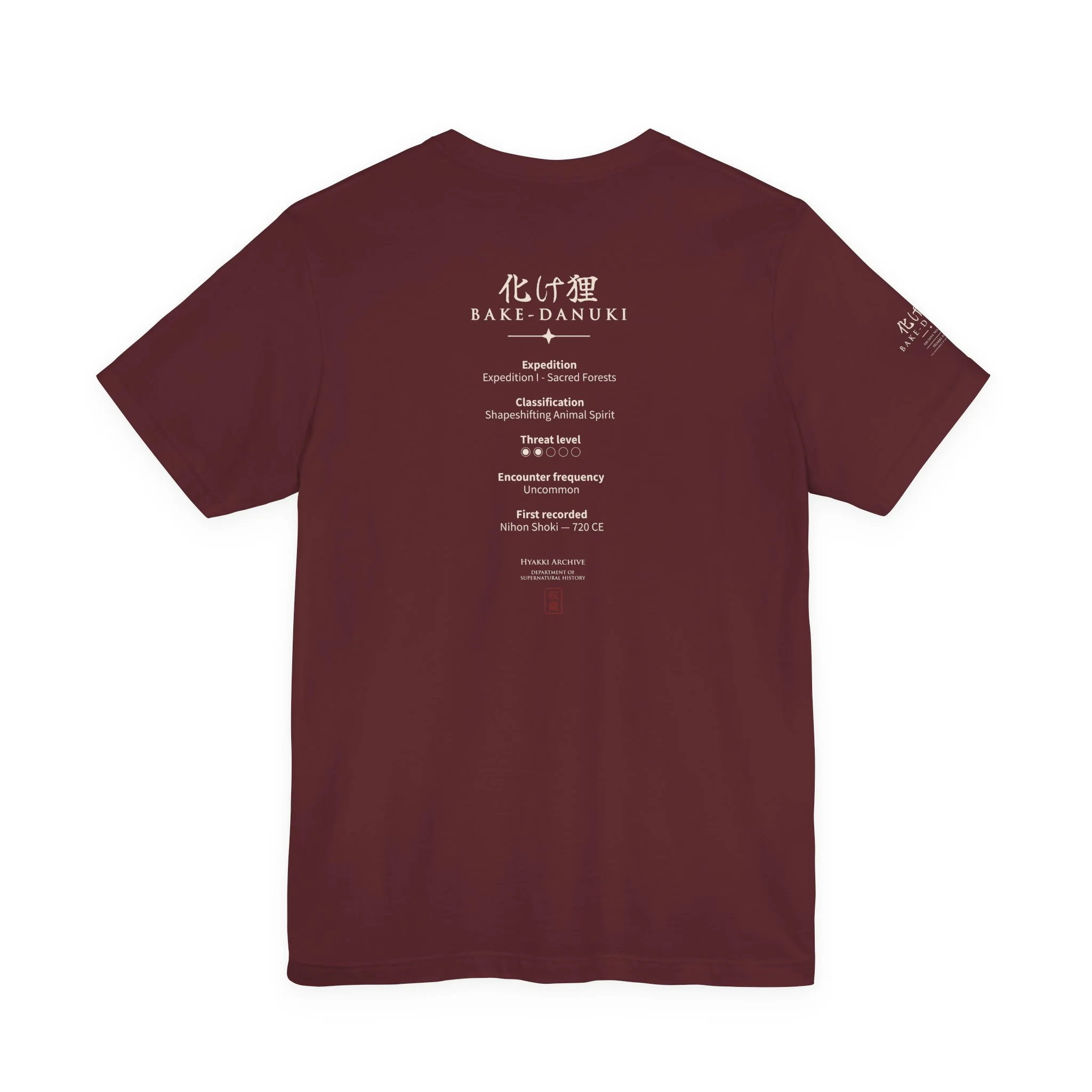
Classification Shapeshifting Animal Spirit
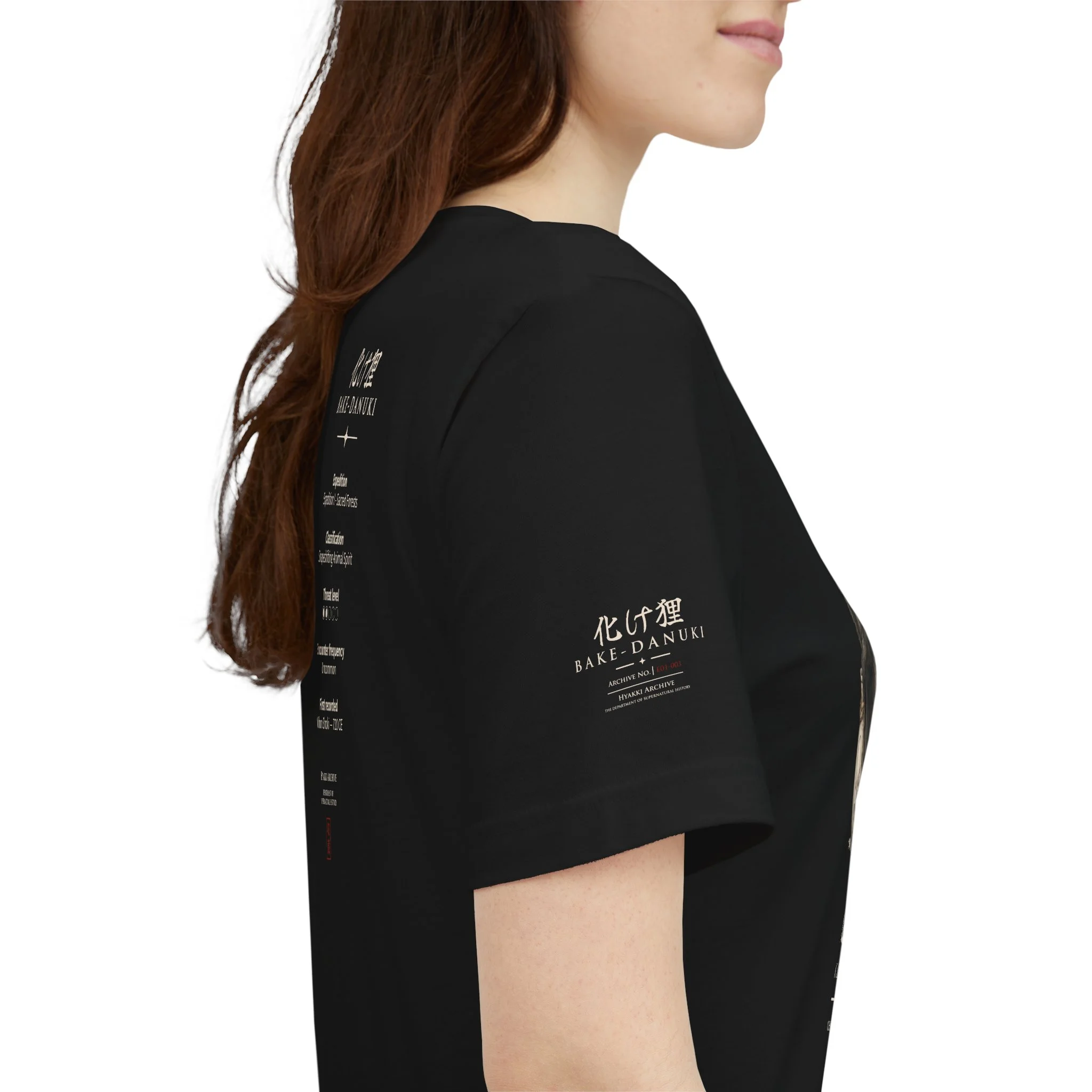
Expedition Expedition I — Sacred Forests
Threat Level ■■□□□ (Level II – Caution)
First Recorded Early 17th Century CE

Bake-danuki are supernatural tanuki associated with disguise, transformation, mischief and comic deception. Unlike the more ethereal fox traditions, tanuki stories often feel earthy and theatrical, with the animal fooling travellers, disguising itself as people or objects, and turning ordinary situations into elaborate supernatural performances.

The Design

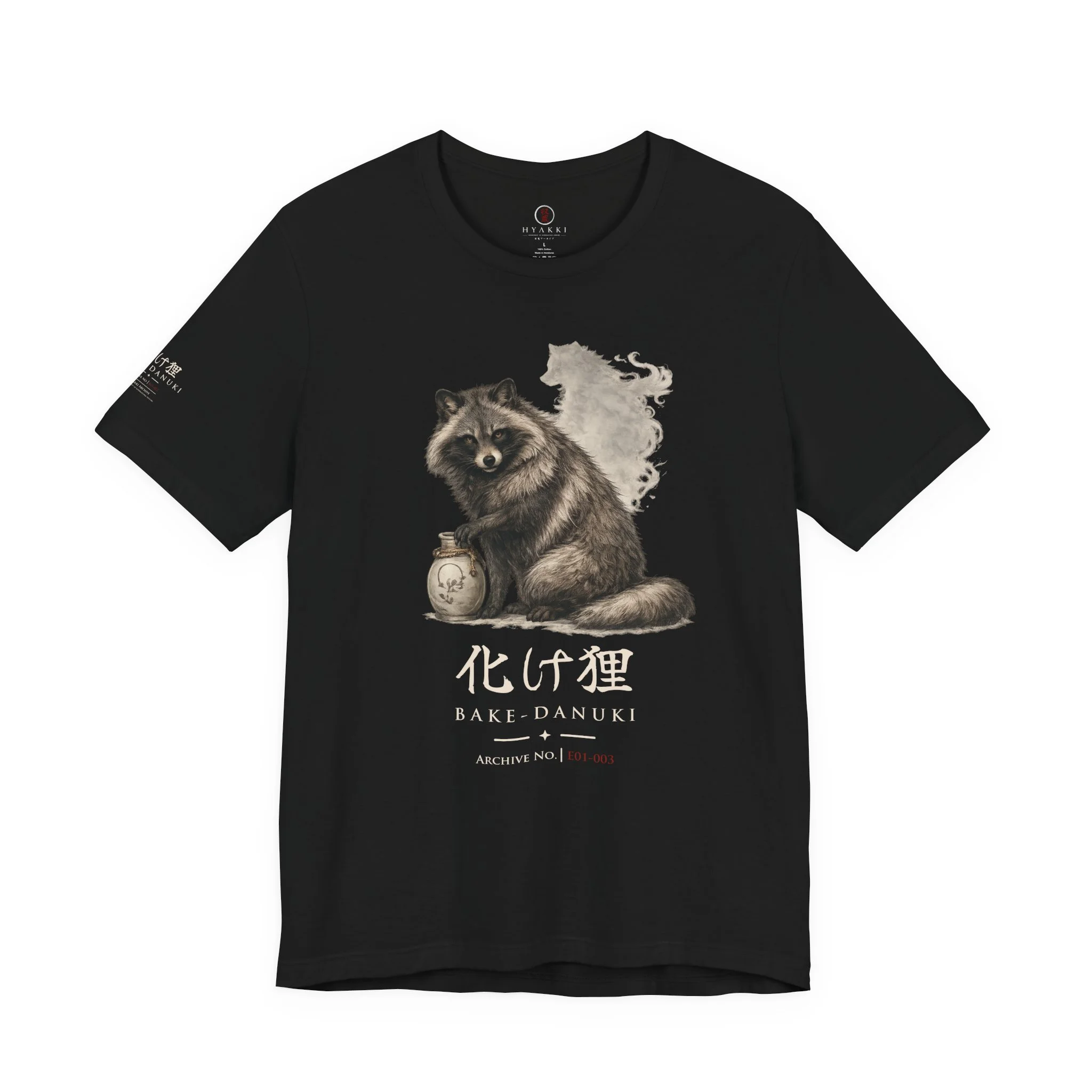
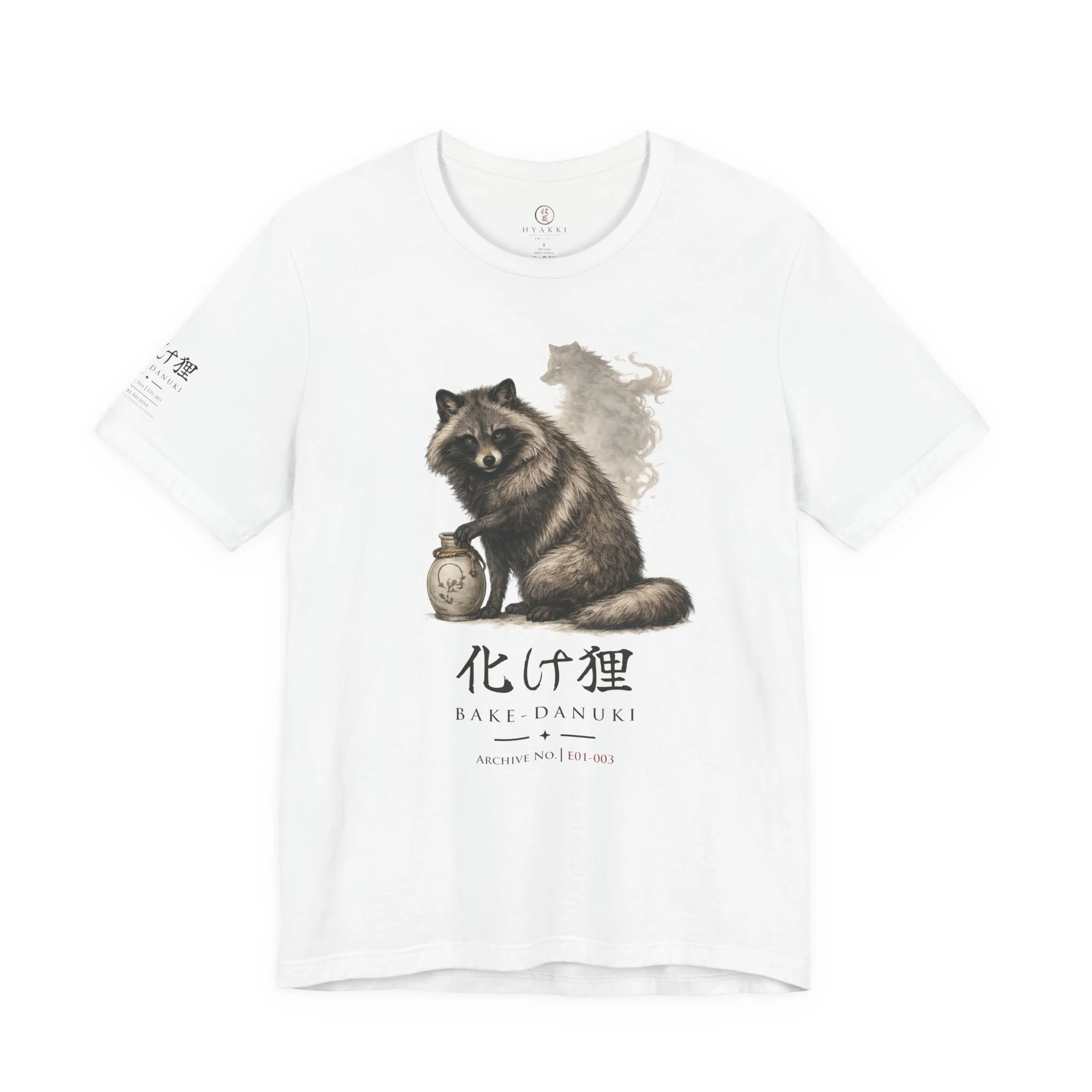
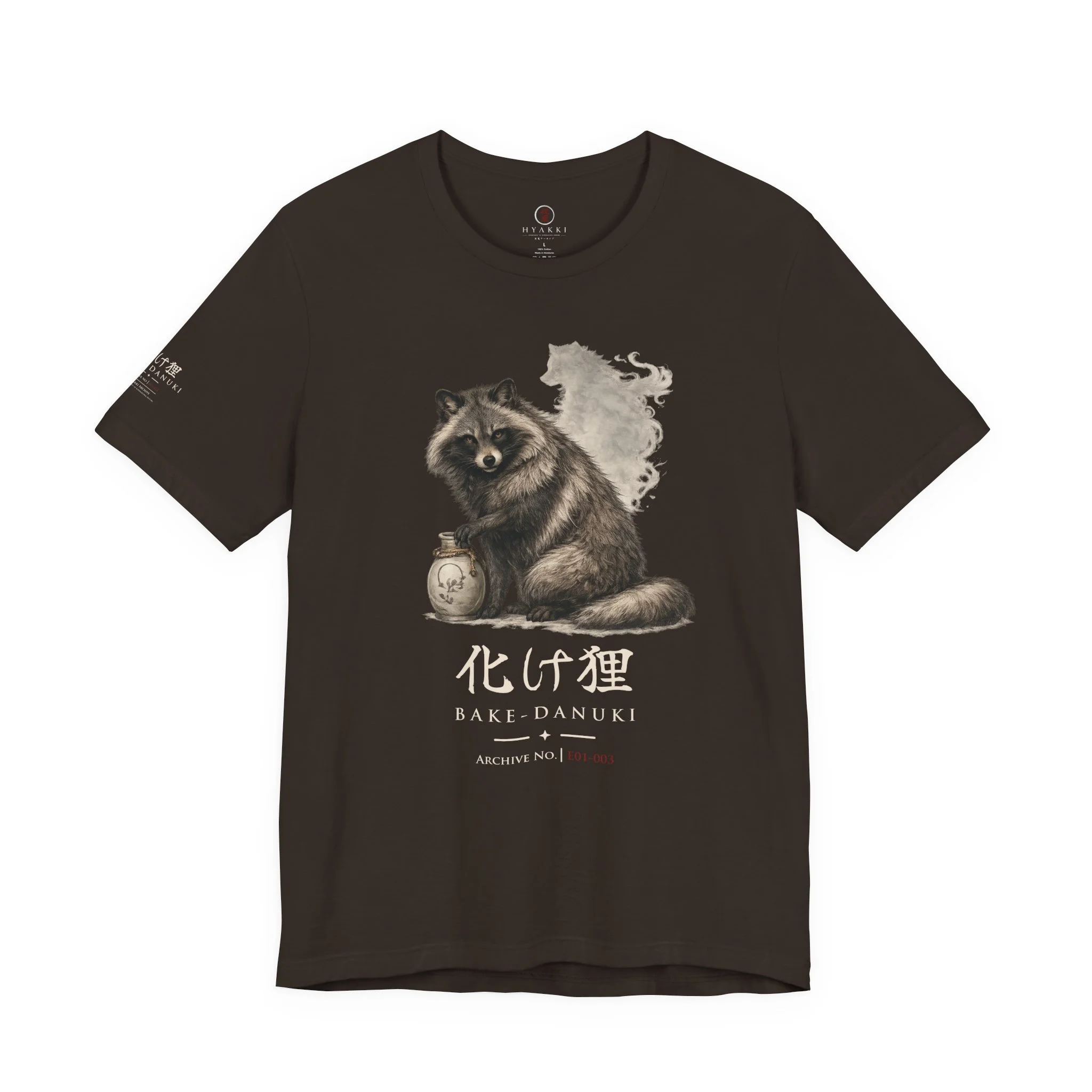
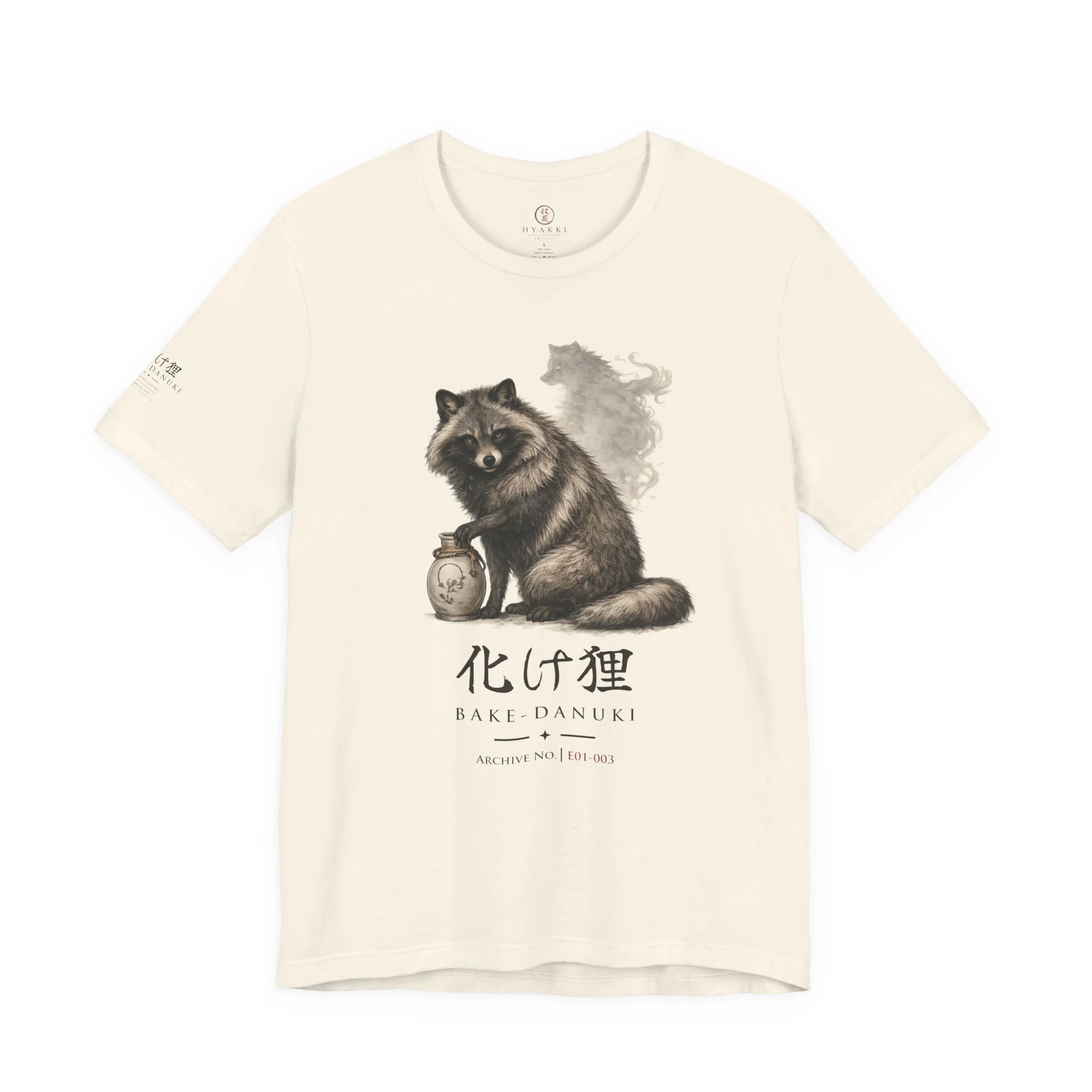
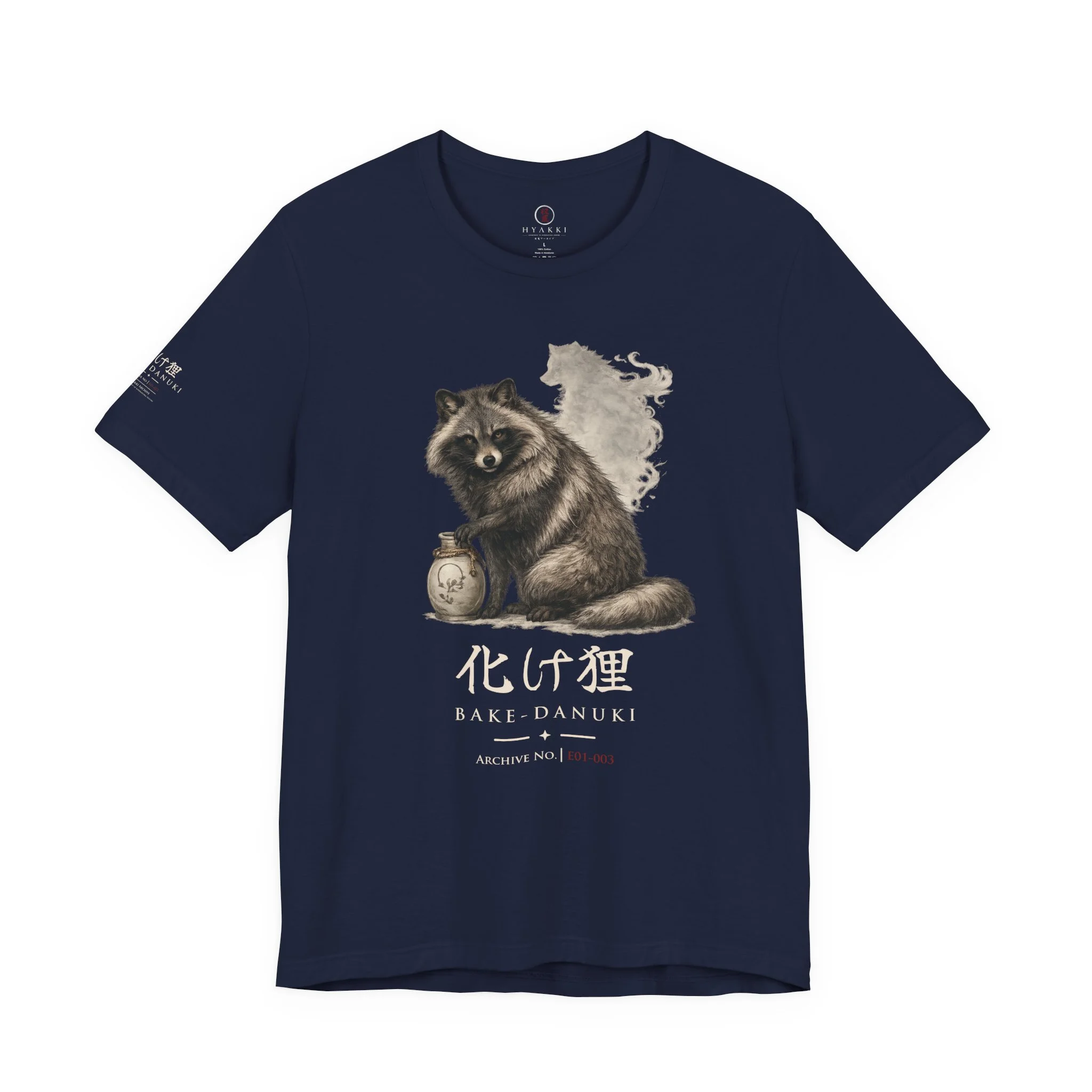
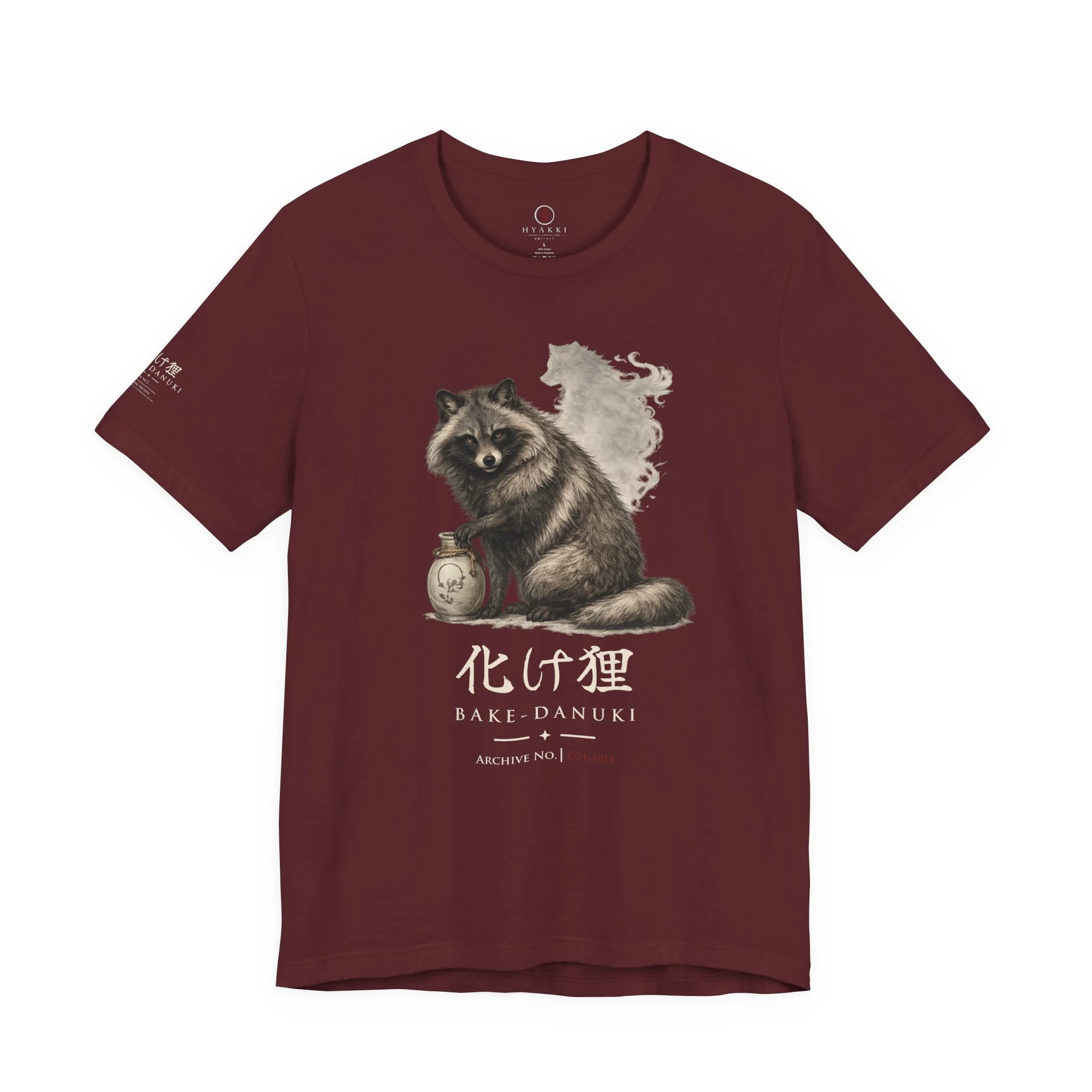
The E01-003 Bake-danuki design centers on one of Japanese folklore’s most playful shapeshifters. At the heart of the piece is a seated tanuki rendered in a naturalistic, museum-illustration style, its thick fur and calm posture giving it an almost believable presence. One paw rests on a ceramic jar, adding a grounded folkloric detail, while behind the animal rises a pale, ghostlike secondary form that suggests transformation already taking place.

Beneath the illustration, the large 化け狸, the title BAKE-DANUKI, and Archive No. E01-003 keep the design firmly within the Hyakki archive system. The layout is clean and centered, allowing the tanuki itself to remain the focus.

Like the other Hyakki releases, the design works across the available palette of white, dark brown, black, warm cream, deep navy, and muted burgundy, with the darker shirt colors giving the pale transformed silhouette especially strong contrast.

The Entity Behind the Design

Bake-danuki are supernatural tanuki, based on the real Japanese raccoon dog but transformed in folklore into masters of disguise, imitation and comic deception.

Unlike some yōkai that are primarily feared, Bake-danuki often sit in a more playful space between uncanny and absurd. They may trick travellers, impersonate people, transform into objects, or create elaborate false appearances simply to confuse and embarrass those around them. Their stories often feel earthy and theatrical rather than purely sinister.

That makes Bake-danuki especially well suited to Hyakki’s archive approach. The creature is recognizably animal, but its folkloric identity depends on what it can become. The most interesting question is rarely what it is at first glance. It is what the tanuki may be pretending to be.

Known For

Bake-danuki is best known for shapeshifting. In folklore, tanuki can take human form, disguise themselves as monks, imitate ordinary objects, or create convincing illusions that mislead the people around them. The famous Bunbuku Chagama story, in which a transforming tanuki becomes a tea kettle, is one of the clearest examples of this tradition.

Tanuki are also known for a more humorous style of supernatural behaviour than many other yōkai. Their tricks can be unsettling, but they are often comic as well. This gives the Bake-danuki a tone that is distinct from the more solemn or seductive supernatural fox traditions.

In modern visual culture, tanuki are also strongly associated with ceramic figures, sake, good fortune and shopfront symbolism. Some of those motifs are later cultural developments rather than ancient core folklore, but they have become part of how the creature is recognized today.

From Folklore to Design

This design leans into transformation without overexplaining it.

The tanuki itself is rendered as a believable animal, seated and self-possessed, rather than exaggerated into a comic mascot. The ceramic jar beside it introduces an object-world connection that fits the folkloric tradition of transformation and disguise, while the pale figure rising behind the body suggests another form emerging from the same presence. It feels less like a battle pose and more like a reveal.

That choice matters. Bake-danuki folklore is not mainly about physical aggression. It is about uncertainty, performance and the possibility that what you are looking at is only one layer of the trick.

The design also avoids crowding the composition with too many props. Instead of turning the figure into a bundle of clichés, it keeps the focus on one strong animal form and one visible hint that the transformation has already begun.

From the Hyakki Archive

Archive File E01-003 continues Expedition I — Sacred Forests with one of Japan’s most mischievous shape-shifters.

If Kitsune leaves the viewer asking whether the fox is more than it seems, Bake-danuki asks a slightly different question: how many things has this animal already pretended to be?

The seated posture appears calm.
The expression appears harmless.
The second form behind it suggests otherwise.

The tanuki has revealed enough to be recognized.

Not enough to be trusted.

収蔵

Temperament Mischievous • Playful • Unpredictable
Activity Primarily Nocturnal
Encounter Frequency Uncommon
Habitat Forest Edges • Mountain Roads • Villages • Rural Paths
Known Variants Bunbuku Chagama • Named Regional Tanuki Traditions


01 · What Is It?

Bake-danuki are supernatural tanuki, the Japanese raccoon dog, believed in folklore to possess abilities of transformation and disguise. The Japanese animal itself is real, but stories surrounding it gradually developed into a much wider supernatural tradition.

Bake-danuki may impersonate people, disguise themselves as objects, create misleading appearances or frighten travellers. Their stories often contain humour alongside danger, making them different in tone from many explicitly hostile yōkai.

The tanuki’s supernatural identity is also unusually flexible. Sometimes it is a troublesome roadside trickster. Elsewhere it becomes the hero of a comic tale, a powerful regional figure, or an auspicious cultural symbol.

Rather than one fixed monster species, Bake-danuki is best understood as the supernatural side of a much broader Japanese tanuki tradition.

02 · Historical Record

Tanuki have a long place in Japanese storytelling, although the exact boundary between ordinary animal lore and supernatural Bake-danuki developed gradually.

By the early seventeenth century, tanuki were already being represented in material culture as animals associated with transformation and mischievous humour. The Metropolitan Museum of Art preserves an early seventeenth-century tanuki-shaped water-dropper and explicitly notes the animal’s folkloric reputation for transformation and playful deception.

By the Edo period, Bake-danuki stories were firmly established in popular literature and visual culture. The famous Bunbuku Chagama tale, in which a tanuki or related transforming animal becomes a tea kettle, circulated widely in illustrated books and later children’s literature. The National Diet Library preserves early printed versions of the story.

The supernatural tanuki therefore belongs securely to early-modern Japanese folklore, while many of its best-known modern visual conventions developed later.

03 · Appearance

Bake-danuki has no single supernatural appearance.

In many stories, the creature begins as an ordinary-looking tanuki. Its supernatural nature becomes apparent only when it transforms, speaks or behaves impossibly.

Historical artworks frequently emphasize disguise rather than monstrous anatomy. An eighteenth-century netsuke in the Metropolitan Museum shows a tanuki wrapped in a lotus leaf as though using it for a priestly disguise, directly reflecting the animal’s reputation as a master of transformation.

Modern imagery has added highly recognizable features such as oversized bellies, sake bottles, straw hats and exaggerated anatomy. Some of these belong more strongly to comic art and later Shigaraki ceramic culture than to a universal folkloric description of Bake-danuki.

For Hyakki, the most defensible visual foundation is still the real animal: recognizable tanuki anatomy with subtle signs that the creature is performing, disguising or observing.

04 · Behaviour & Encounters

Transformation and deception are the strongest recurring Bake-danuki traits.

A tanuki may take the form of a person, imitate a monk, disguise itself as an object or manipulate what a traveller thinks they are seeing. The resulting encounter can be frightening, but just as often it is comic. Bake-danuki stories frequently depend on embarrassment, mistaken identity or a trick being exposed.

The Bunbuku Chagama tradition is one of the best-known examples. Versions differ, but the central image of a tanuki or transforming animal becoming a tea kettle became deeply embedded in popular culture.

This flexibility makes Bake-danuki less useful as a creature with a fixed catalogue of “powers.” The important pattern is performance. The animal changes how it appears, then waits to see whether the human believes the disguise.

05 · Belief, Ritual & Meaning

Bake-danuki is not primarily a religious entity in the same way that some Kitsune traditions are connected with Inari worship.

Its cultural strength lies instead in storytelling, humour and the uneasy boundary between wild animal and human society.

The tanuki is a real nocturnal animal that often lives surprisingly close to people. Folklore transforms that familiarity into suspicion: perhaps the animal beside the road is not merely watching. Perhaps it understands the traveller and is preparing a trick.

Over time, tanuki also acquired a strong connection with good fortune. The familiar ceramic tanuki statues of Shigaraki are now widely associated with business luck and prosperity. However, these statues are modern compared with the older Bake-danuki tradition. Japanese government material dates their production in Shigaraki to around 1900, with their national popularity increasing after Emperor Shōwa’s visit in 1951.

06 · Regional & Historical Variations

Tanuki folklore varies widely across Japan.

Some regions developed famous individual supernatural tanuki with their own names and local stories. Others emphasized roadside deception, transformation, mysterious sounds or playful interaction with humans.

The famous Shigaraki tanuki is a particularly important modern visual development, but it should not be projected backward onto older folklore. Its straw hat, sake bottle and other auspicious features belong to the modern ceramic tradition, including the system now called the Hassō Engi, or eight auspicious traits.

Likewise, exaggerated belly-drumming and comic anatomical imagery became highly visible through later art and popular culture, but neither should be treated as mandatory Bake-danuki anatomy.

What remains most consistent across periods is the tanuki’s reputation for transformation, disguise and mischievous behaviour.

07 · What We Actually Know

Tanuki are real Japanese raccoon dogs DOCUMENTED
Tanuki have a long folkloric association with transformation and disguise DOCUMENTED
Bake-danuki stories were well established by the early Edo period DOCUMENTED
Bunbuku Chagama is an important transforming-tanuki tale DOCUMENTED
Every Bake-danuki carries a sake bottle and wears a straw hat INCORRECT
Shigaraki tanuki statues date back to ancient yōkai worship INCORRECT
Shigaraki tanuki statues began appearing around 1900 DOCUMENTED
Bake-danuki are universally malicious INCORRECT
Weight N/A
Expedition

Expedition I — Sacred Forests

Classification

Shapeshifting Animal Spirit

Threat Level

■■□□□ Level II

Reviews

There are no reviews yet.

Only logged in customers who have purchased this product may leave a review.