


Yōkai: A Complete Guide to Japan’s Strange Spirits, Monsters, and Unexplained Things What yōkai are, where they came from, what they are not, how dangerous they can be, and why these strange beings have remained part of Japanese culture for centuries. Imagine walking home after dark and hearing footsteps behind you, but when you turn […]
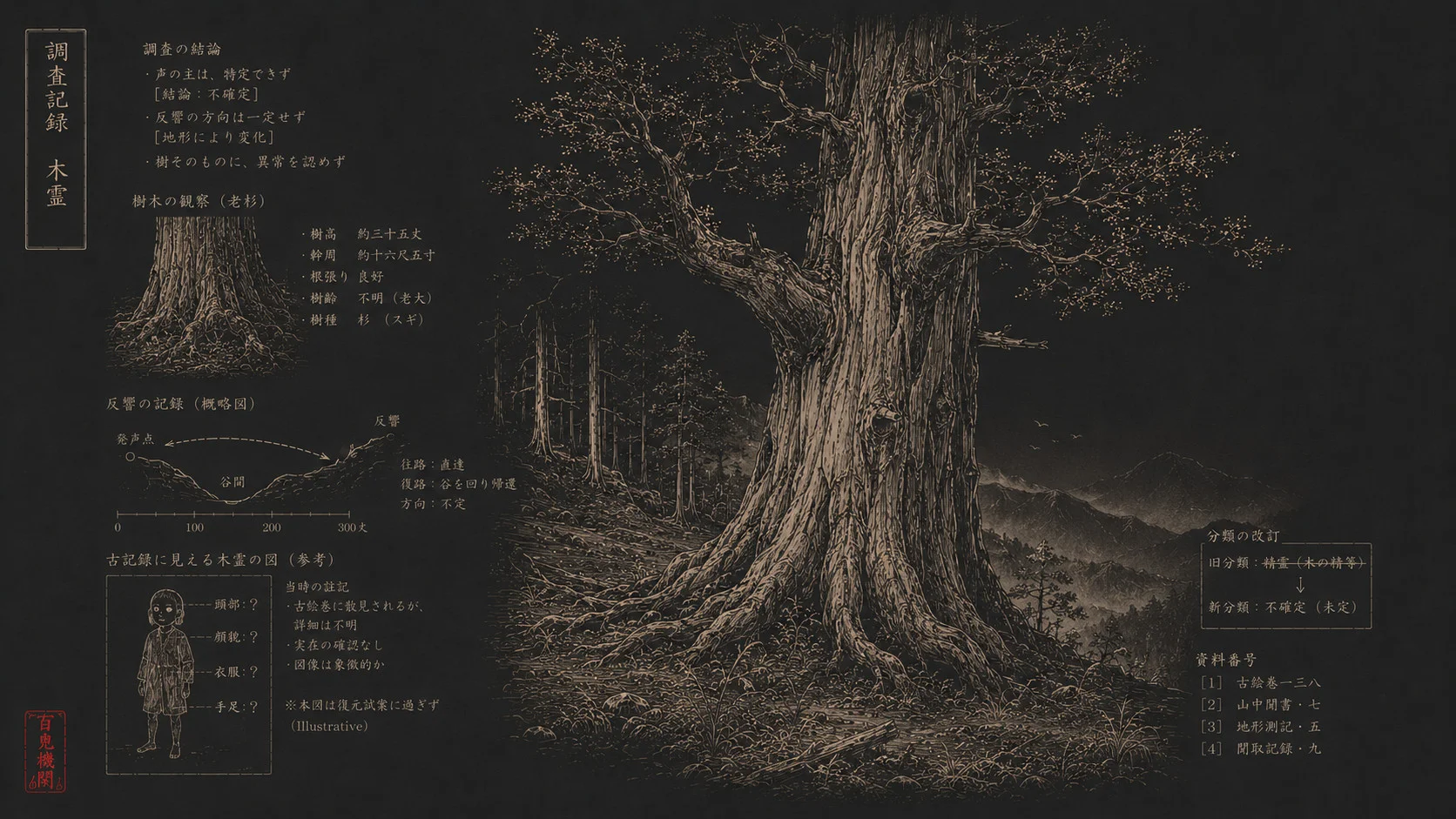
After reviewing the Kodama investigation, the Archive returns to its original classification. The evidence strongly supports traditions of spiritually significant trees, but provides far less certainty that Kodama was ever understood as one consistent kind of being.

Researchers establish a listening grid around an old woodland to compare how sound travels between trees and slopes. Most test sounds are successfully traced. One ordinary knock produces a less satisfactory result.

One old cedar has survived while the woodland around it has repeatedly changed. Residents agree that previous generations deliberately spared the tree, but disagree on why, leaving the Archive to reconstruct a tradition from the protection it left behind.

The Archive compares historical descriptions and visual representations of Kodama to determine when an unseen presence associated with trees and echoes became something artists could depict as a creature.
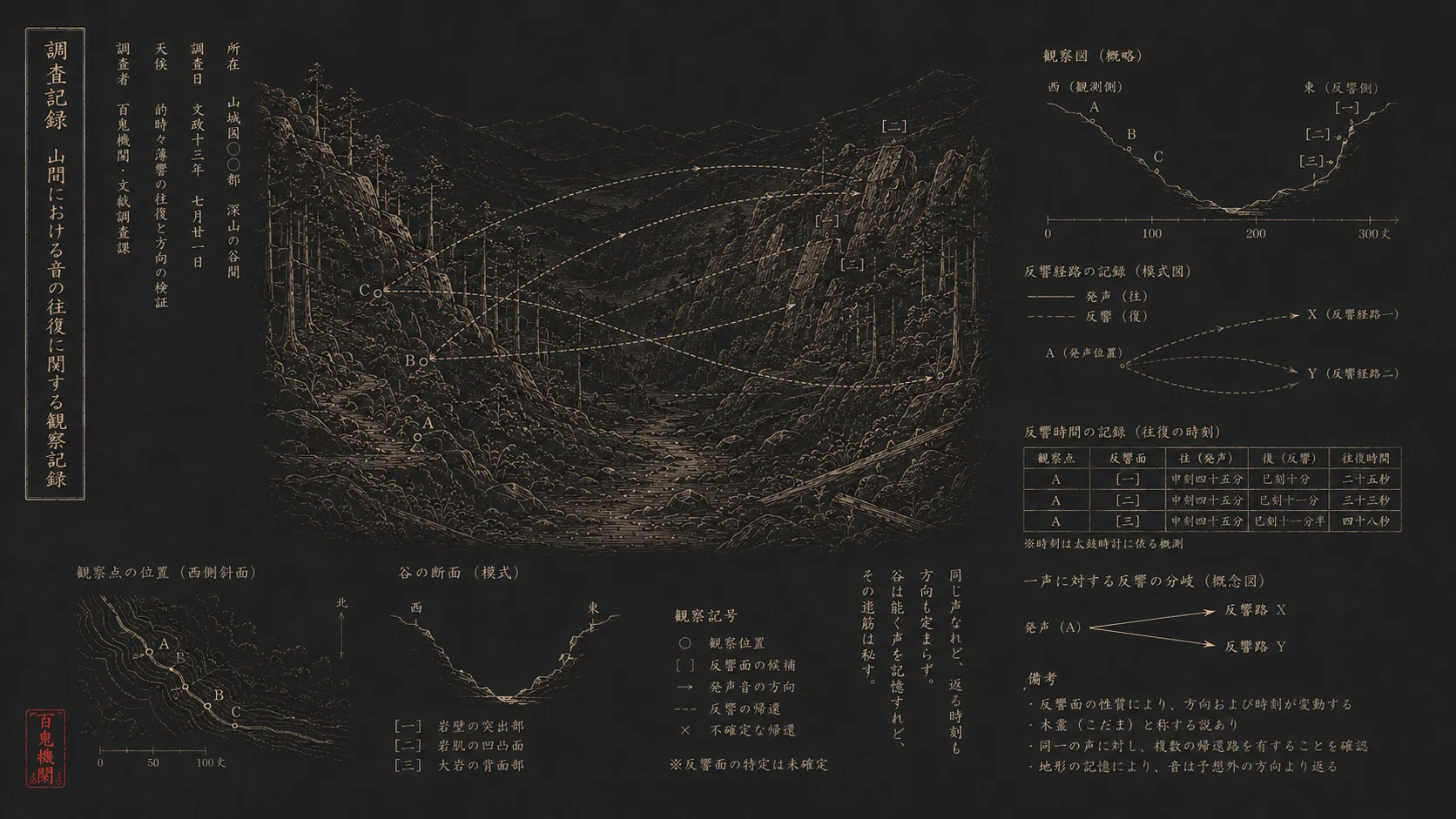
Archive researchers call across a wooded mountain valley to document how sound returns through the terrain. The results explain much of what they hear, while revealing why the older idea of a mountain answering back may have been so compelling.
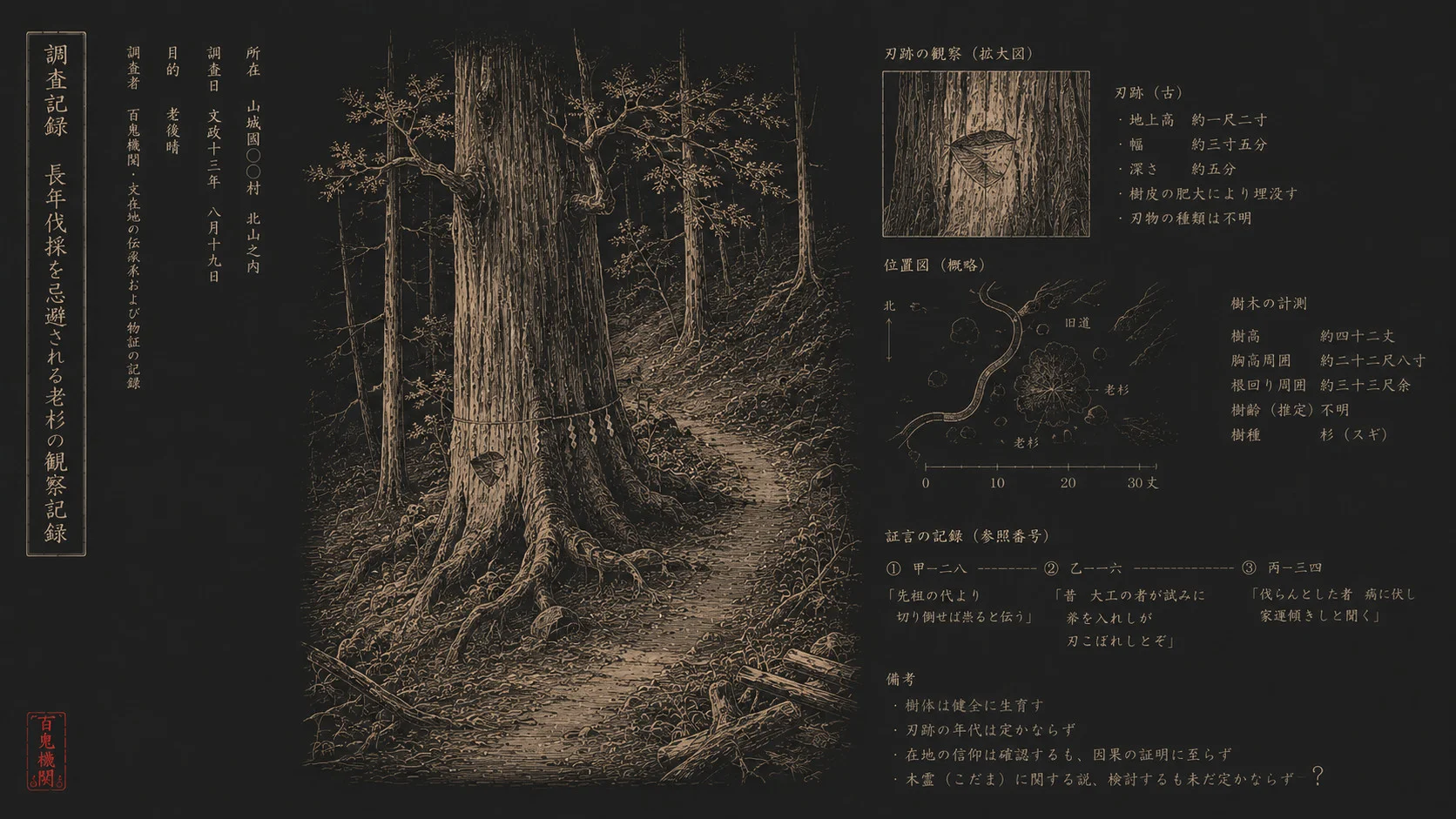
Residents identify several old trees that previous generations warned should never be cut. The explanations differ, but the prohibition remains remarkably consistent, leading the Archive to investigate what such taboos can actually tell us about Kodama tradition.
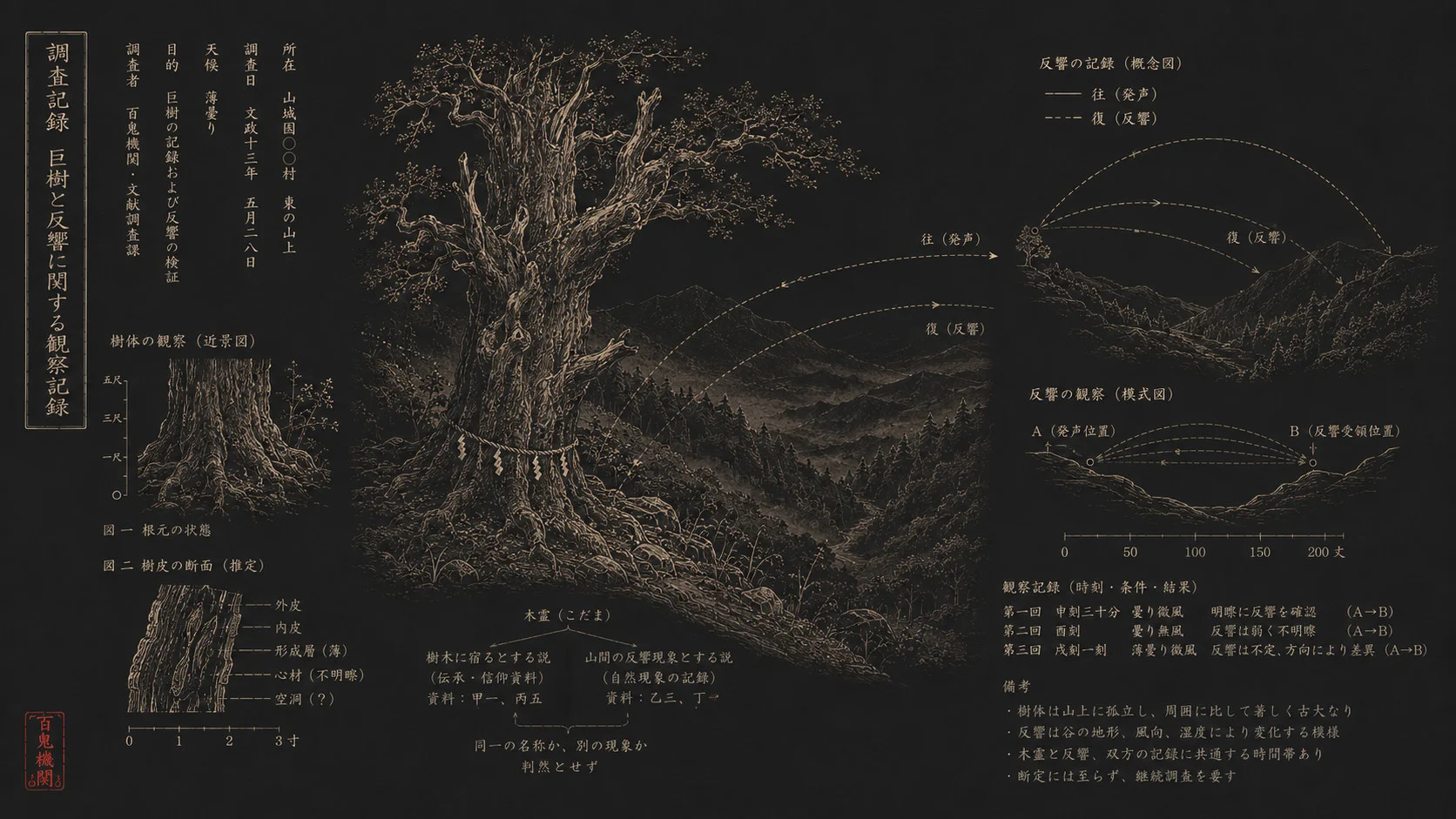
Before kodama became familiar as a forest spirit with a recognizable form, the word carried older associations with trees, mountains, and sounds returned from distant slopes. The Archive examines what the historical record actually allows us to call a Kodama.

The Archive attempts to produce a reference illustration of a kitsune in human form using several independent accounts. Contradictory descriptions leave much of the figure impossible to reconstruct without invention.
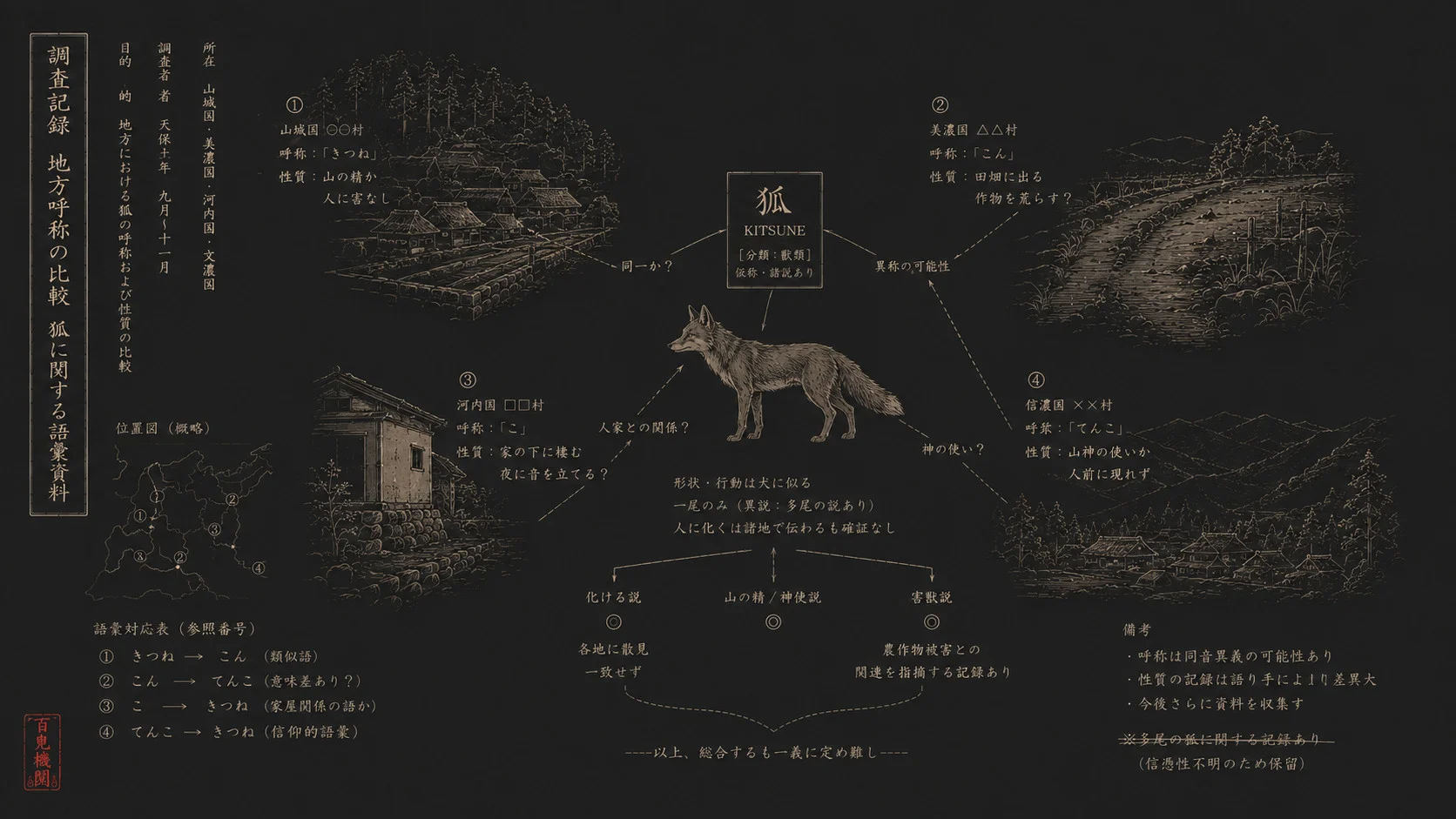
Interviews across neighboring settlements reveal that supernatural fox traditions do not fit neatly beneath a single local name. The Archive compares changing terminology and confronts the limits of its own classification system.