
E01 – 007 Kijimuna

The Thing That Drops from the Trees

Japanese Name 釣瓶落とし
Romanization Tsurube-otoshi
Classification Tree Spirit
Expedition Expedition I — Sacred Forests
Threat Level ■■■□□ (Level III – Dangerous)
First Recorded Early 20th Century Folklore Records

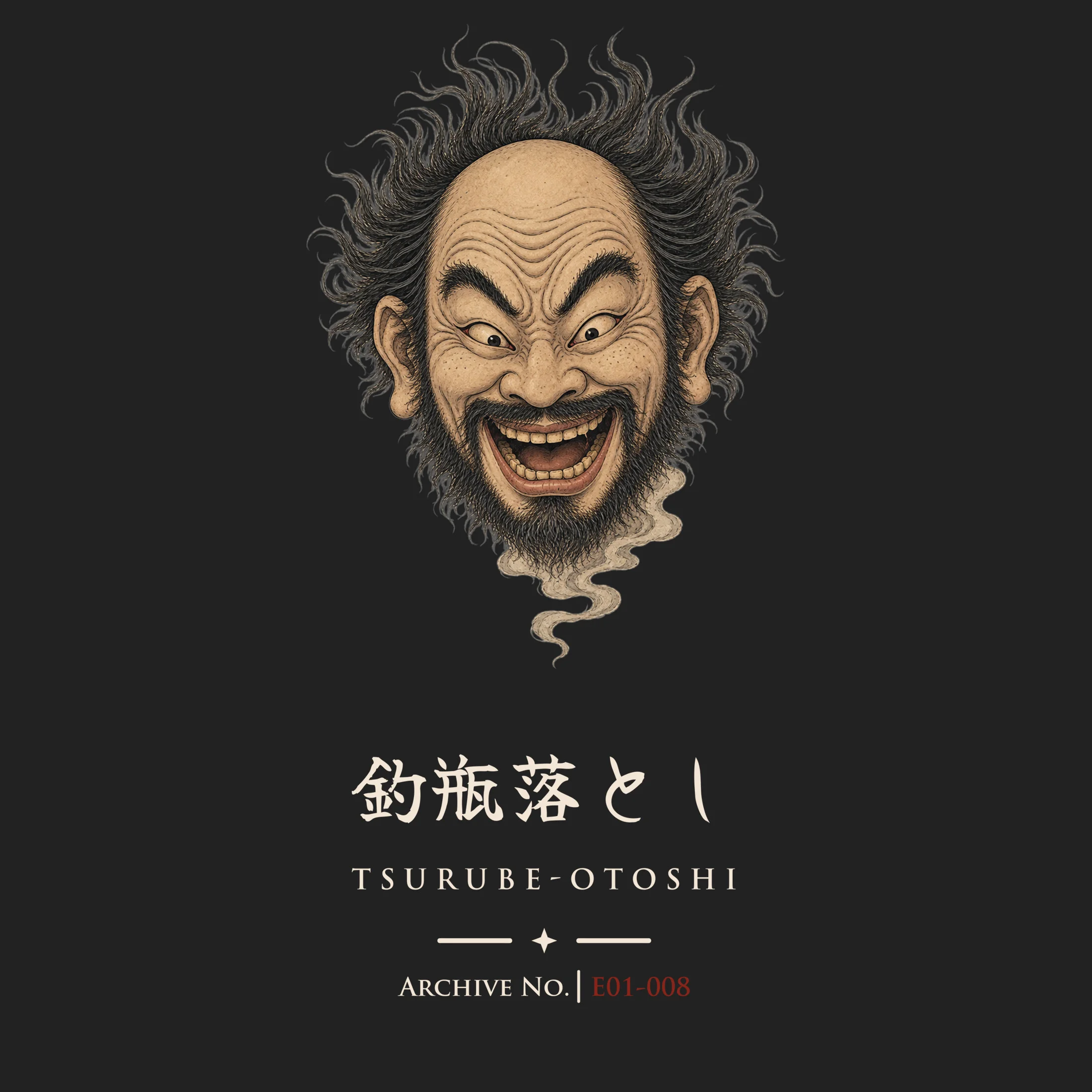
Tsurube-otoshi is a regional Japanese apparition associated with large trees and sudden danger from above. Modern depictions often show an enormous human head dropping from the canopy, but recorded traditions are far less consistent. In some places, a bucket descends from a tree; elsewhere an unseen being calls out, seizes travellers, or drops suddenly from the branches. The name and downward movement are more stable than any single physical form.

The Design

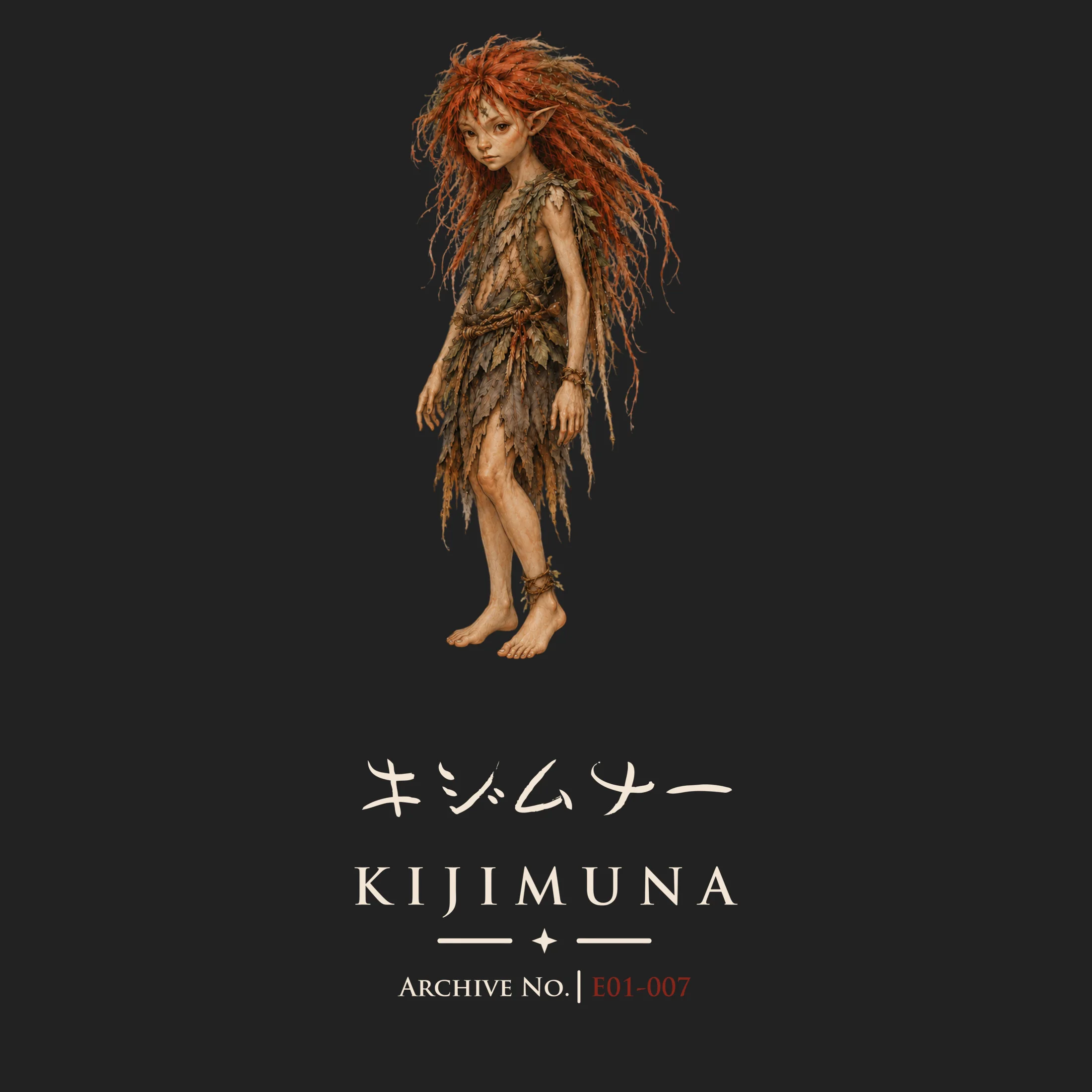
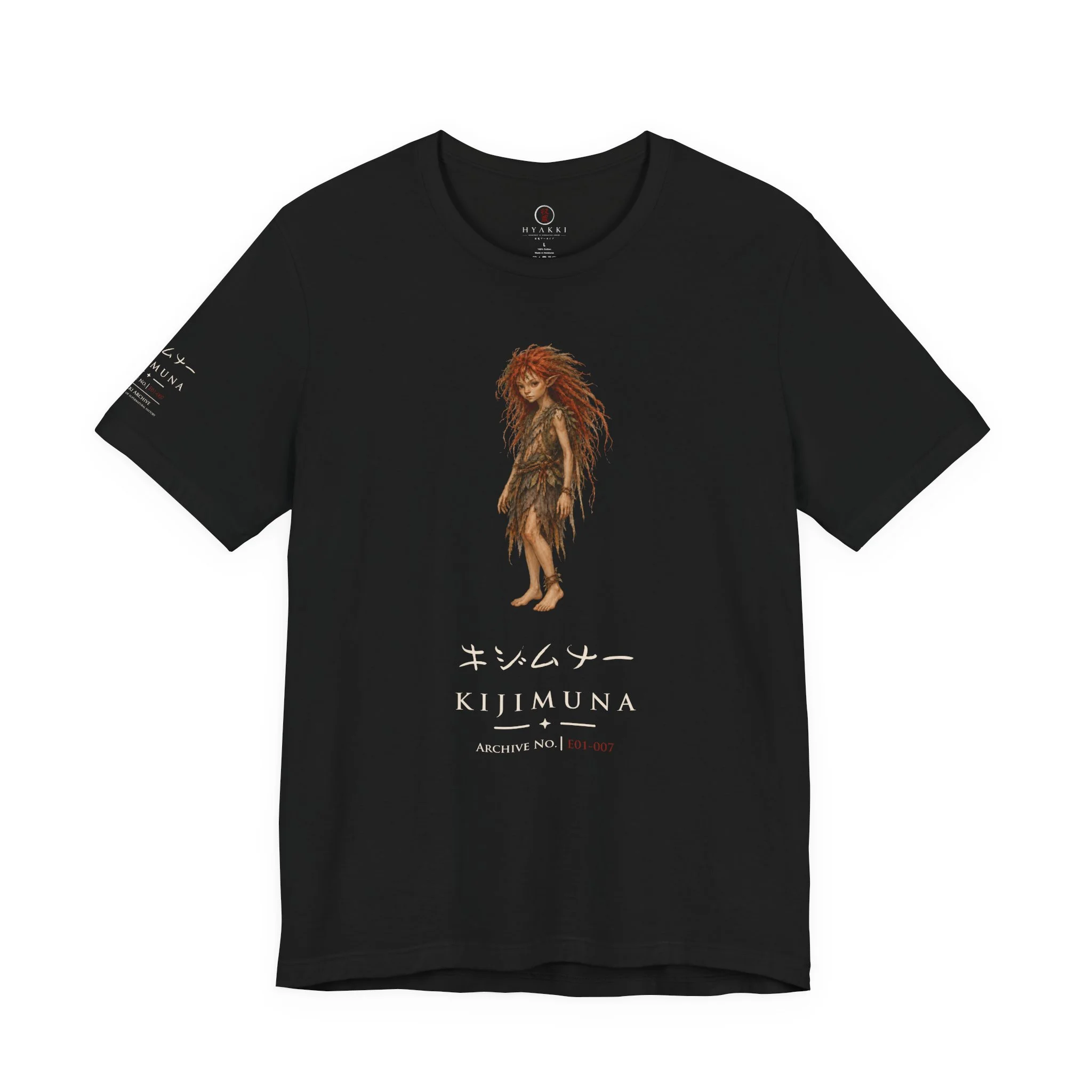
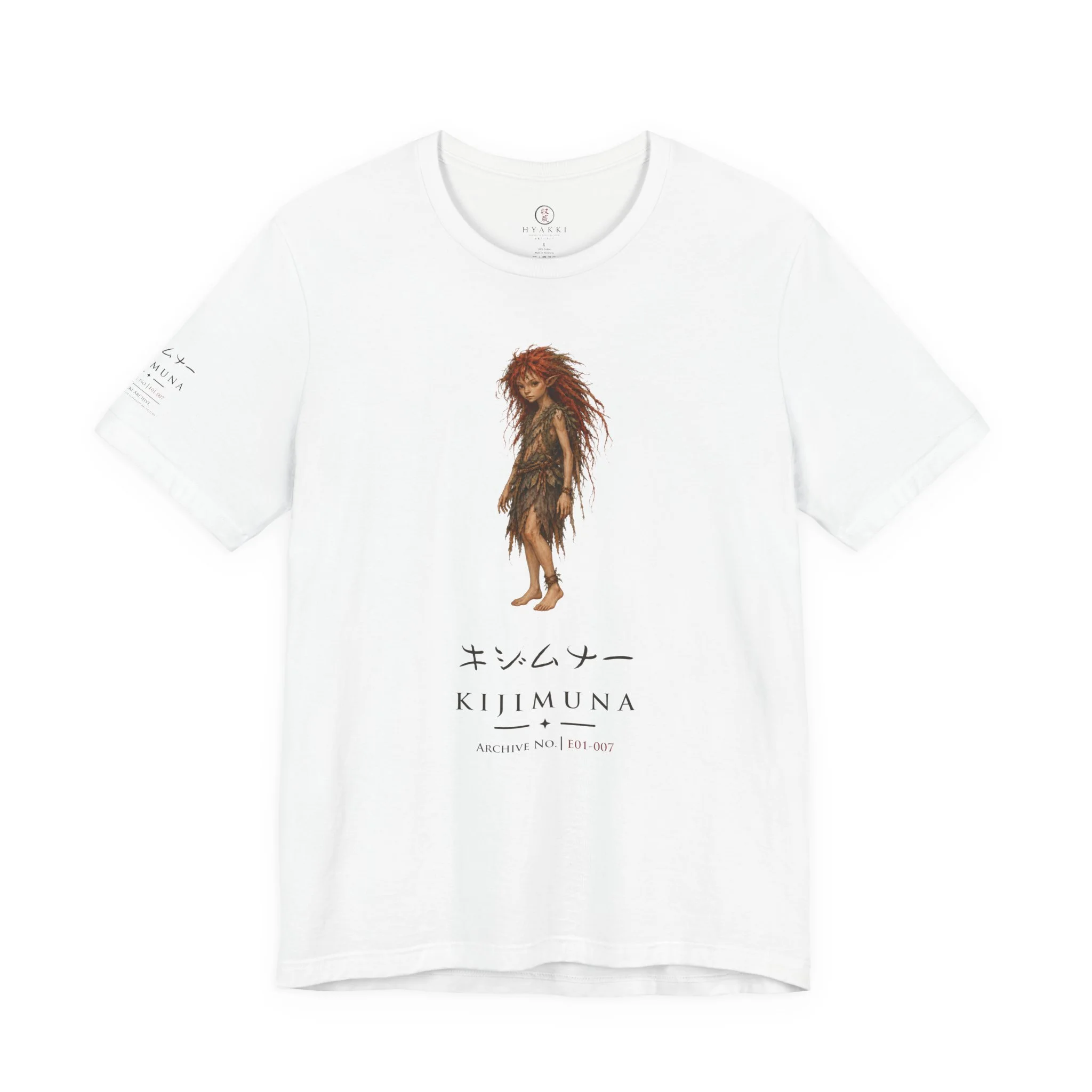
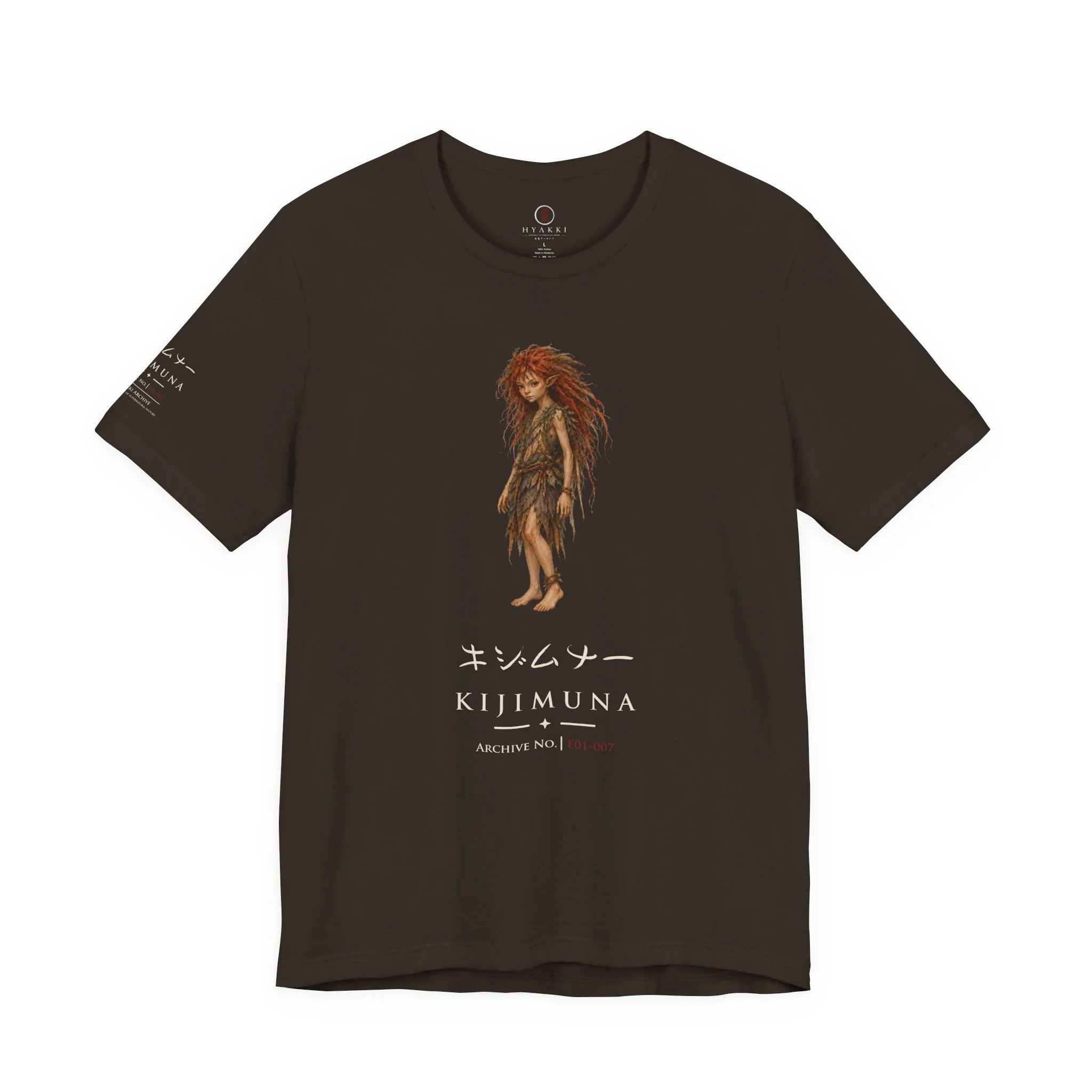
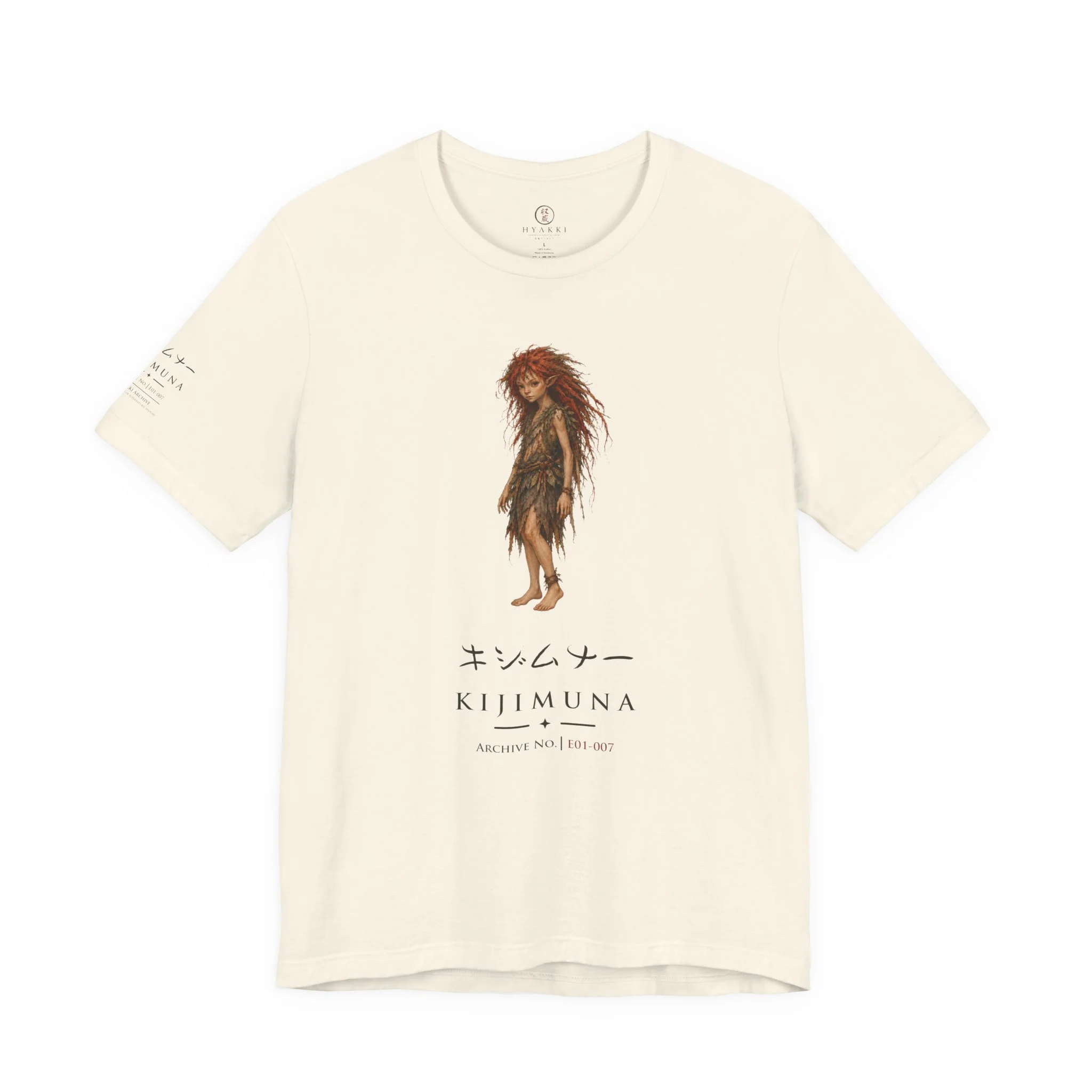
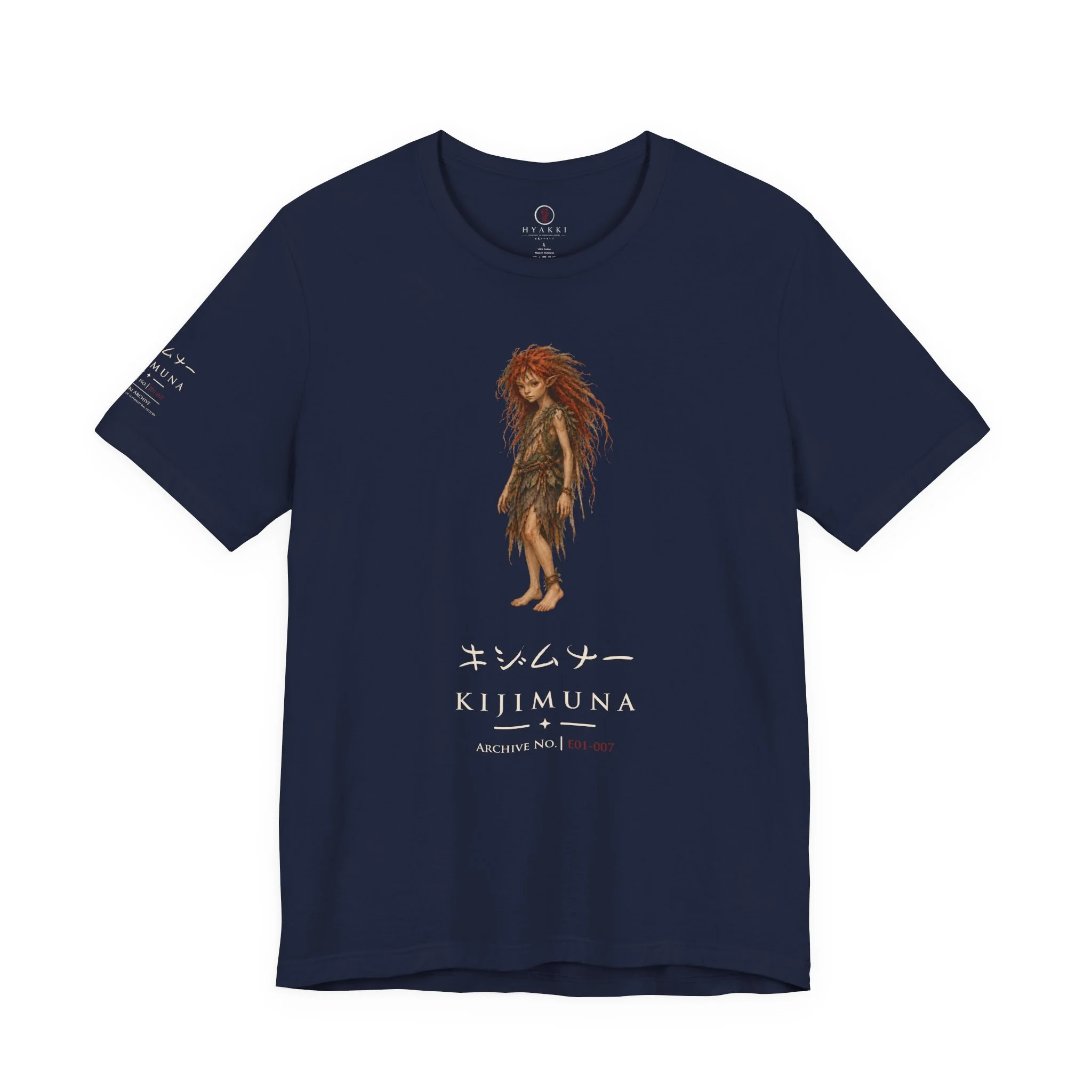
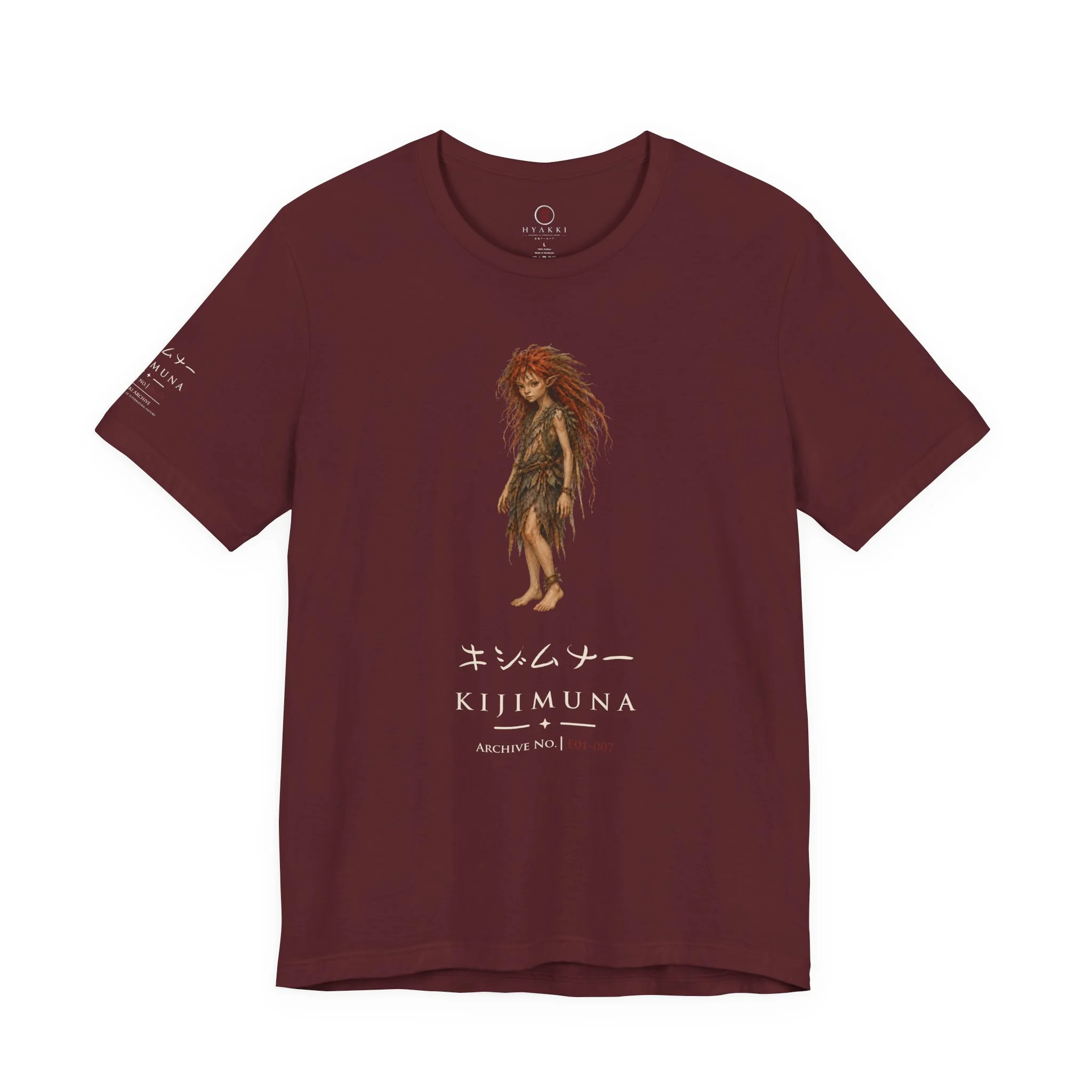
The E01-007 Kijimuna design presents the spirit as a small, humanlike forest being with an immediately recognizable feature: an enormous mass of vivid red-orange hair.

The figure is shown full-body, barefoot, with a slim build and pointed ears. Its clothing is made from layered, leaf-like and fibrous materials in muted browns and olive tones, giving the impression of something dressed from the landscape rather than from ordinary human society. The long hair dominates the silhouette and gives the character a wild, untamed presence without making it monstrous.

Beneath the illustration, キジムナー, KIJIMUNA, and Archive No. E01-007 maintain the same clean archival structure as the rest of the collection.

The restrained composition works especially well on darker shirt colors, where the red hair and warm earth tones become the main focal point.

The Entity Behind the Design

Kijimuna belongs to the folklore of Okinawa and is especially associated with large gajumaru, or banyan trees.

Recorded traditions often describe Kijimuna as small, red-haired beings who can interact directly with humans. Unlike many supernatural entities whose stories centre on attack or fear, Kijimuna may form friendships, help with work, or accompany people fishing.

That relationship is not unconditional.

Stories frequently revolve around reciprocity, boundaries, and the consequences of offending the spirit. A Kijimuna may reward a person it trusts, but the same relationship can collapse if the human breaks an expectation or violates a taboo.

This makes Kijimuna less a generic forest guardian and more a supernatural neighbour: close enough to interact with, but never fully part of the human world.

Known For

Kijimuna is especially known for its red hair, its connection with banyan trees, and its unusual relationships with fishermen.

In recorded Okinawan traditions, a person befriended by a Kijimuna may be taken fishing and return with an unusually good catch. Some stories add a distinctive detail: the fish are missing an eye because the spirit has already taken the part it prefers.

Other accounts describe Kijimuna helping with work, appearing at night, producing strange sounds, or behaving in ways that blur the line between helpful companion and troublesome spirit.

The name Bunagaya appears in related traditions, particularly in northern Okinawa, but it should not simply be treated as a perfect synonym in every context.

Kijimuna is also strongly tied to place. Its identity is not just “small red-haired spirit.” The gajumaru tree, village landscape, coast, and human relationship all matter to the tradition.

From Folklore to Design

This design takes the small red-haired humanoid tradition as its starting point and turns it into a complete Hyakki specimen.

The red-orange hair is the strongest folkloric anchor. Rather than making it neat or stylized, the design lets it spread outward in tangled strands, making the figure feel wild and closely connected to the natural environment.

The pointed ears, leaf-like clothing, and subtle markings on the skin are more interpretive. They help separate the figure visually from an ordinary human child, but they should not be read as fixed historical anatomy.

Importantly, the design does not turn Kijimuna into a cute mascot. The expression is subdued and observant, and the figure stands with a reserved, almost wary posture.

That fits the underlying folklore well.

This is a being that may become a friend.

That does not mean it belongs to you.

From the Hyakki Archive

Archive File E01-007 expands Expedition I — Sacred Forests beyond the main islands of Japan and into the distinctive supernatural traditions of Okinawa.

The Kijimuna does not simply inhabit a tree.

It enters into relationships.

It may help.
It may share.
It may return.

But those relationships come with expectations that are not always spoken aloud.

The question is not whether the spirit can become your friend.

It is what you owe it once it has.

収蔵

Temperament Ambushing • Hostile • Unpredictable
Activity Nocturnal
Encounter Frequency Rare
Habitat Large Trees • Forest Roads • Village Outskirts • Mountain Paths
Known Variants Tsurube-oroshi • Regional Bucket and Tree-Dwelling Forms


01 · What Is It?

Tsurube-otoshi is a supernatural phenomenon associated with large trees, especially those standing beside roads or on the edges of settlements.

The name evokes a tsurube, the bucket traditionally lowered into a well. That image of something being suddenly lowered or dropped from above is central to the tradition.

Modern yōkai imagery often turns Tsurube-otoshi into a giant disembodied head that falls from a tree and attacks travellers. That form is memorable, but the historical folklore record is much less tidy.

Some regional accounts describe an actual bucket descending from a tree. Others mention a creature living in the branches, an oni using a bucket to scoop up people, or an unseen voice speaking before something is lowered.

Tsurube-otoshi is therefore better understood as a family of descending tree apparitions than as one creature with standardized anatomy.

02 · Historical Record

The surviving documentary record is primarily preserved through modern folklore collecting.

Kunio Yanagita’s 1938 Yōkai Meii material records traditions from Aichi in which something called Tsurube-otoshi or Tsurube-oroshi suddenly descends from the top of a large tree. One related story describes an oni living in a great cedar and using a metal bucket to scoop up people passing beneath it.

Other collected traditions from Hokuriku preserve different forms.

A Fukui account describes a large zelkova tree from which a bucket would fall at night and injure travellers. Another describes a voice calling from a tree before a bucket was lowered.

The International Research Center for Japanese Studies database currently lists only a small number of records explicitly under the name Tsurube-otoshi, reinforcing the impression that this is a regional tradition rather than a universally standardized Japanese entity.

03 · Appearance

There is no reliable single appearance.

The giant-head form familiar from modern illustrated yōkai culture should be treated as one representation, not as the universal body of Tsurube-otoshi.

Regional records describe very different manifestations.

In Fukui, the thing descending from the tree can simply be a tsurube bucket. In Aichi, the tradition may involve an oni inhabiting a cedar and using a bucket to seize travellers. In Kyoto, a related Tsurube-oroshi tradition describes something tanuki-like living in a large tree and scooping up humans.

Other accounts leave the form unresolved entirely.

This makes Tsurube-otoshi a good example of a supernatural being whose name and action survived more consistently than its anatomy.

Any Hyakki reconstruction should therefore identify which regional or later visual tradition it represents rather than presenting one body as definitive.

04 · Behaviour & Encounters

The most consistent behavioural feature is vertical ambush.

A traveller passes beneath a large tree at night. Something then drops, descends, reaches down, or attempts to lift the person upward.

One Fukui tradition describes a bucket falling from a large zelkova and injuring people walking below. An Ishikawa account tells of a Tsurube-otoshi descending from the sky in an abandoned property; anyone whose hands or feet touched it could no longer pull away and would be carried upward.

Other traditions are more conversational. A Tsurube-oroshi in Fukui calls out from the top of a tree before lowering a bucket. Another poses questions to people passing beneath it, with the wrong answer supposedly leading to death.

The danger is therefore not always a falling monster.

The recurring idea is that the canopy contains something capable of reaching into the road below.

05 · Belief, Ritual & Meaning

Tsurube-otoshi does not appear to have a major formal ritual tradition comparable with shrine-associated beings.

Its folklore instead belongs strongly to the geography of dangerous nighttime travel.

Large roadside trees create an obvious blind spot. A traveller approaching in darkness can see the path ahead but not necessarily the branches directly overhead. Tsurube-otoshi turns that physical vulnerability into supernatural form.

The well-bucket imagery also makes the encounter unusually domestic and familiar. A tsurube is an ordinary tool whose defining motion is vertical: it is lowered from above and drawn back upward. Applied to a tree, that familiar motion becomes deeply unnatural.

Some regional stories attach moral tests, riddles, or avoidance behaviour to the apparition, but these should not be universalized.

The wider cultural power of Tsurube-otoshi lies in a simple reversal:

The road seems dangerous because of what may be waiting ahead.

The folklore warns that the danger may already be directly above you.

06 · Regional & Historical Variations

Variation is fundamental to Tsurube-otoshi.

In Fukui, recorded traditions include a bucket falling from a zelkova tree, a voice asking whether it should lower the bucket, and a being that challenges travellers with questions.

In Aichi, Yanagita records traditions in which something drops from the crown of a large tree, including a story about an oni in a cedar using a metal bucket to seize people.

In Ishikawa, another version descends from above and can carry away anyone who touches it.

Related traditions also appear under the name Tsurube-oroshi, and the relationship between the names is not perfectly uniform.

This is why reducing the entity to “a giant head that falls from trees” removes much of what makes the folklore interesting.

The most stable pattern is not the head.

It is the descent.

07 · What We Actually Know

Tsurube-otoshi is associated with large trees and danger from above DOCUMENTED
Regional records preserve actual bucket-descending traditions DOCUMENTED
Some traditions involve an oni or other being inhabiting the tree DOCUMENTED
Tsurube-oroshi appears as a related regional name DOCUMENTED
Every Tsurube-otoshi is a giant severed human head INCORRECT
The entity has one standardized anatomy throughout Japan UNSUPPORTED
Every encounter involves the victim being eaten INCORRECT
The downward movement is more consistent than the entity’s physical form INTERPRETATION
Weight N/A
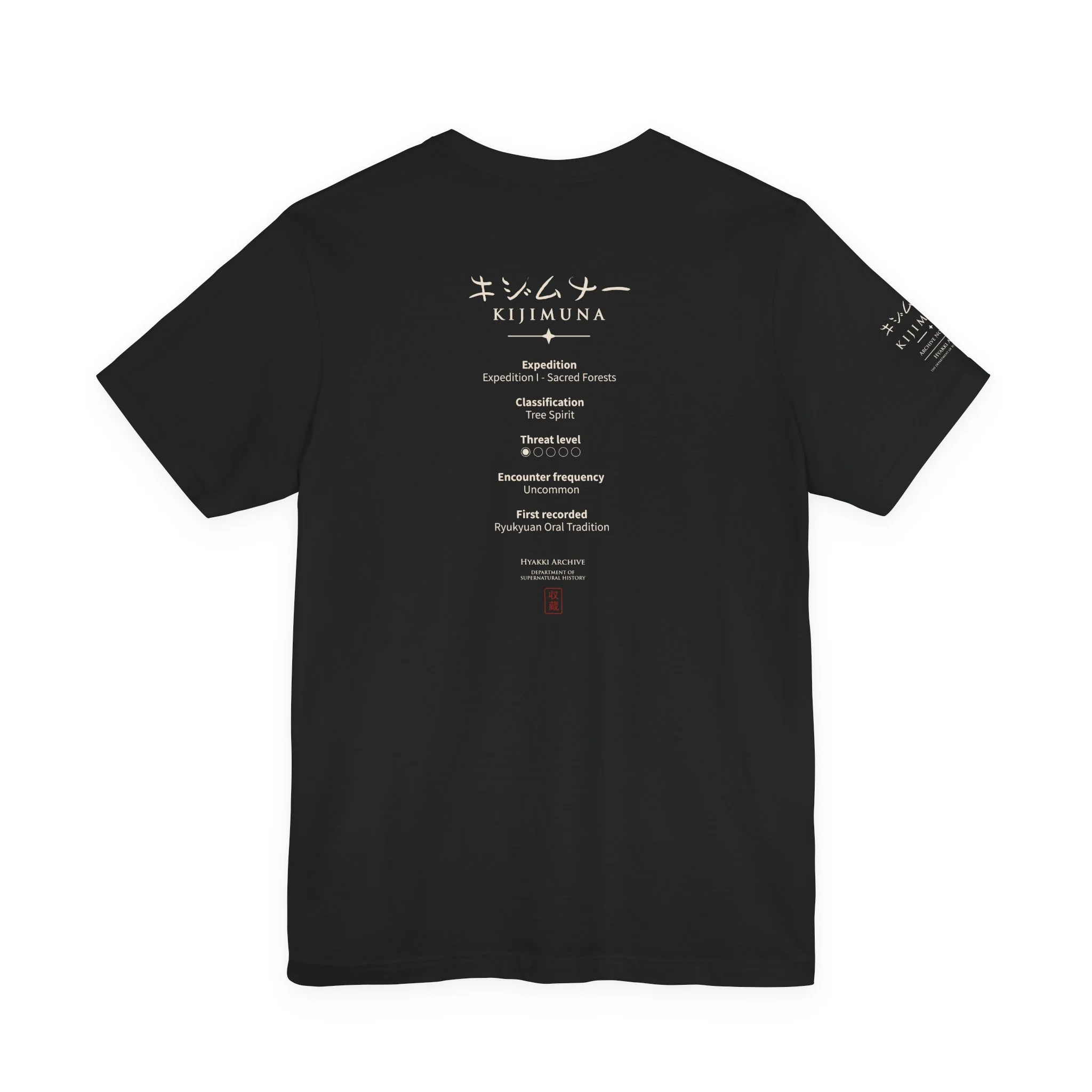
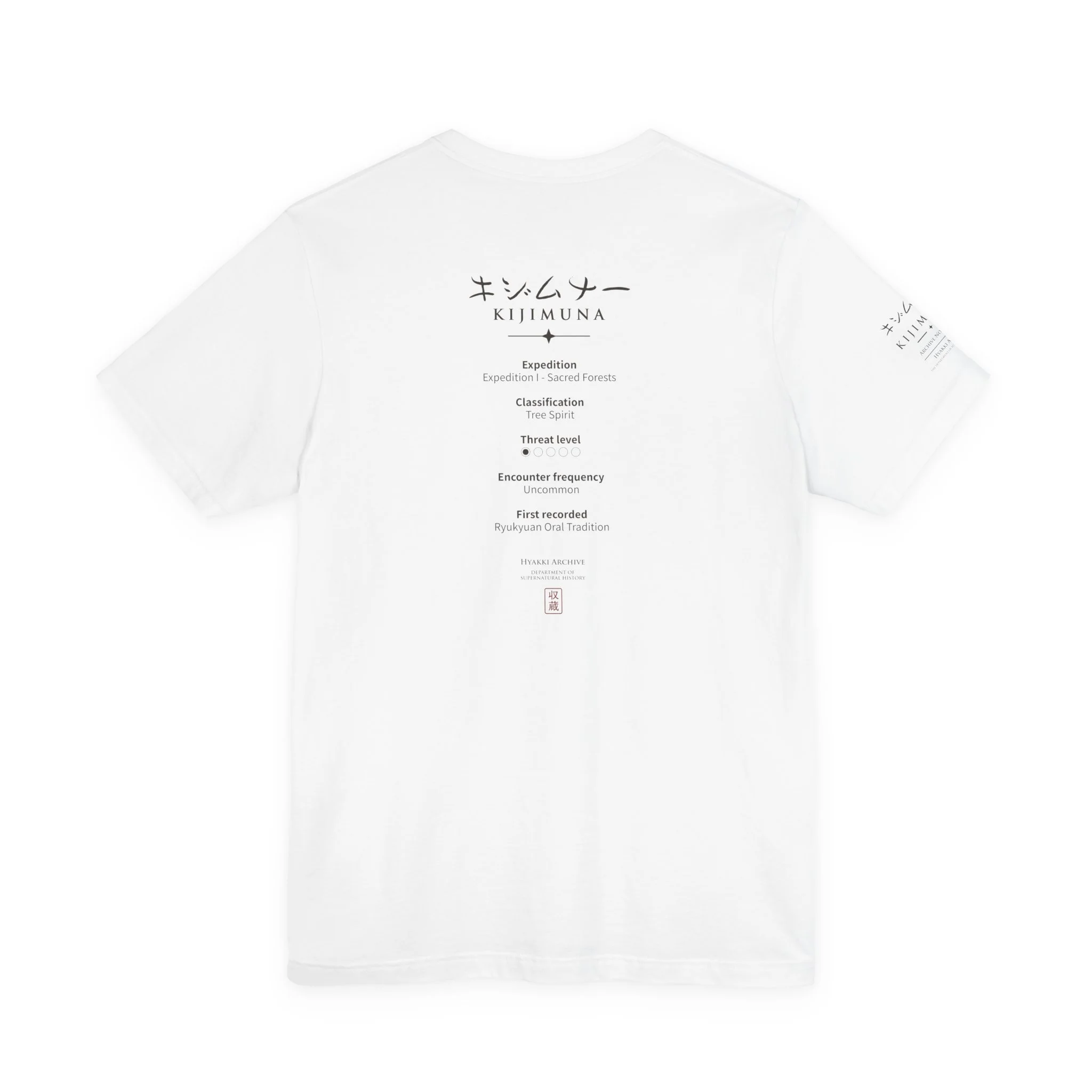
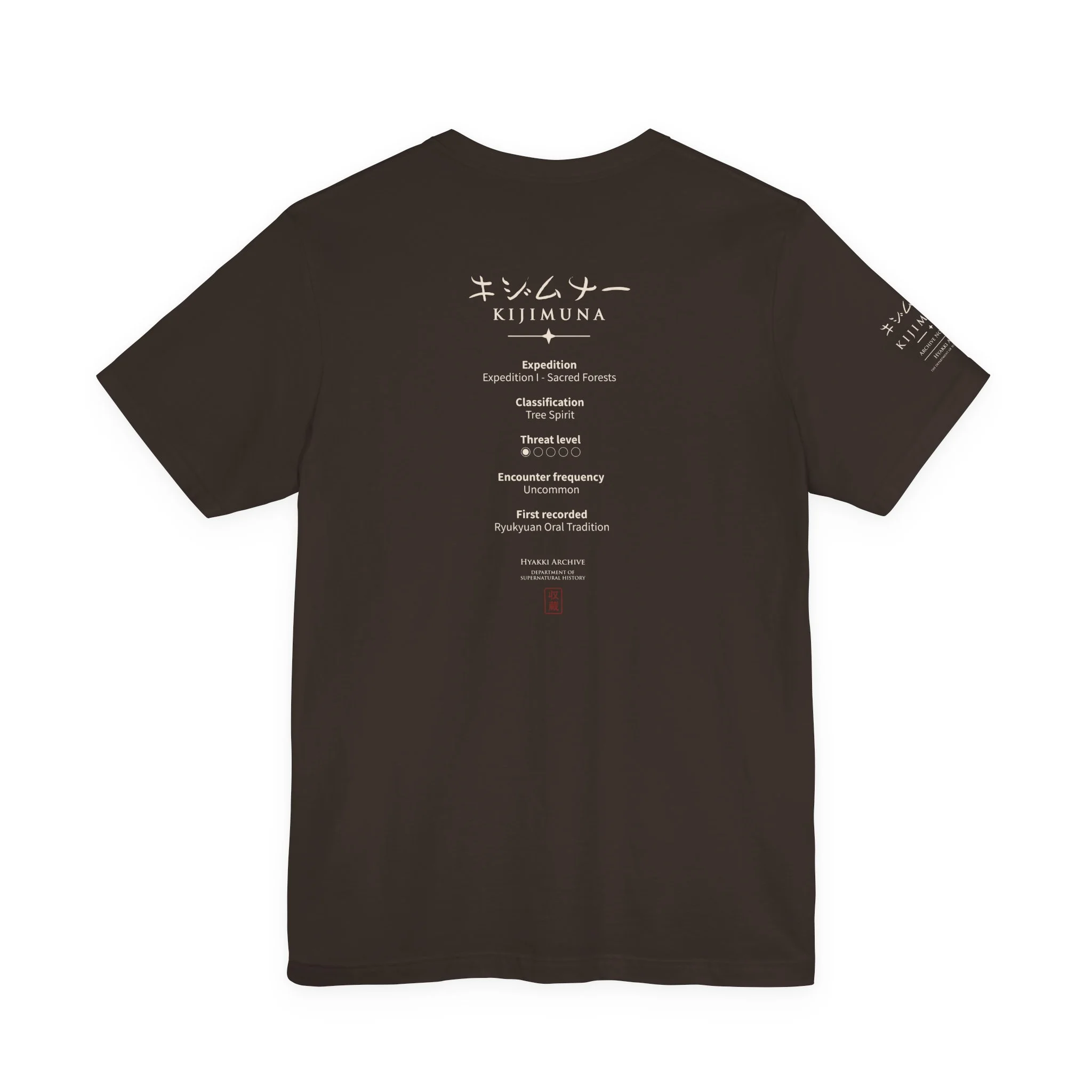
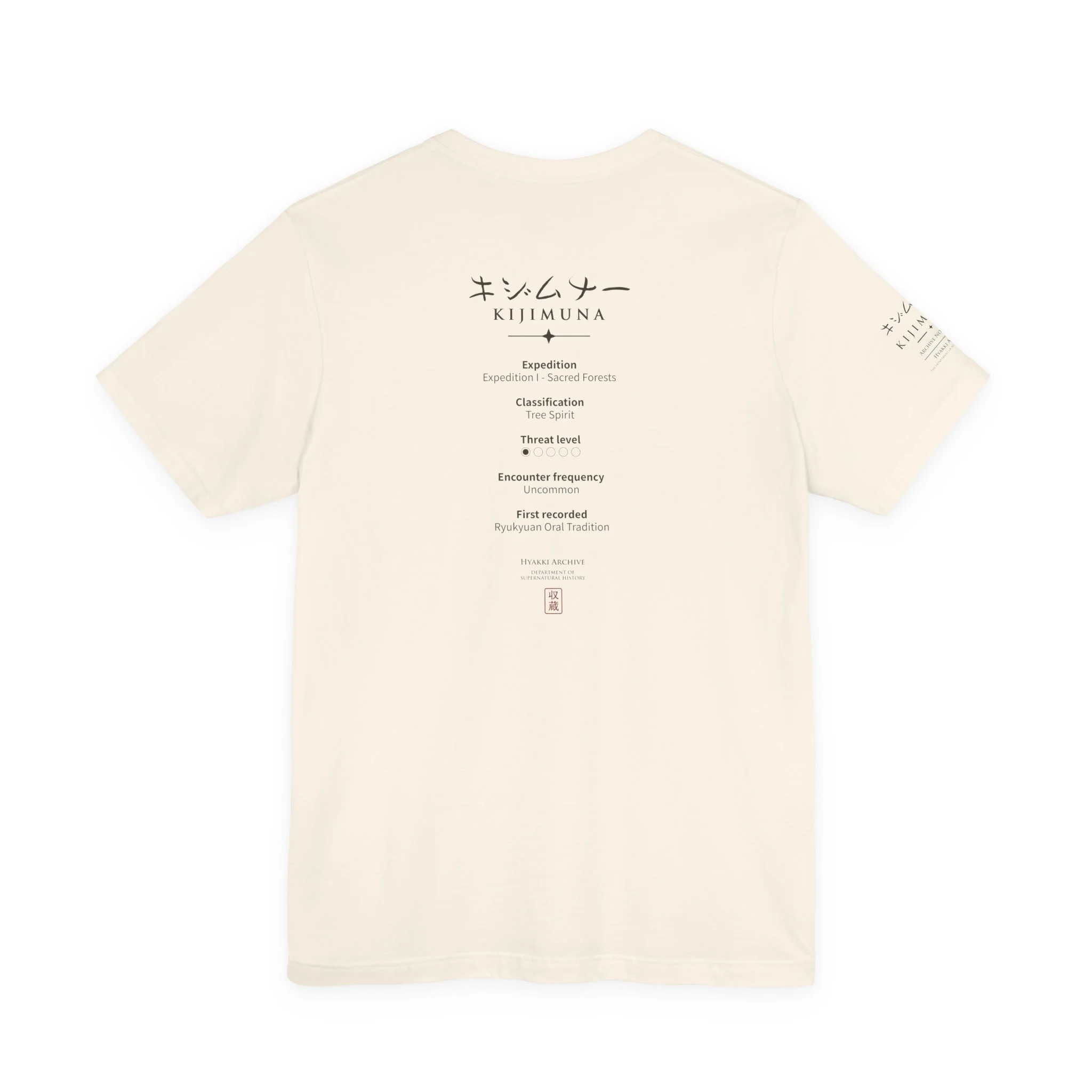
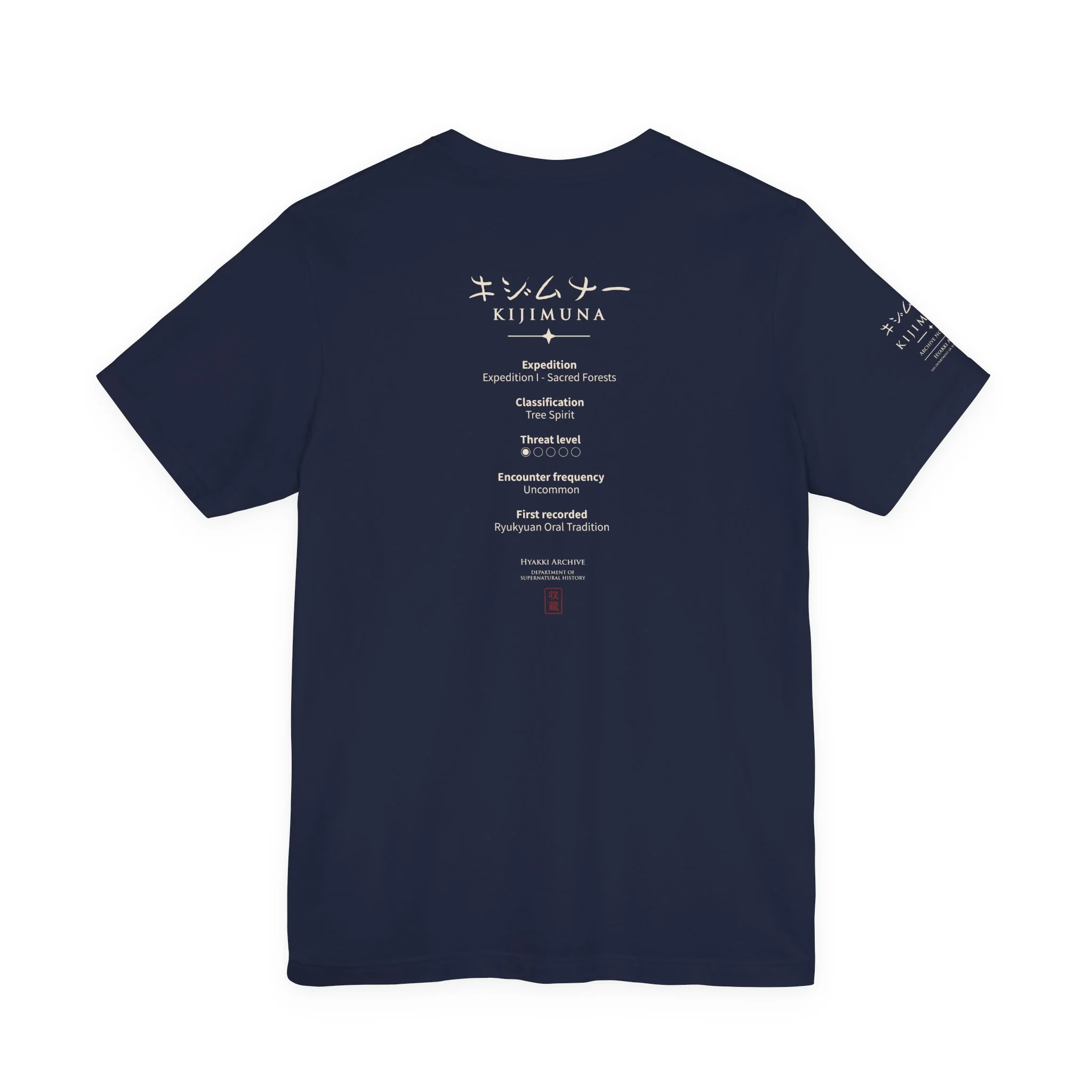
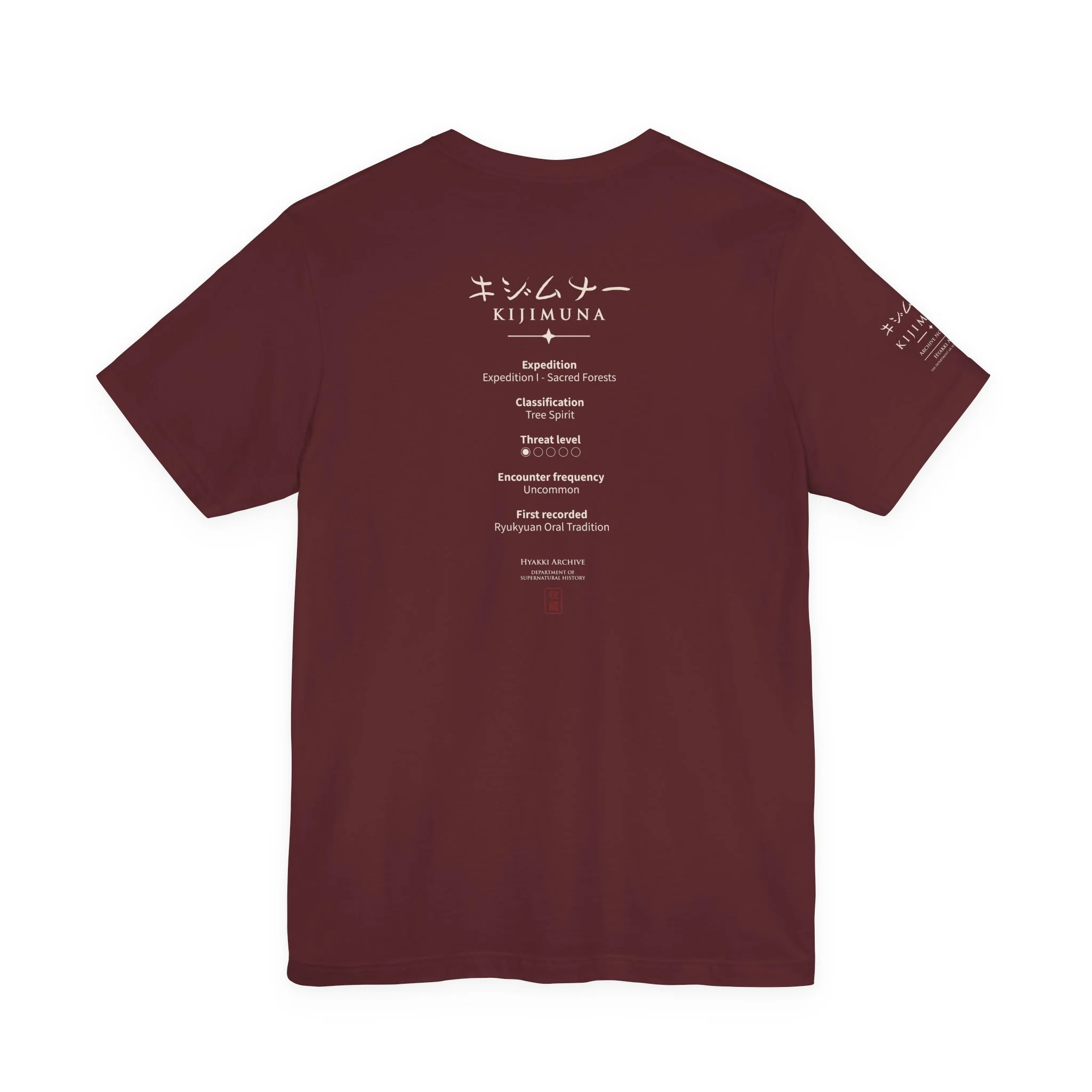
Expedition

Expedition I — Sacred Forests

Classification

Tree Spirit

Threat Level

■□□□□ Level I

Reviews

There are no reviews yet.

Only logged in customers who have purchased this product may leave a review.