

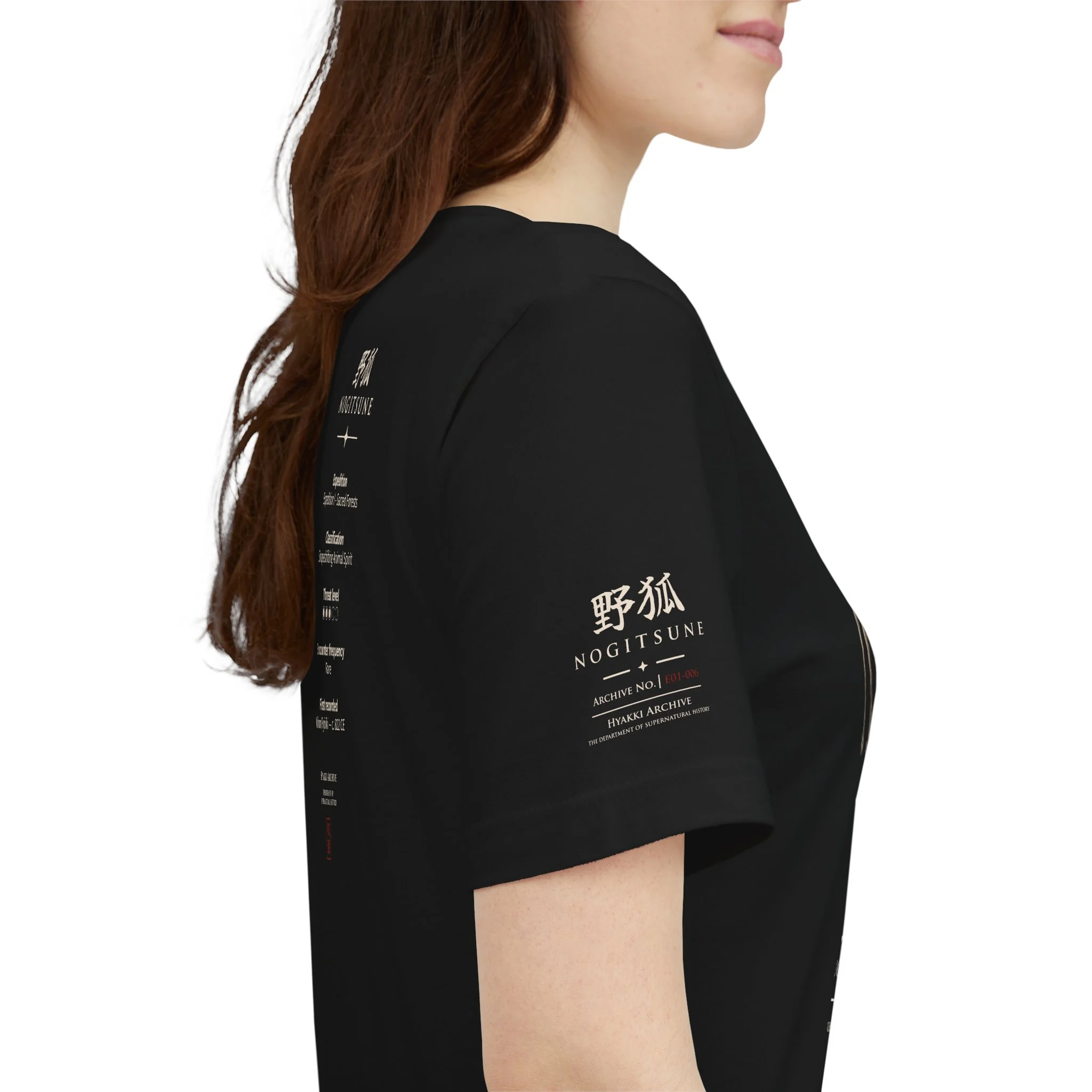
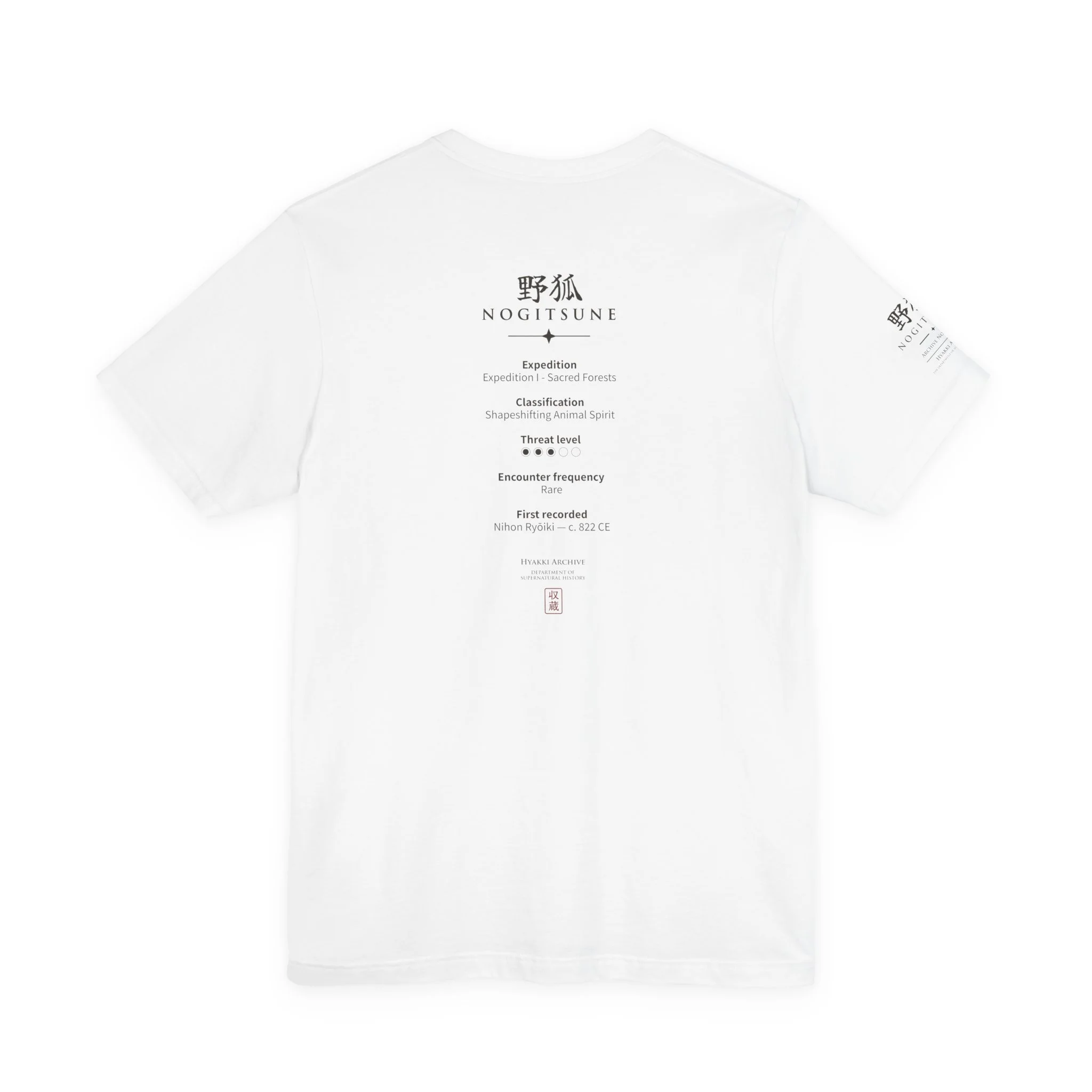
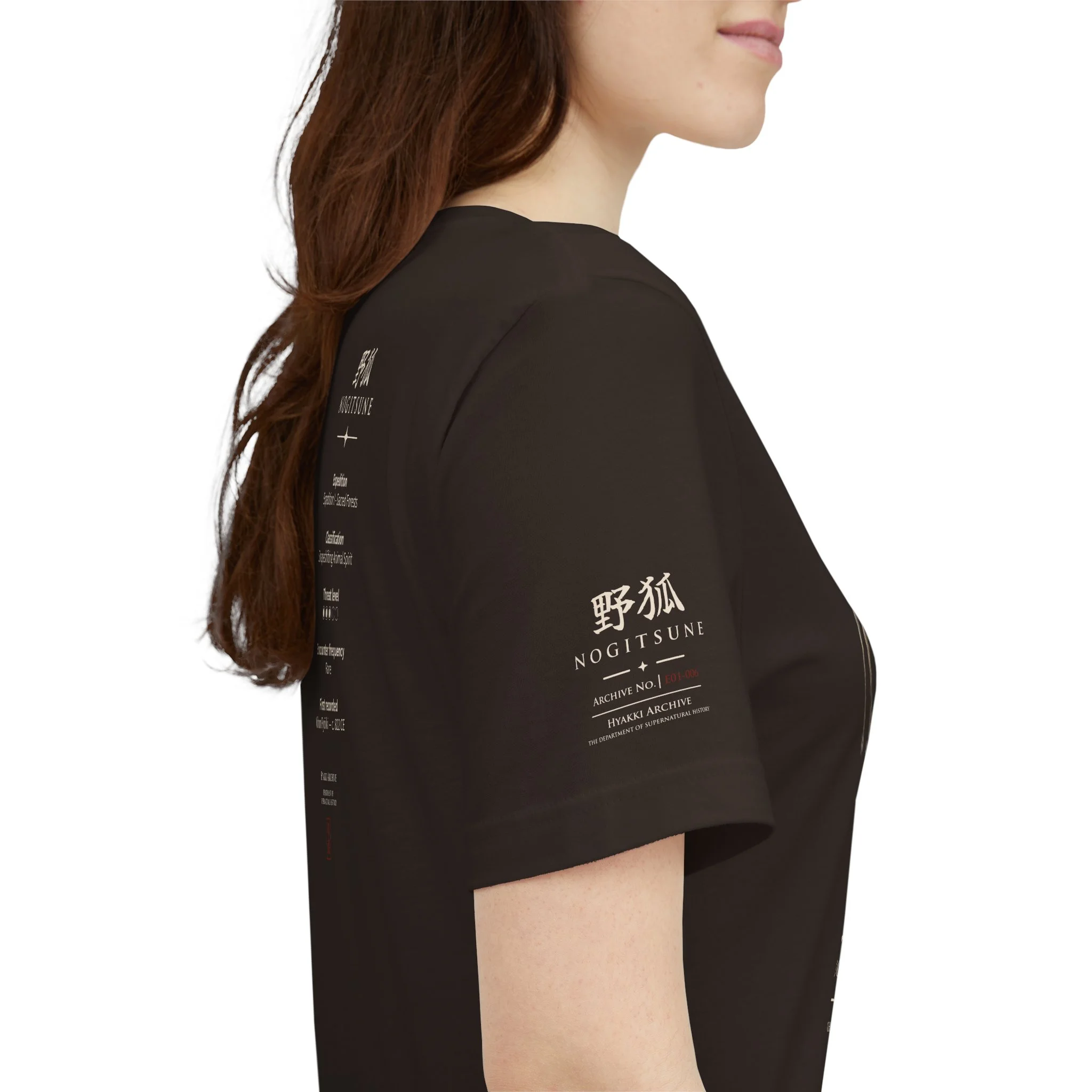



The Design
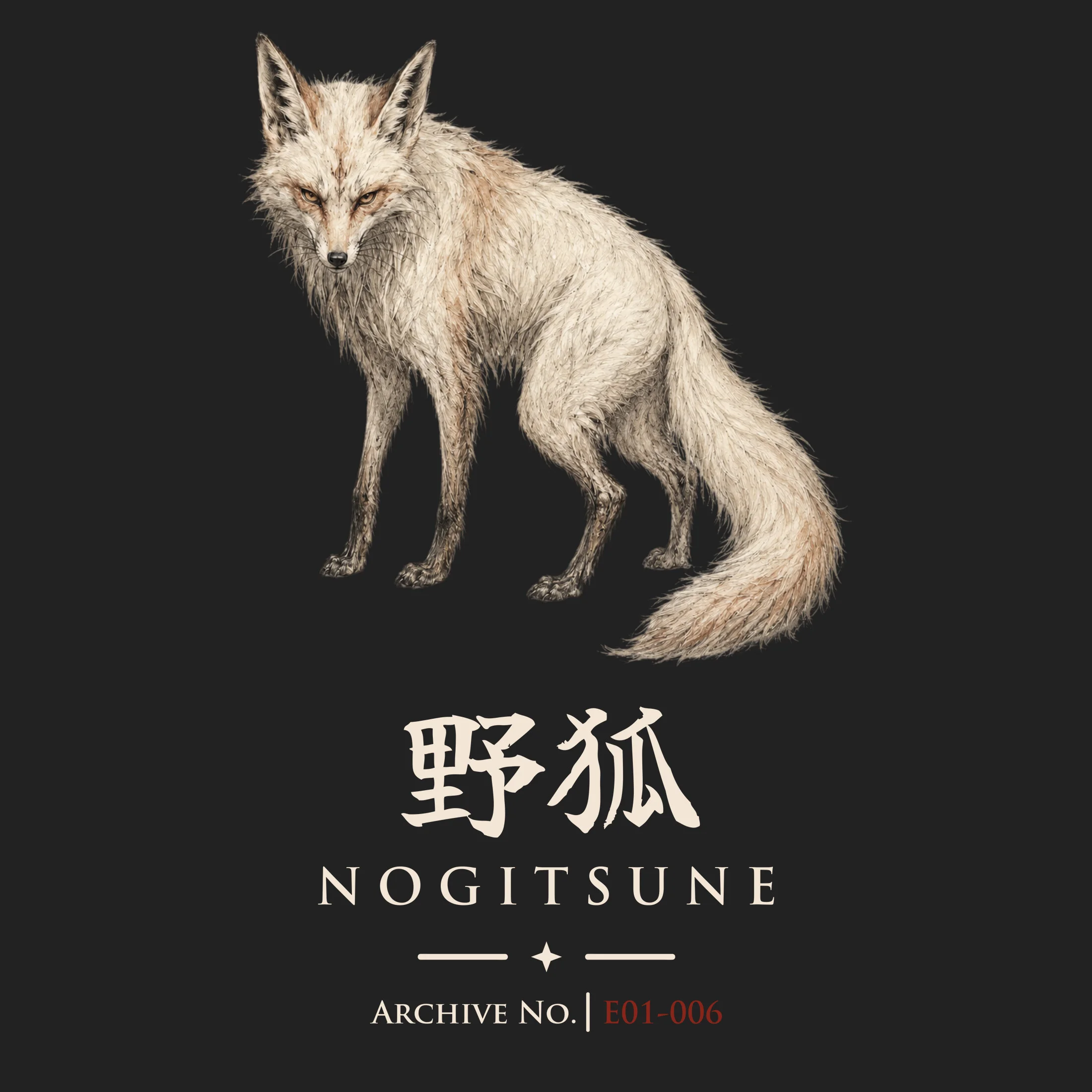
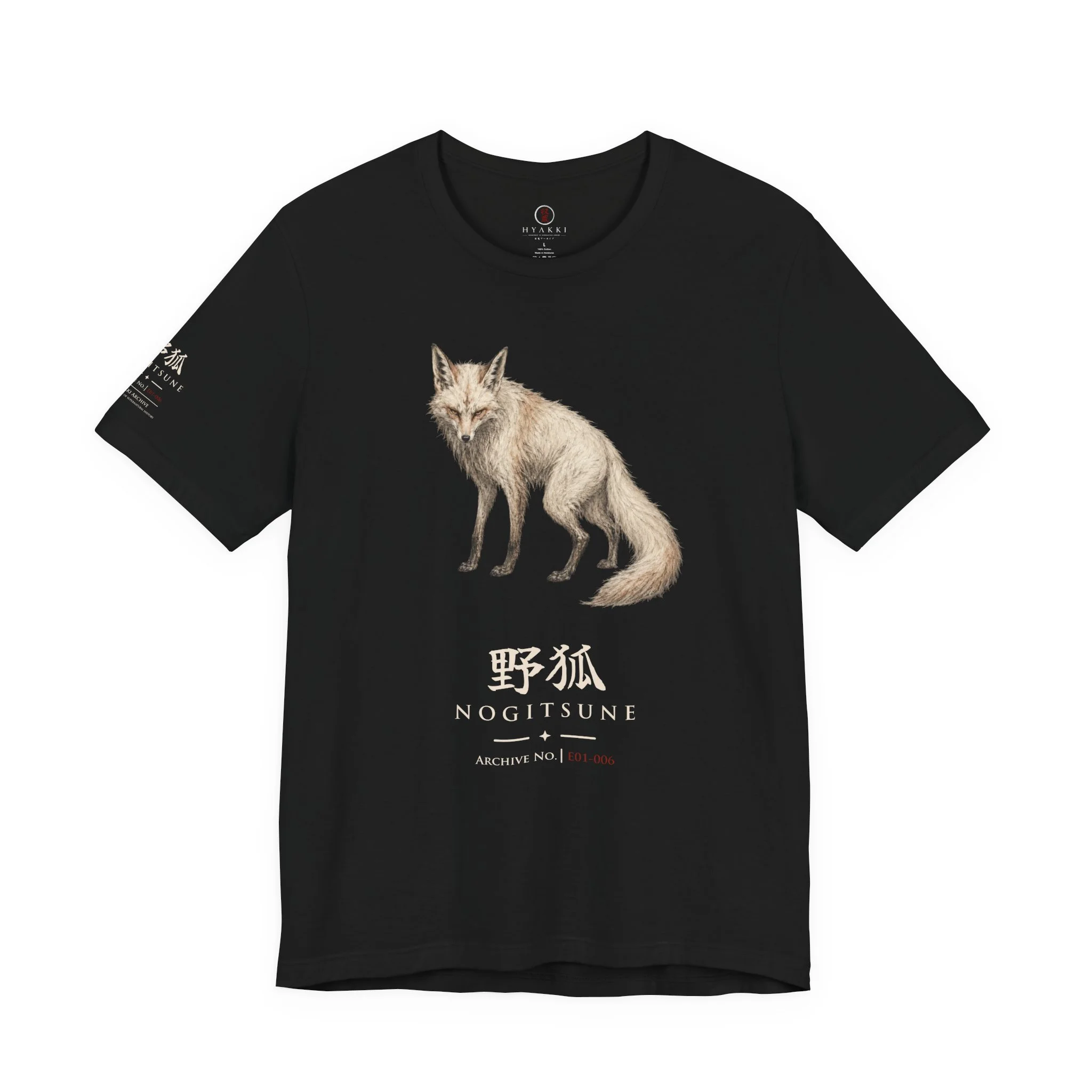
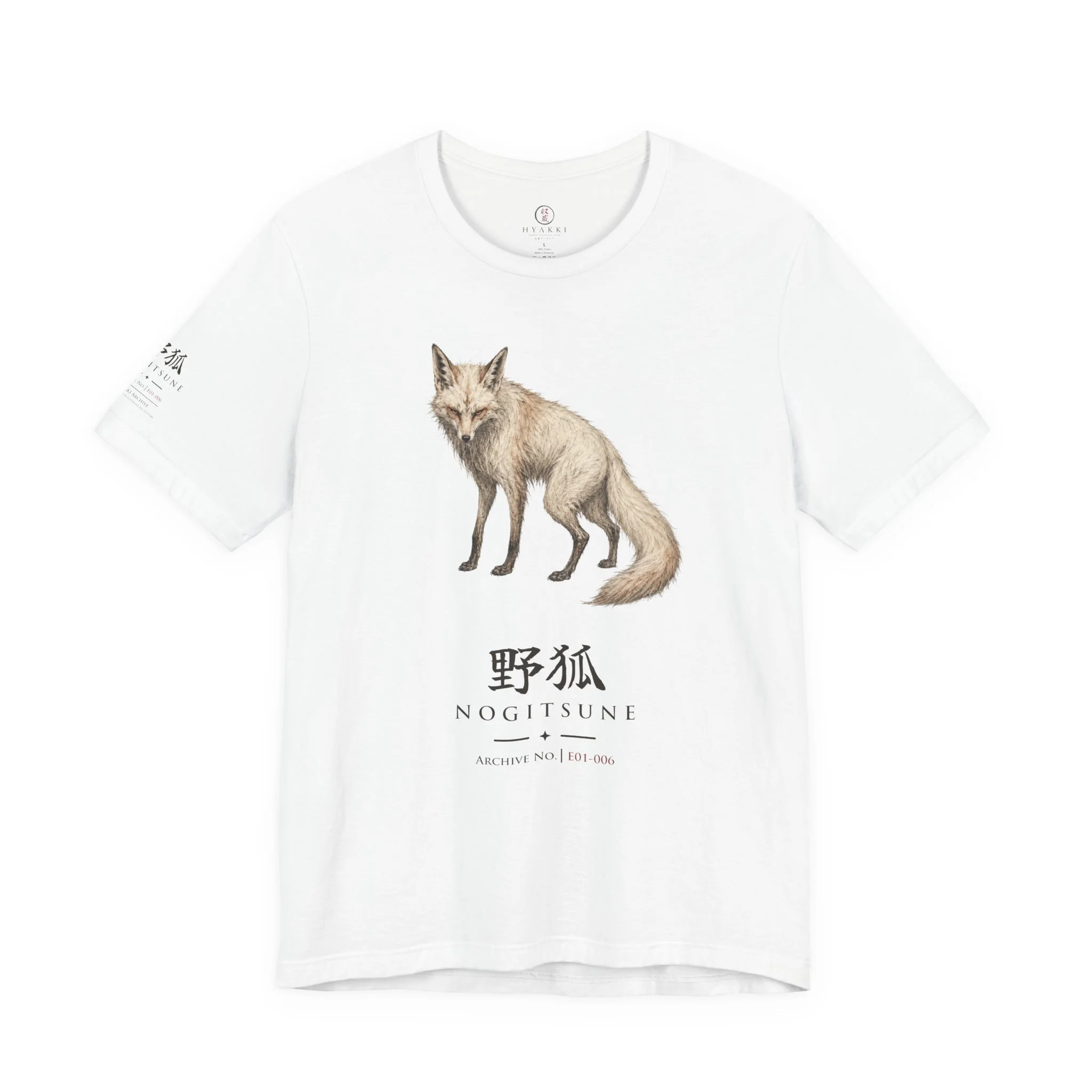
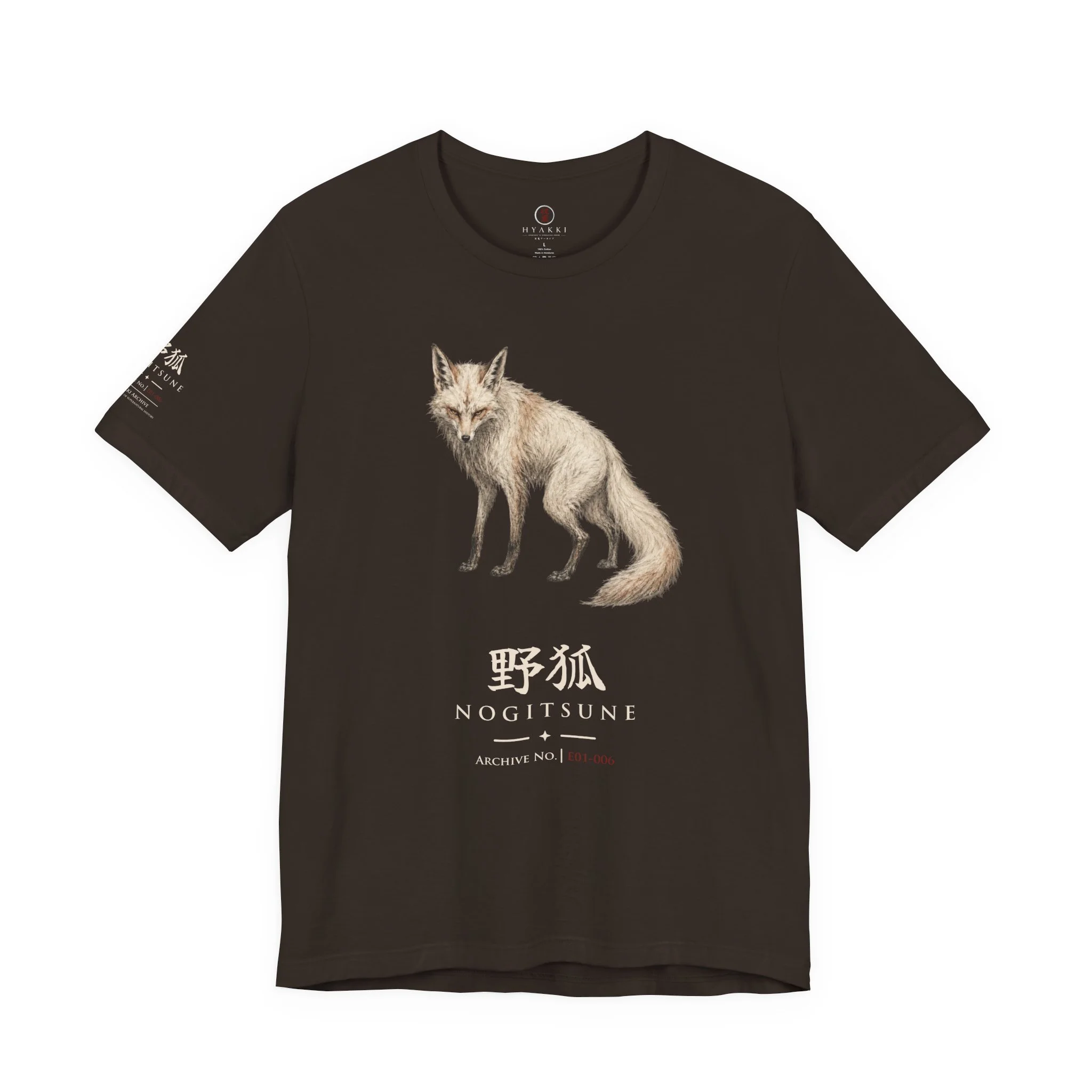
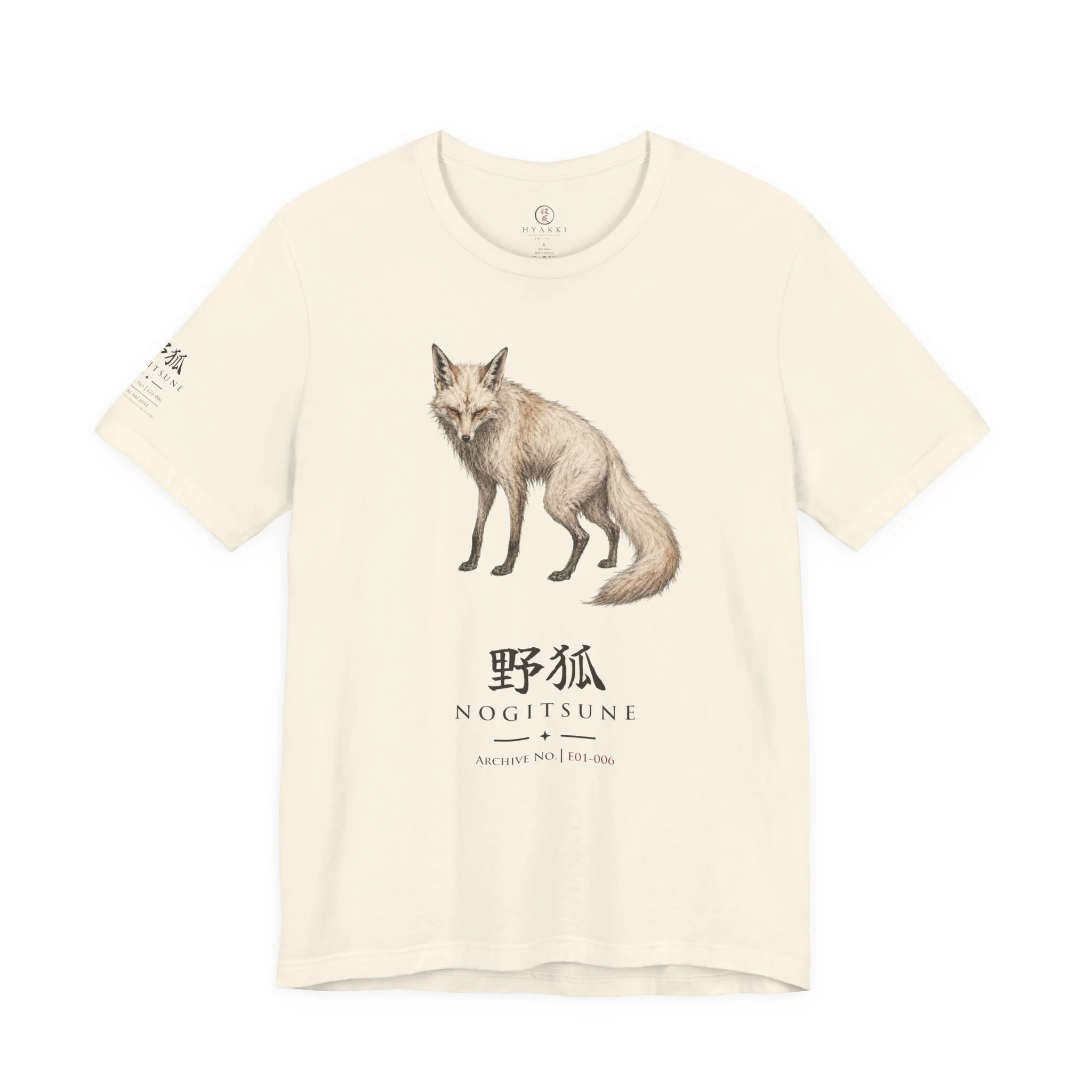
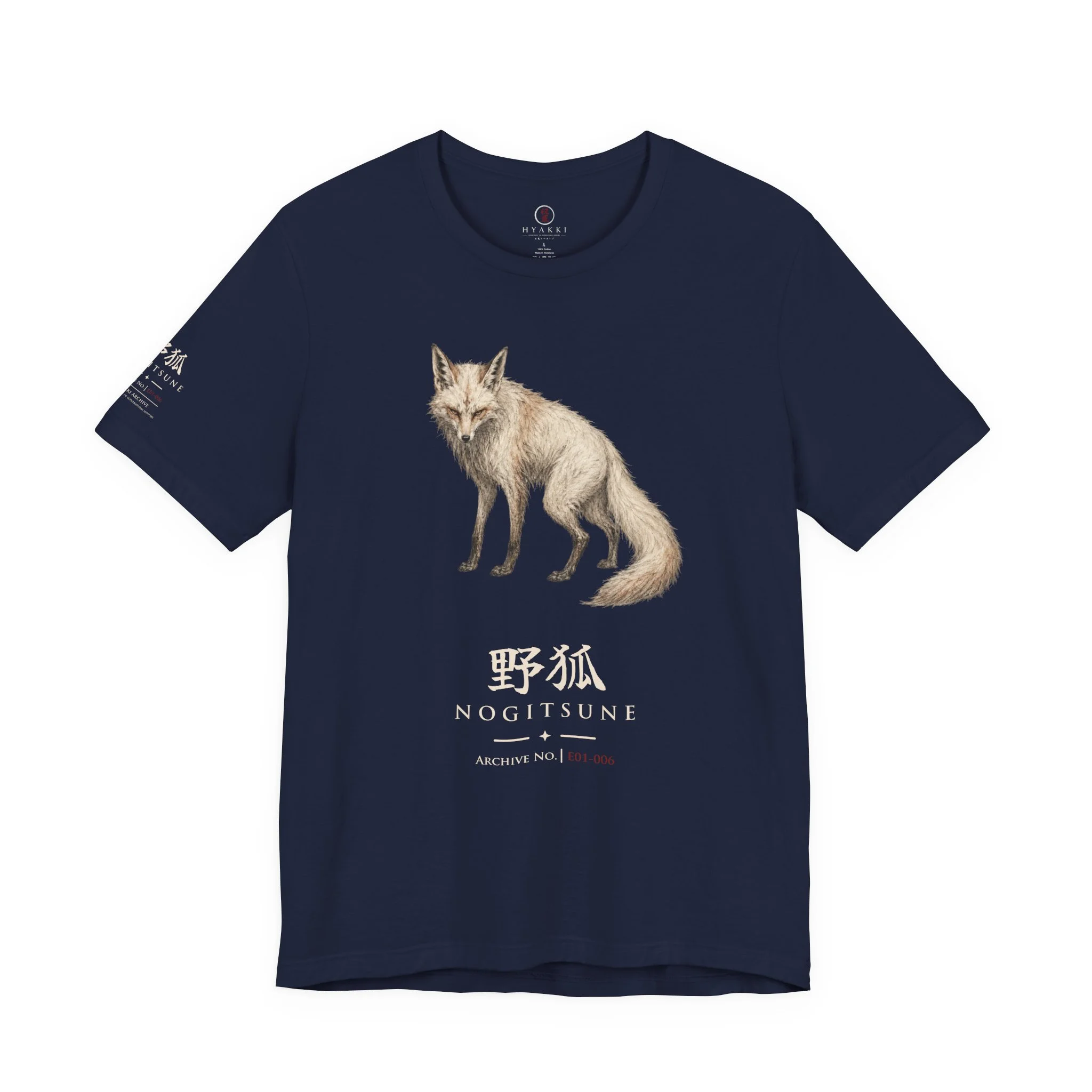
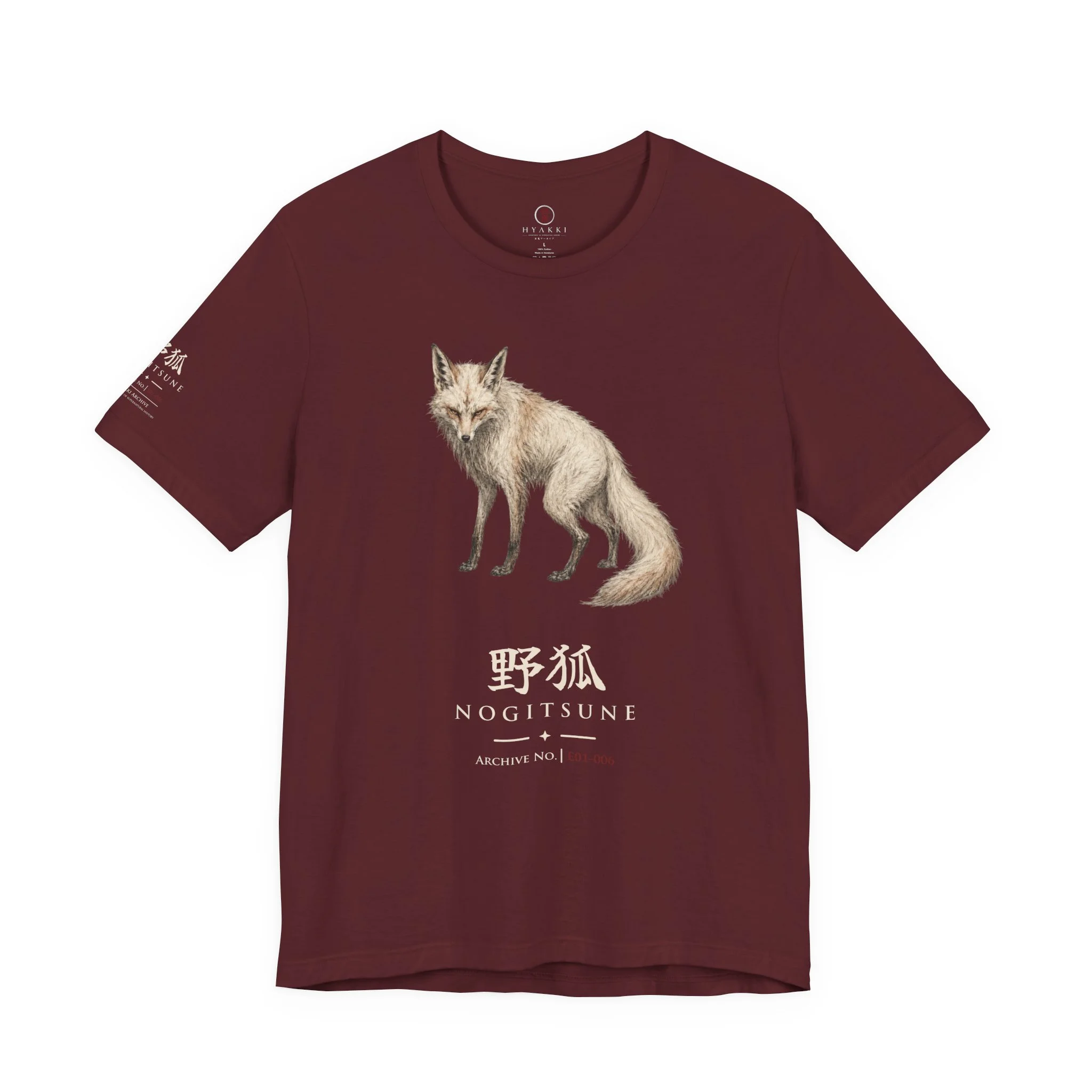
The E01-006 Nogitsune design presents the wild fox with almost no overt supernatural decoration.
At the centre stands a lean, pale fox with a single long tail, rougher fur, darkened legs, and a much more guarded expression than the Kitsune of E01-001. Its ears remain upright, but the lowered head and narrowed eyes make the animal feel wary, calculating, and difficult to approach. Subtle reddish-brown markings around the face and coat add unease without turning the fox into an obvious fantasy creature.
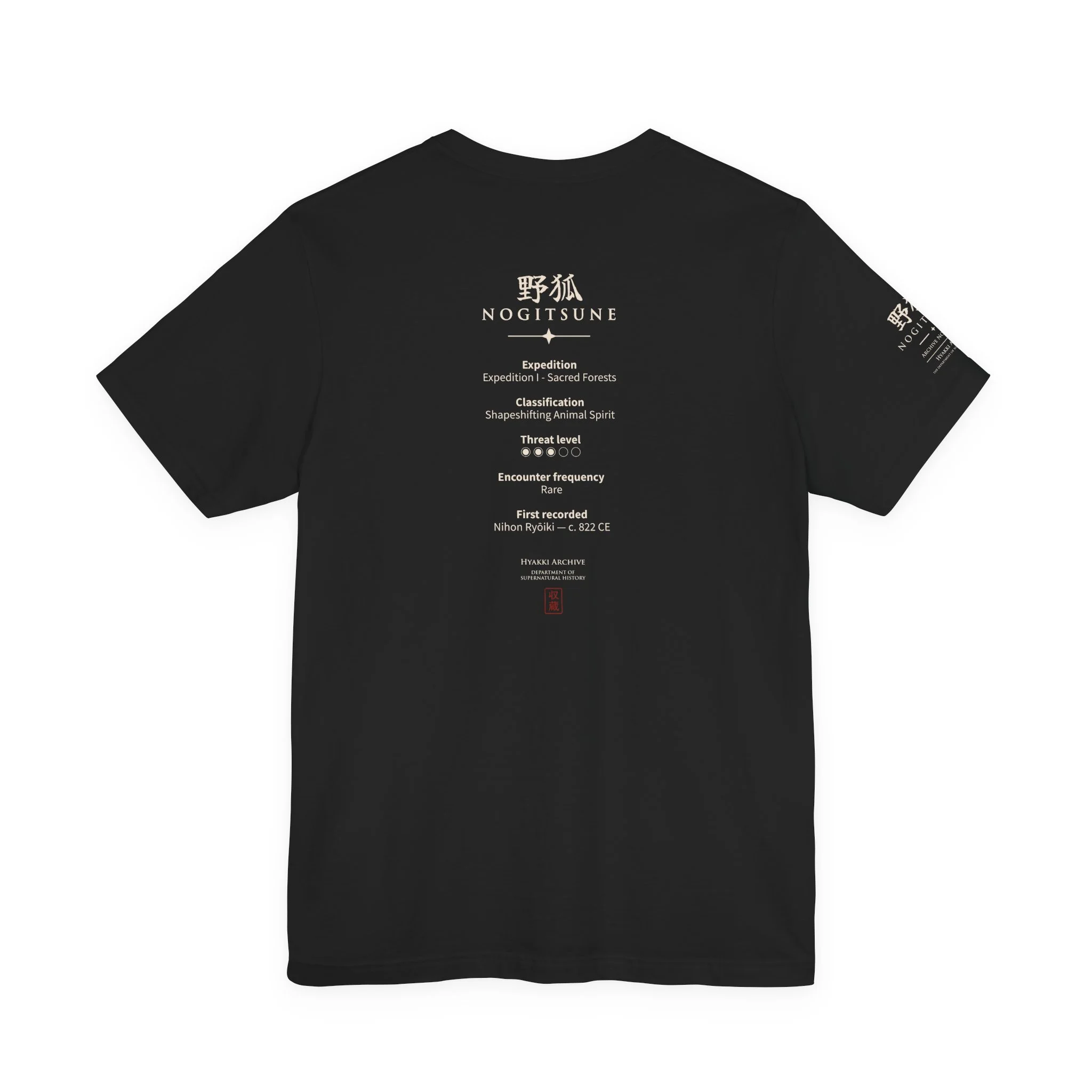
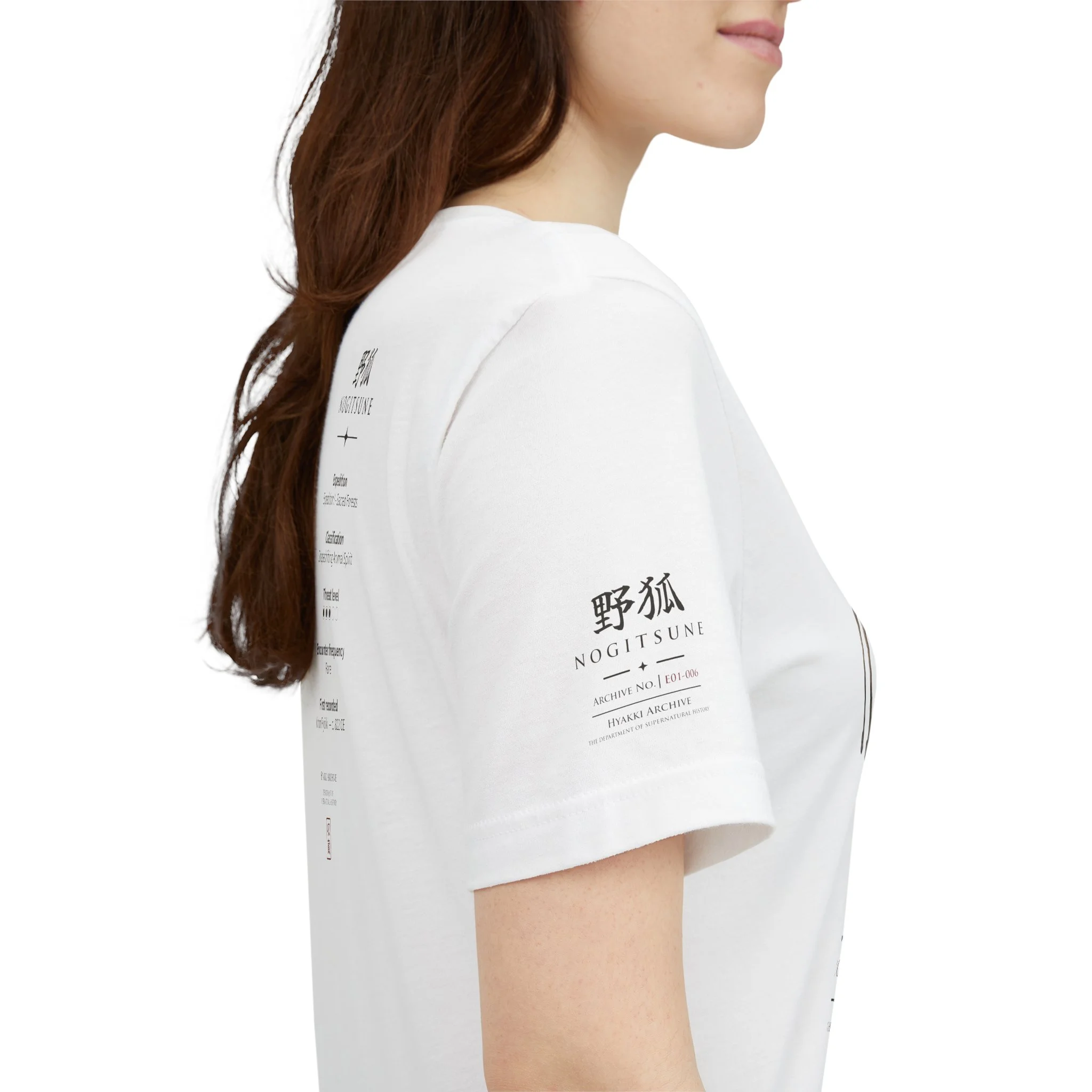
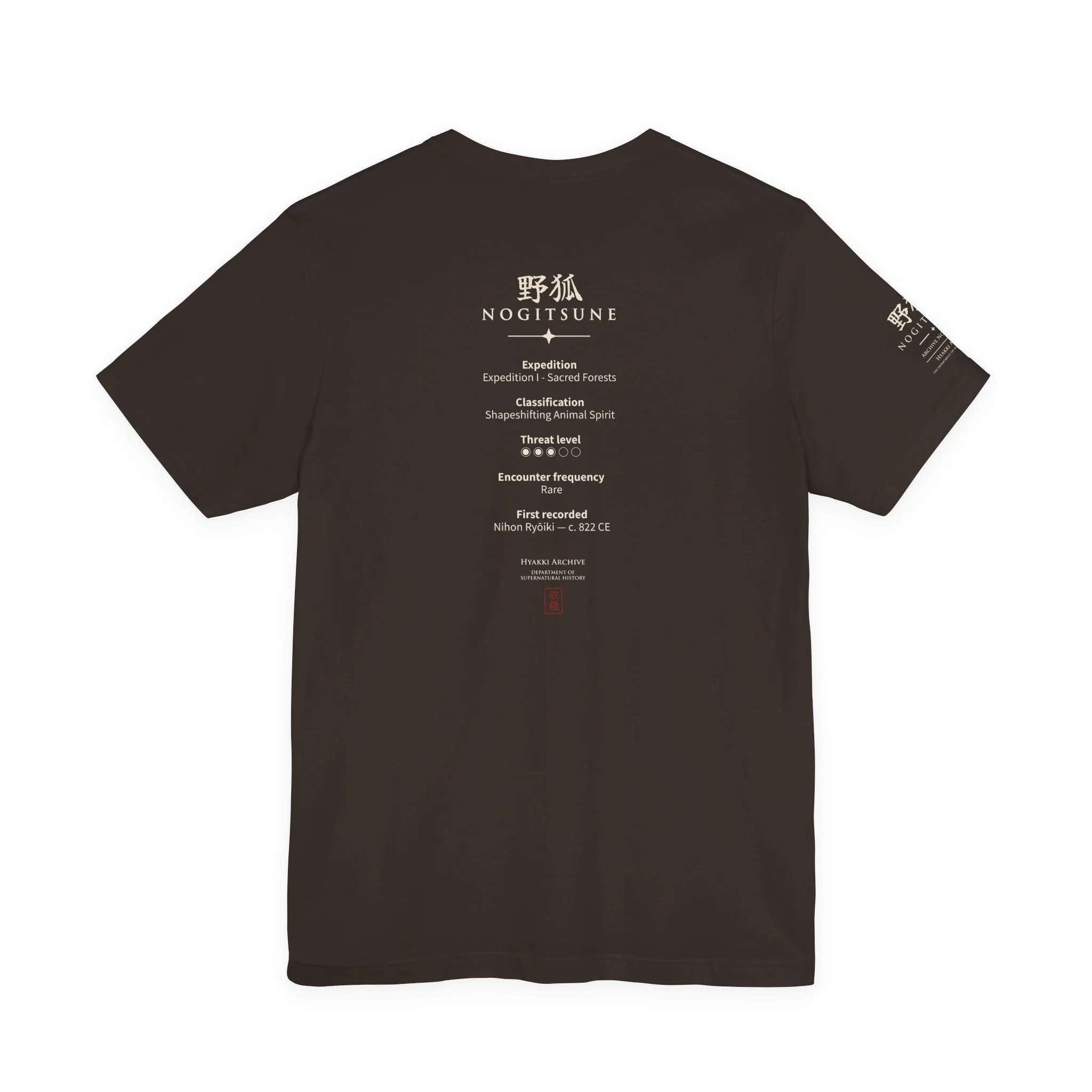
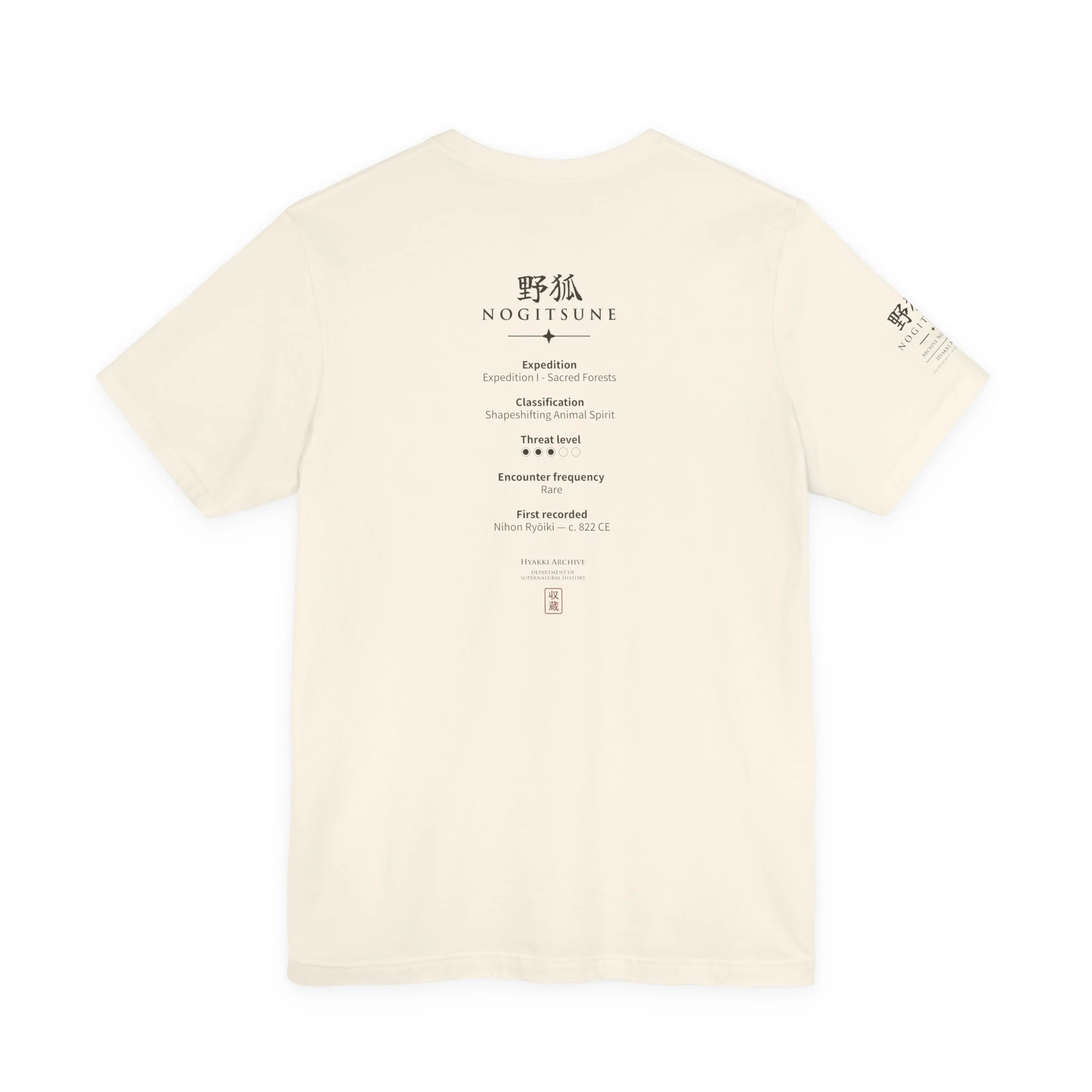
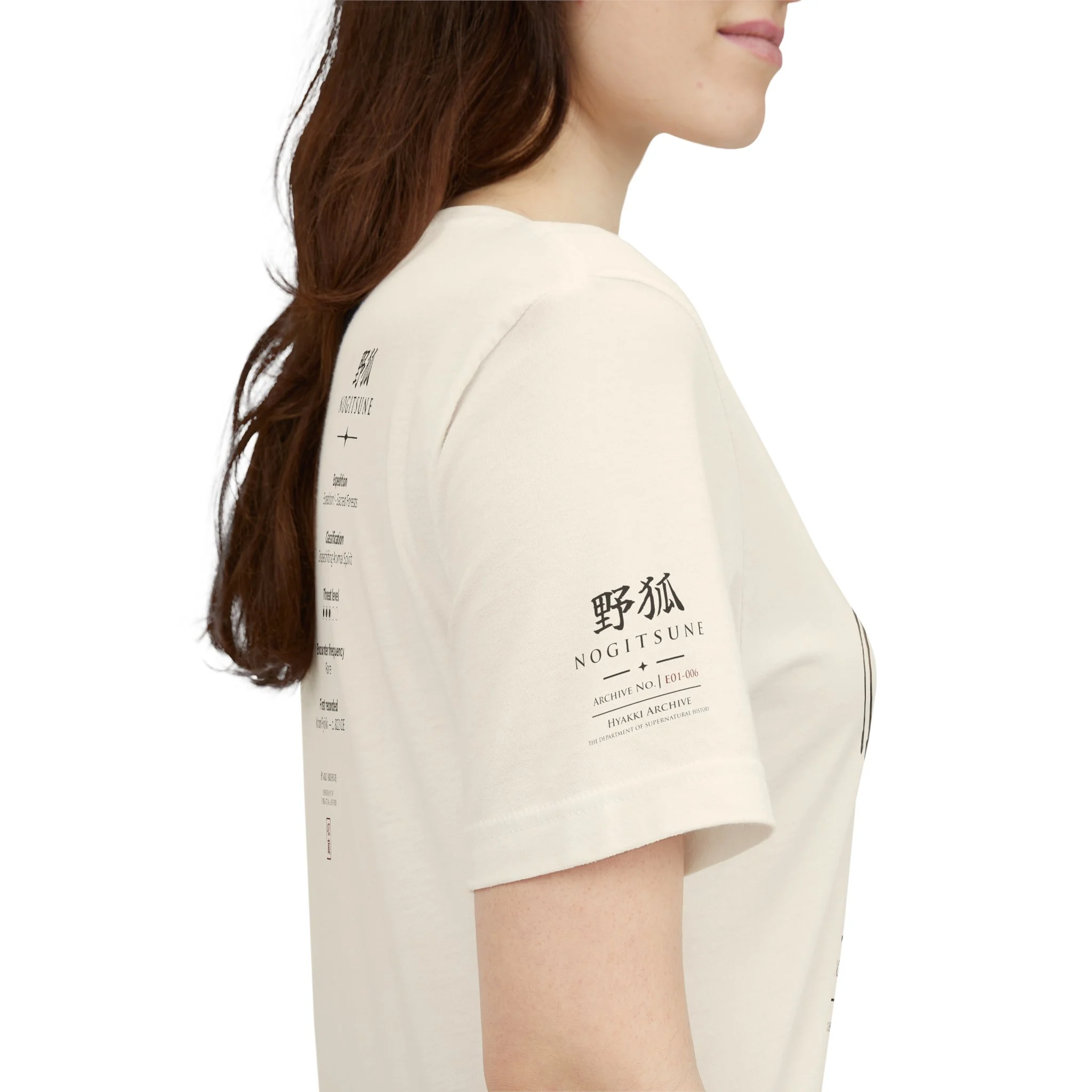
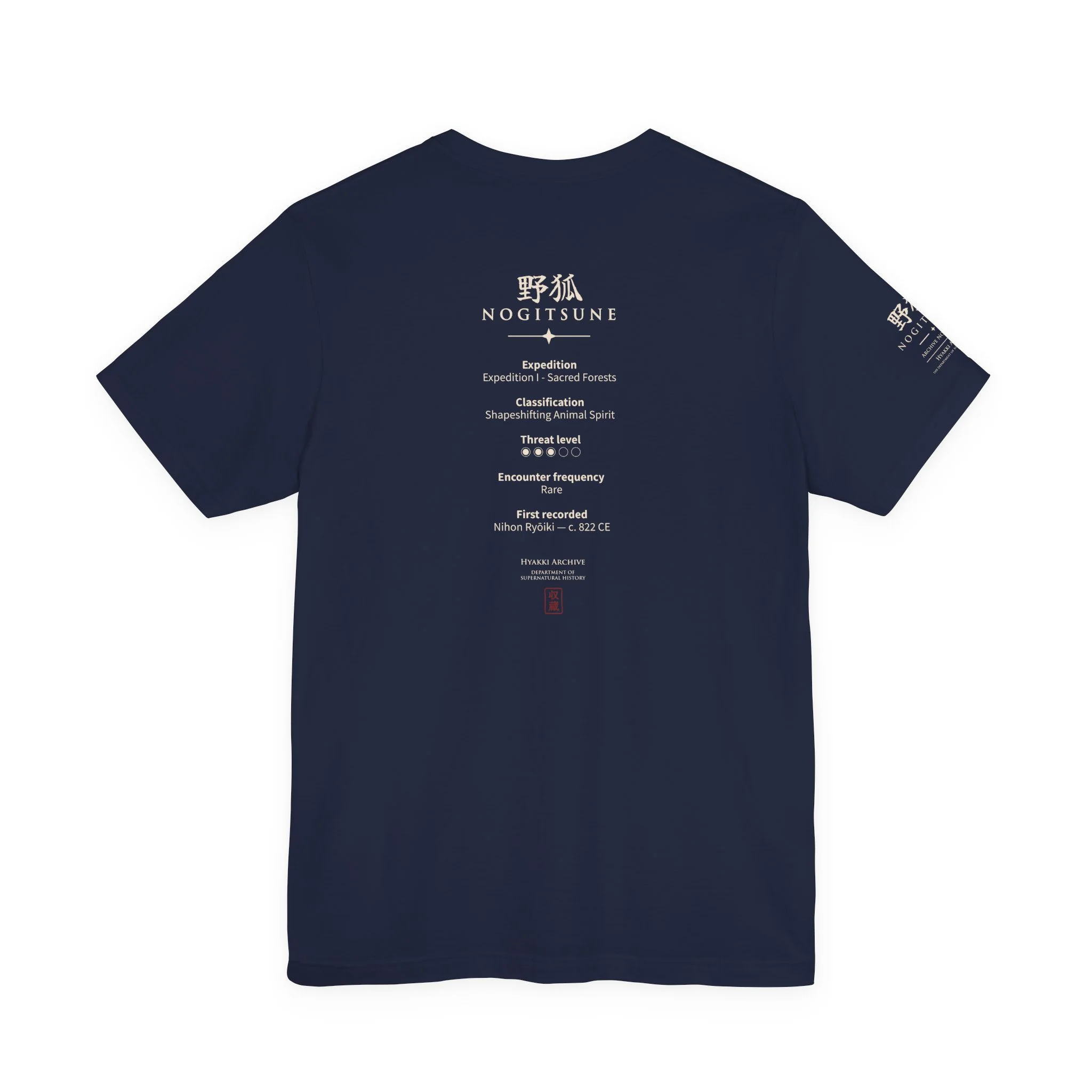
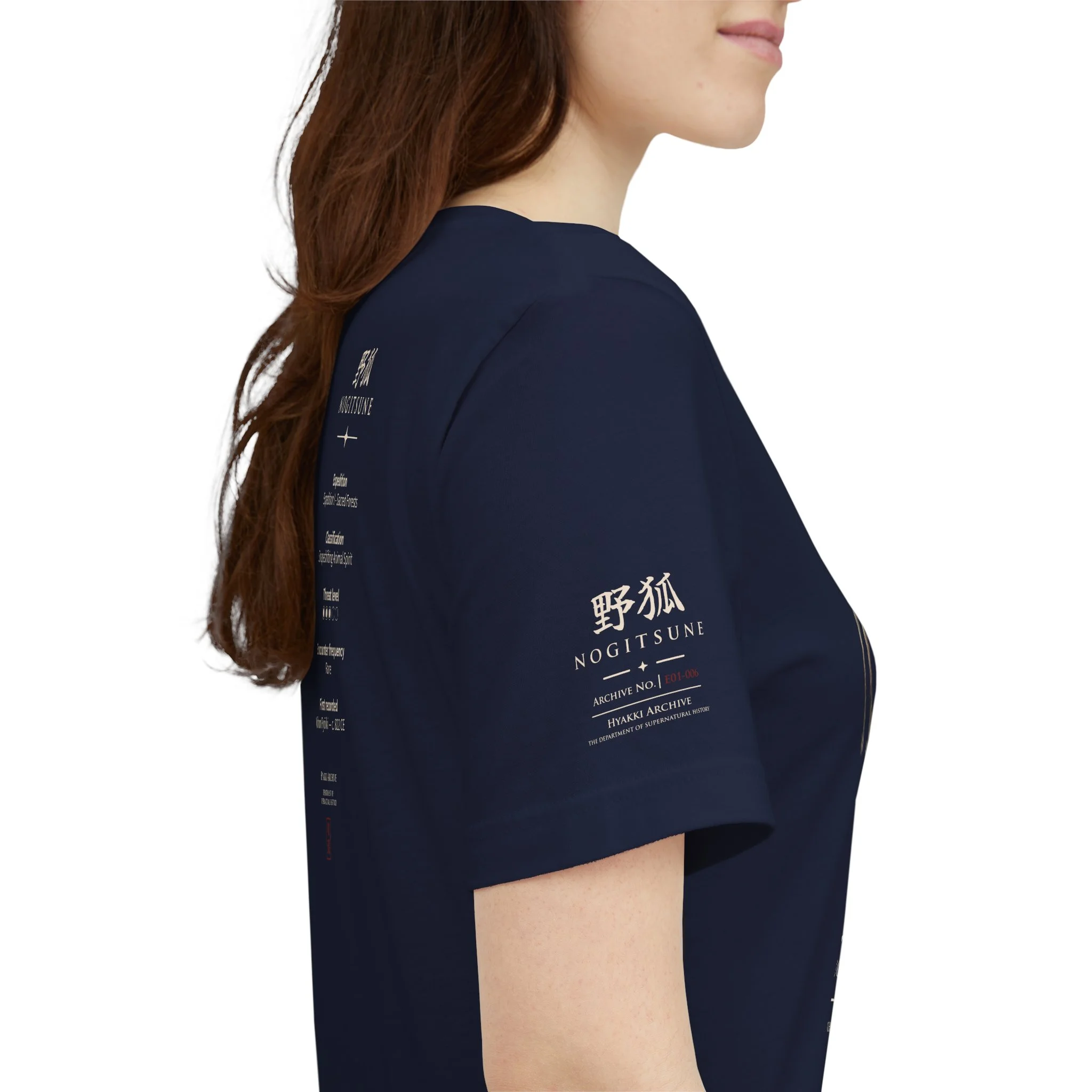
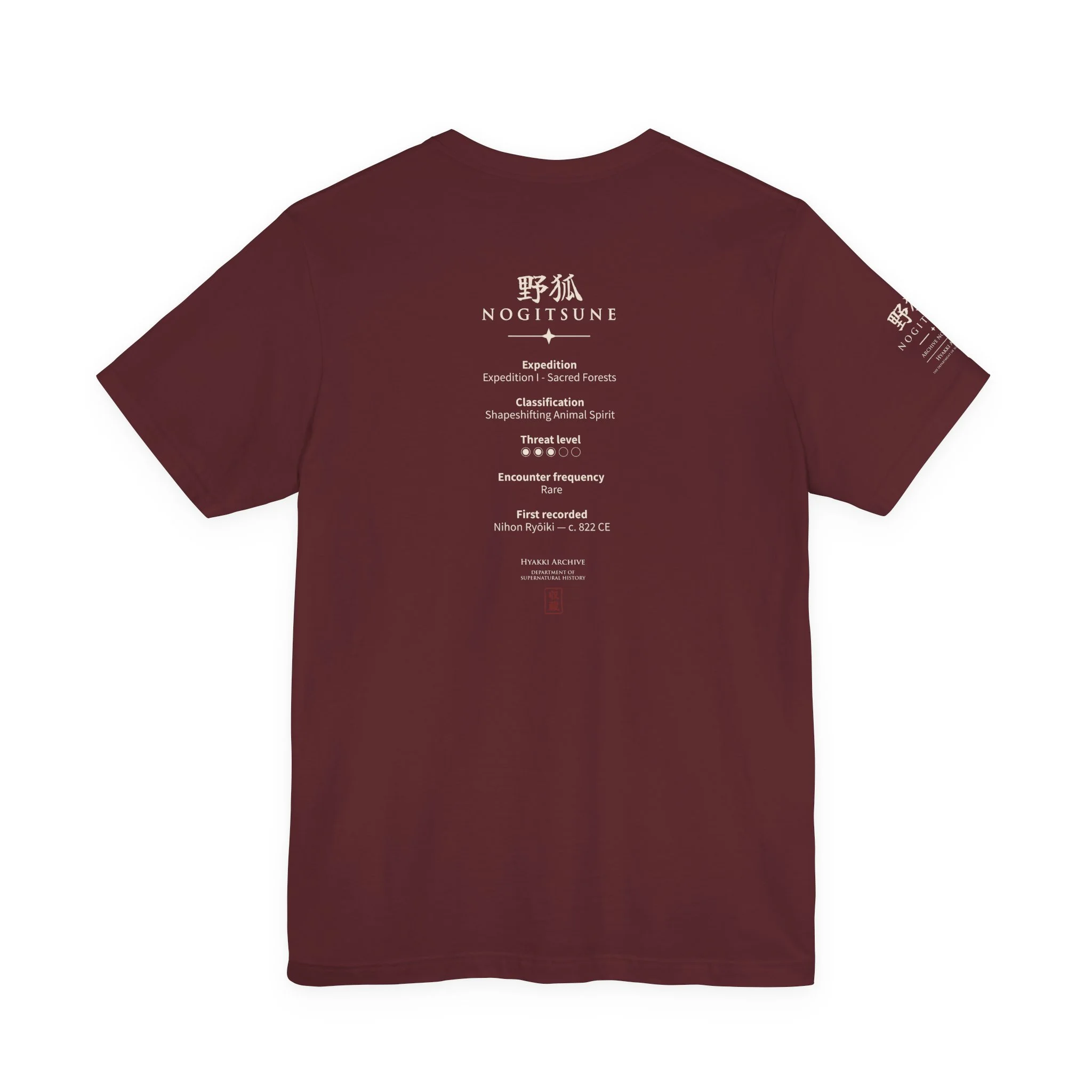
There are no torii gates, shrine ornaments, flames, masks, or multiple tails. Beneath the figure, 野狐, NOGITSUNE, and Archive No. E01-006 keep the design within the restrained Hyakki specimen format.
The result is intentionally ambiguous: an ordinary wild fox at first glance, but one that seems to be watching back.
The Entity Behind the Design
Nogitsune occupies one of the less orderly corners of Japanese fox tradition.
The term can refer simply to a wild fox, but supernatural traditions surrounding nogitsune and the related regional reading yako include deception, possession, misdirection, and encounters with foxes existing outside the religious relationships associated with Inari.
That distinction is important. Nogitsune should not simply be translated into a fantasy hierarchy where sacred foxes are good and wild foxes are evil. Historical and regional traditions are far less consistent than that.
A wild fox might deceive a traveller, retaliate when mistreated, become associated with possession, or behave in ways that make its intentions impossible to determine.
The defining quality is therefore not evil.
It is unreliability.
Known For
Nogitsune traditions are particularly associated with deception and supernatural misdirection.
Stories describe wild foxes causing travellers to become lost or experience convincing situations that later prove unreal. In some accounts, the fox acts in retaliation after being harassed or harmed, suggesting intelligence and motive rather than random hostility.
Regional traditions involving yako also connect wild fox beings with possession. Such beliefs could become socially serious, affecting how individuals and even entire households were regarded by their communities.
Nogitsune is also notable for what it is not. It is not simply the dark opposite of the white fox associated with Inari. Fushimi Inari traditions distinguish sacred fox messengers from ordinary mountain foxes, but Japanese folklore does not preserve one universal system dividing every supernatural fox neatly into benevolent and malevolent classes.
That uncertainty is what separates Nogitsune from the cleaner classifications created by modern fantasy.
From Folklore to Design
The artwork deliberately avoids giving Nogitsune a visual sign that says “evil fox.”
There are no black fur, glowing red eyes, horns, supernatural flames, or exaggerated teeth. Instead, the design begins with believable fox anatomy and changes the mood.
Compared with the composed pale Kitsune of E01-001, this animal appears rougher and less welcoming. Its coat is uneven, its lower legs are darkened, and its expression is noticeably more suspicious. The fox faces the viewer rather than simply presenting itself as a specimen, creating the uncomfortable impression that it has already noticed whoever is observing it.
The single tail is equally deliberate. Multiple tails have become one of the most recognizable modern shorthand symbols for supernatural foxes, but they are not necessary here.
Nogitsune does not need to look magical.
The danger is that nothing visible tells you what kind of fox you have encountered.
From the Hyakki Archive
Archive File E01-006 returns Expedition I — Sacred Forests to the fox, but removes the reassurance of shrine gates, sacred affiliation, and familiar symbolism.
The Kitsune can inhabit many worlds.
Nogitsune belongs to the one beyond the boundary.
A fox stands on the path.
It carries no sign of allegiance.
It has not transformed.
It has not approached.
It is simply watching.
The question is not whether the fox is supernatural.
The question is whether you should continue walking toward it.
収蔵


Reviews
There are no reviews yet.