44.00 $ Tax

The Red-Haired Spirit of the Banyan

Japanese Name キジムナー
Romanization Kijimuna
Classification Shapeshifting Animal Spirit
Expedition Expedition I — Sacred Forests
Threat Level ■■□□□ (Level II – Caution)
First Recorded Traditional Okinawan Folklore
Kijimuna are spirits from Okinawan folklore, especially associated with large gajumaru, or banyan trees. Traditions describe them as small, red-haired beings that may form friendships with humans, help with fishing, and share food or drink. Their relationships are often reciprocal rather than purely hostile, but offending one can bring trouble. The Kijimuna is therefore less a simple forest monster than a supernatural neighbour whose goodwill depends on how humans behave toward it.

44.00 $ Tax

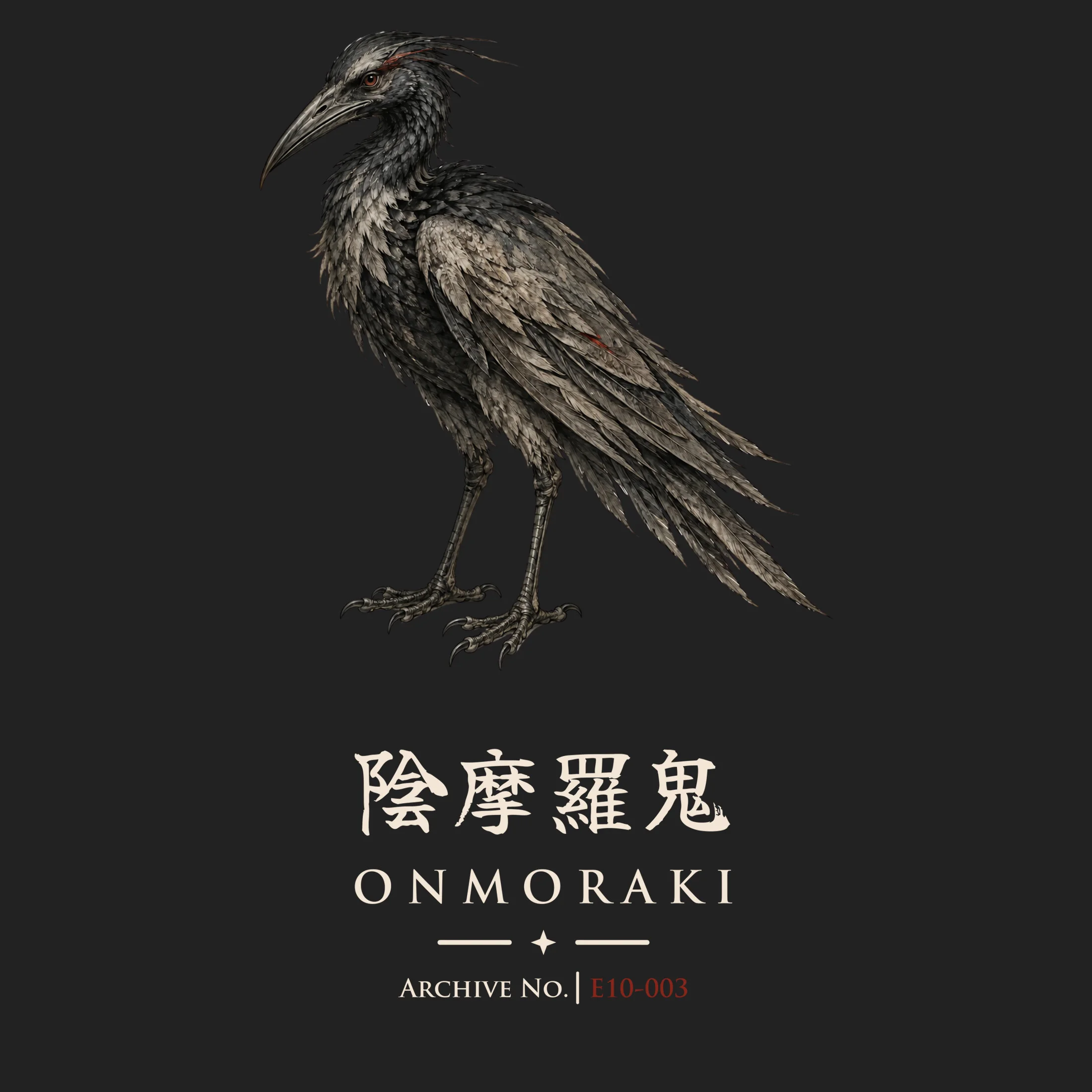
The Bird That Rises from the Unburied Dead

Japanese Name 陰摩羅鬼
Romanization Onmoraki
Classification Corpse-Born Spirit
Expedition Expedition X — Spirits of Death
Threat Level ■■■□□ (Level III – Dangerous)
First Recorded Taihe Hyakumonogatari — 1732 CE
Onmoraki is a dark birdlike apparition associated with recently dead bodies. In the tradition later illustrated by Toriyama Sekien, it resembles a black crane or heron with bright, lamp-like eyes and a harsh cry. The creature was said to arise from the lingering energy of a fresh corpse, especially one temporarily left within a temple or not yet properly dealt with. Its Japanese history is therefore part of a wider transmission of Chinese supernatural literature into Edo-period yōkai culture.

44.00 $ Tax

The Spirit That Remains After Death

Japanese Name 死霊
Romanization Shiryō
Classification Restless Spirit
Expedition Expedition X — Spirits of Death
Threat Level ■■■□□ (Level III – Variable)
First Recorded Early 9th Century CE — Nihon Ryōiki
Shiryō is a broad Japanese term for the spirit of a dead person, traditionally contrasted with ikiryō, a spirit separated from someone still alive. A Shiryō may appear to relatives, linger near the place of death, possess the living, or become dangerous through resentment, but hostility is not essential to the category. More than a single supernatural creature, Shiryō describes the unsettling possibility that death has occurred while the presence of the deceased has not yet disappeared.

44.00 $ Tax

The Spirit That Leaves the Living Body

Japanese Name 生霊
Romanization Ikiryō
Classification Living Spirit
Expedition Expedition X — Spirits of Death
Threat Level ■■■□□ (Level III – Dangerous)
First Recorded Genji Monogatari — c. 1001–1014 CE
Ikiryō is the spirit of a person who is still alive, believed capable of separating from the body and affecting others at a distance. Classical traditions often connect it with intense resentment, jealousy, or emotional fixation. The most famous example appears in The Tale of Genji, where the living Lady Rokujō becomes associated with a possessing spirit that torments Aoi no Ue. Unlike a Shiryō, the source of the haunting has not died.