The Design
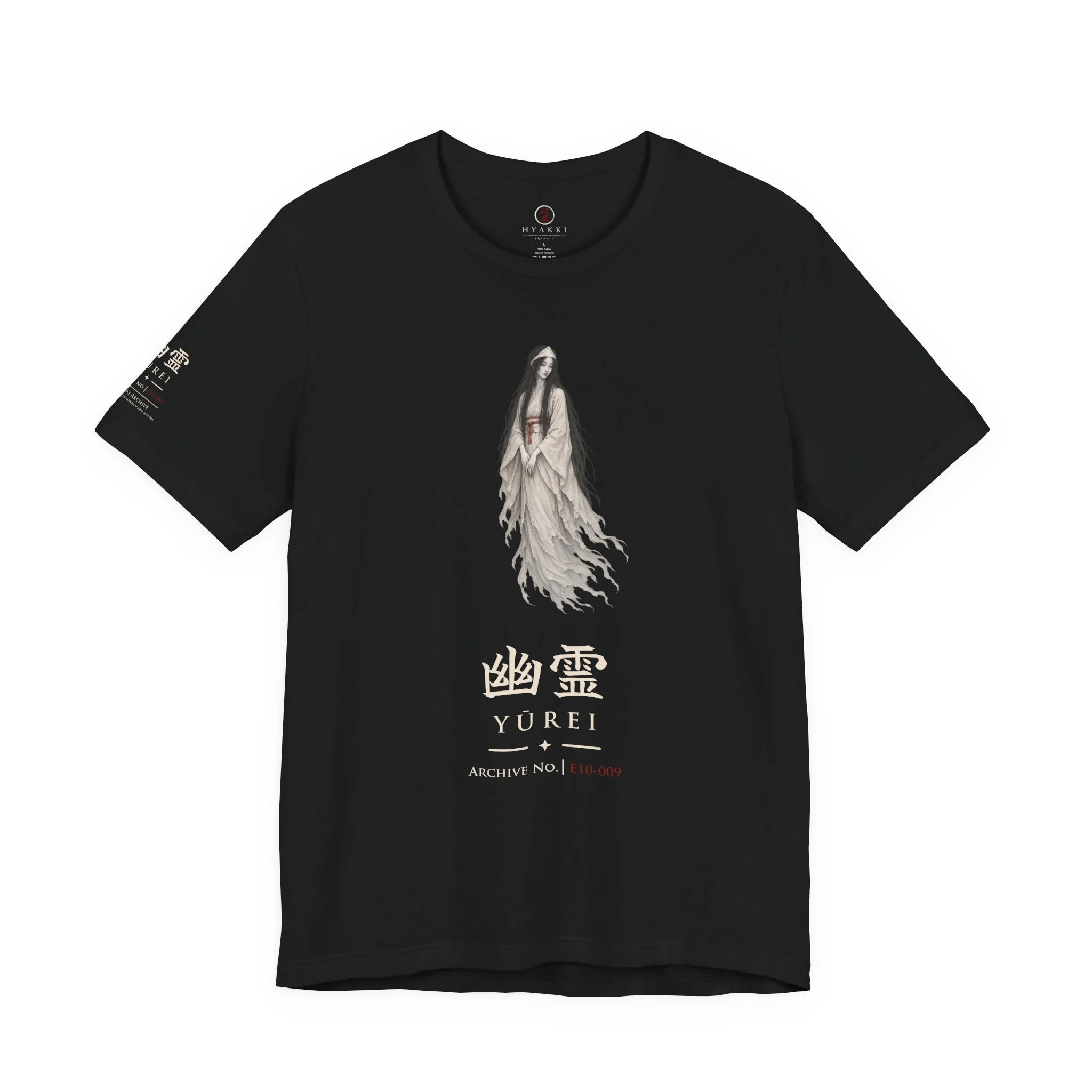
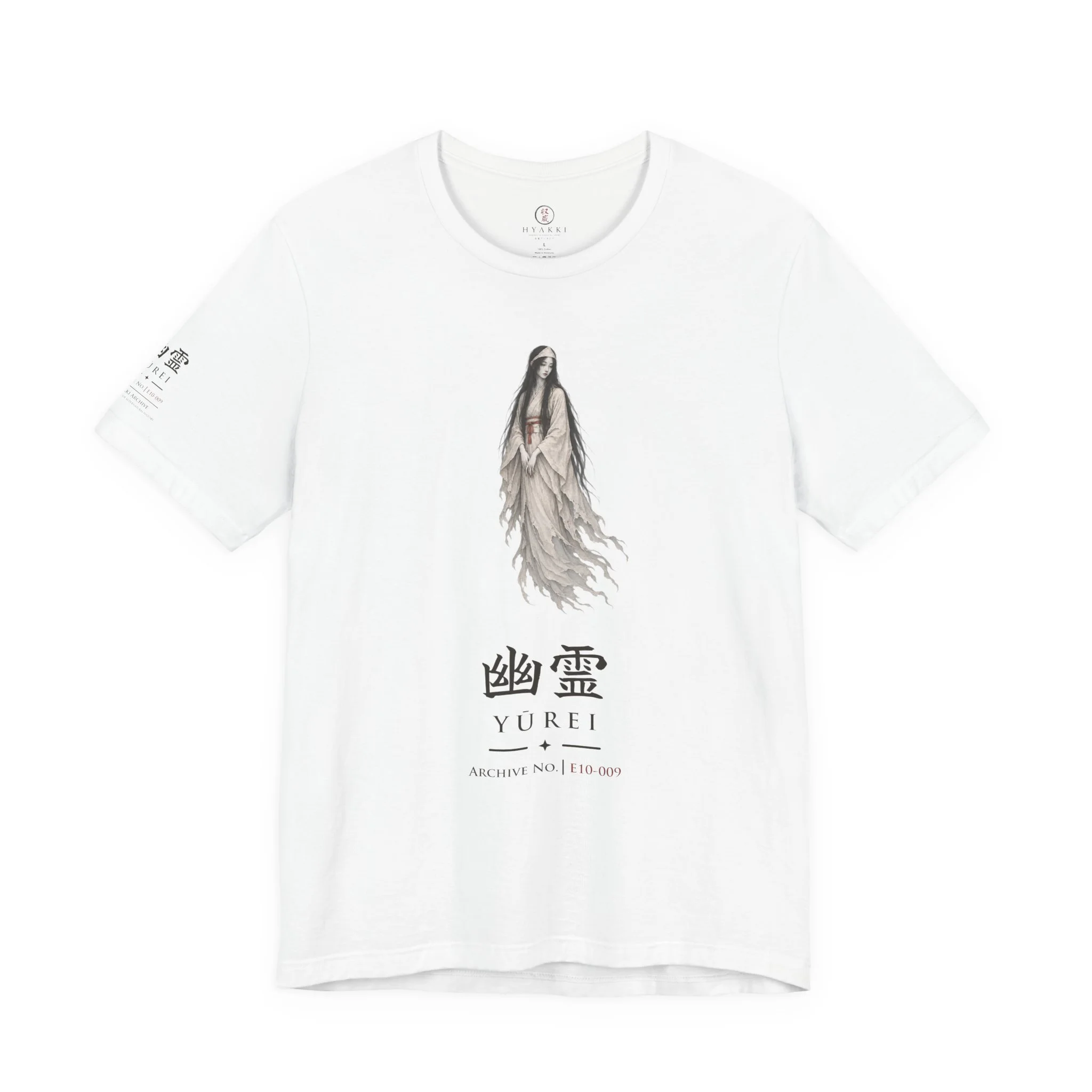
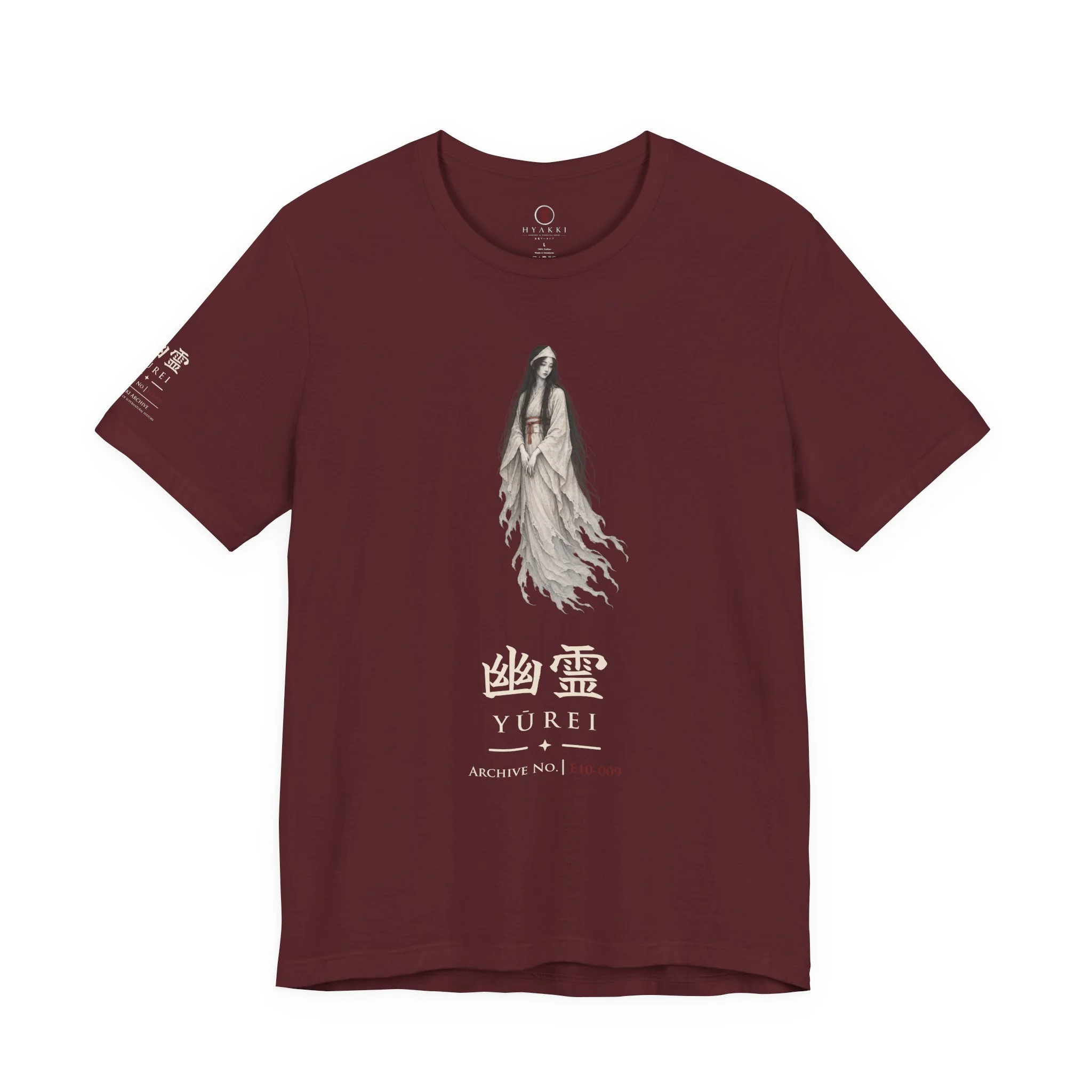
The E10-009 Yūrei design presents one of the most recognizable ghostly forms in Japanese visual tradition.
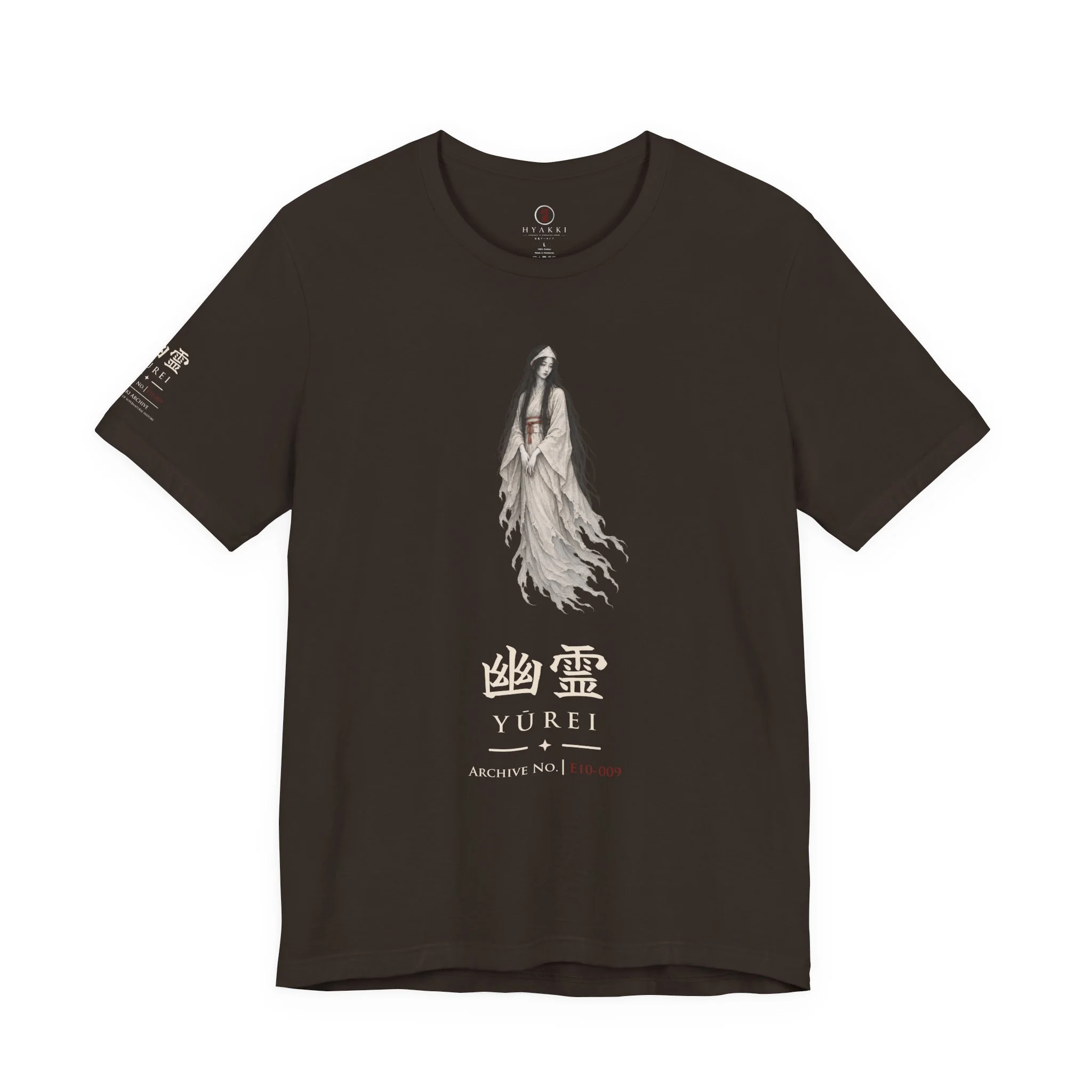
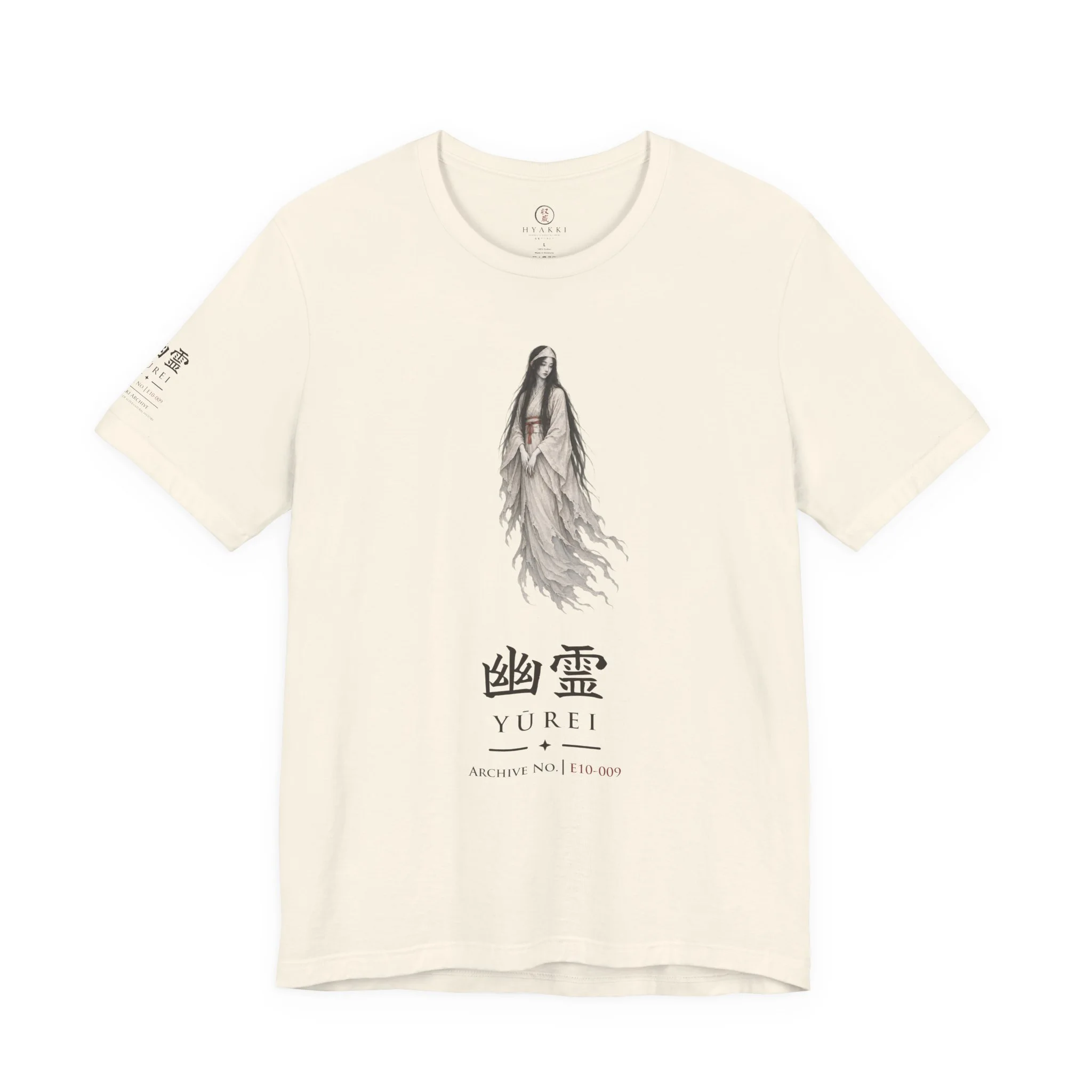
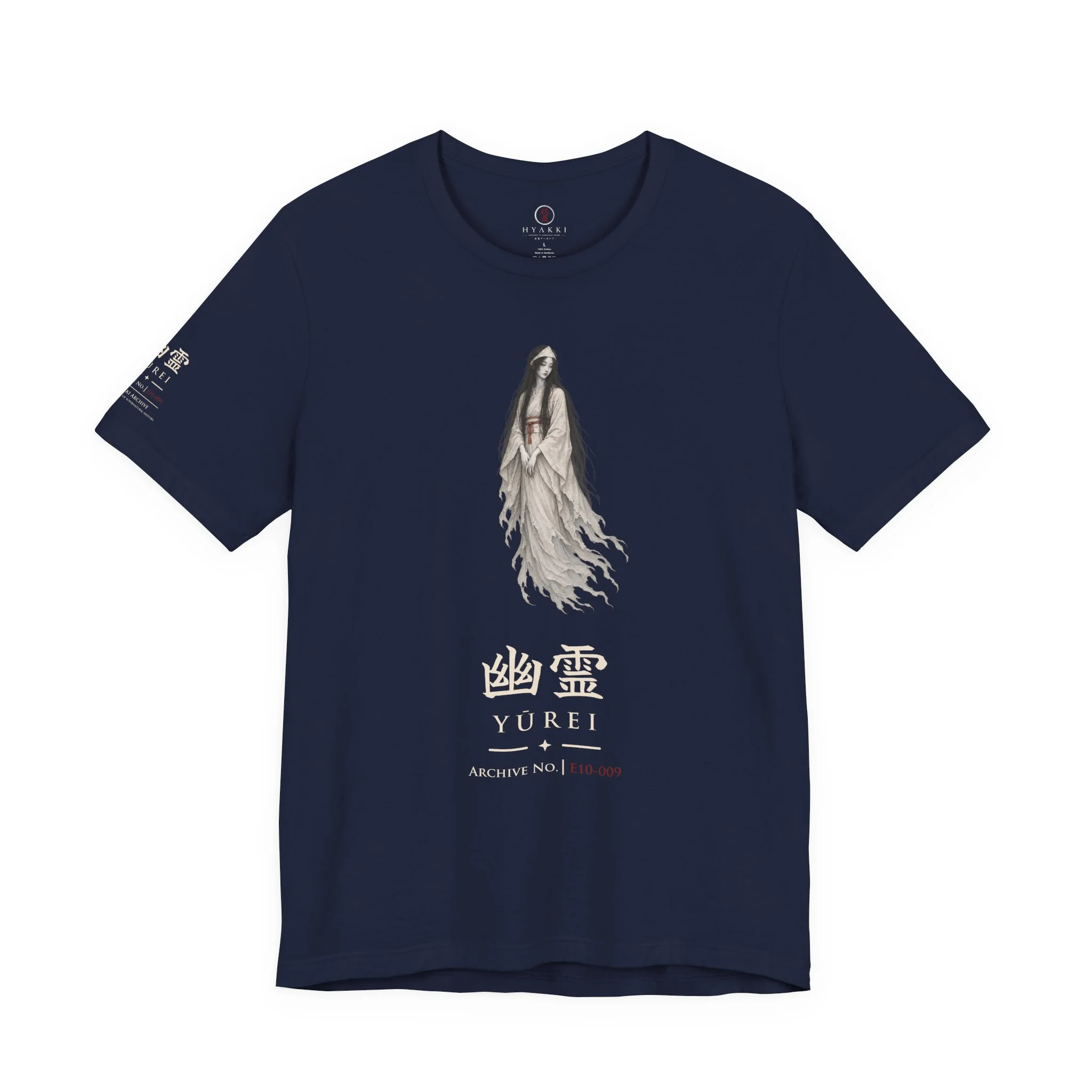
At the center is a pale female apparition shown in flowing white robes, with long black hair falling loosely around the body and a small white funerary headcloth resting across the forehead. The figure is calm, delicate, and distant, with lowered eyes and a restrained, mournful expression. A muted red sash at the waist provides the only notable contrast against the otherwise pale, quiet palette.
The lower portion of the garment becomes increasingly tattered and weightless, dissolving into a trailing ghostlike form that suggests drifting movement rather than ordinary standing. This is one of the strongest choices in the design, because it immediately places the figure between presence and absence.
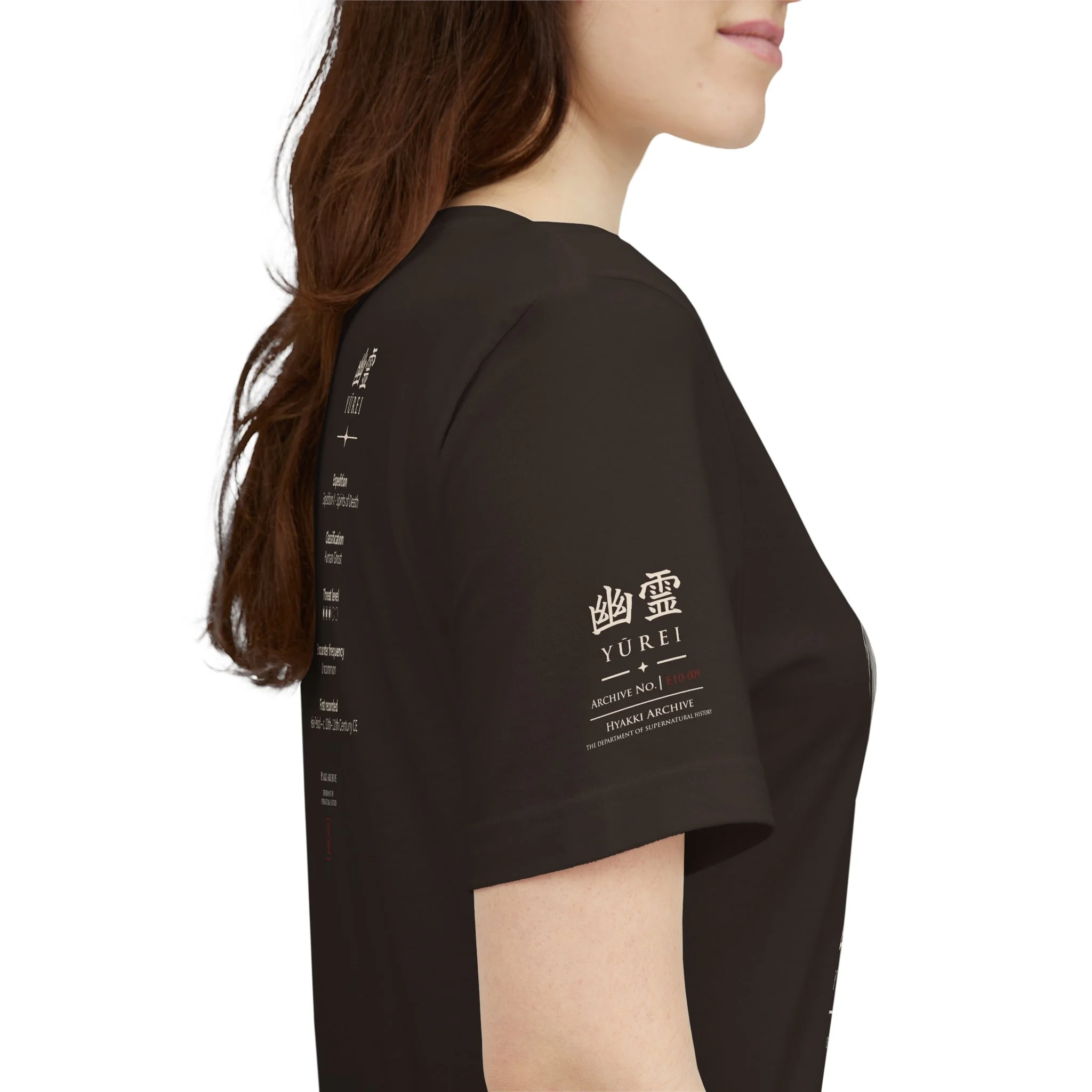
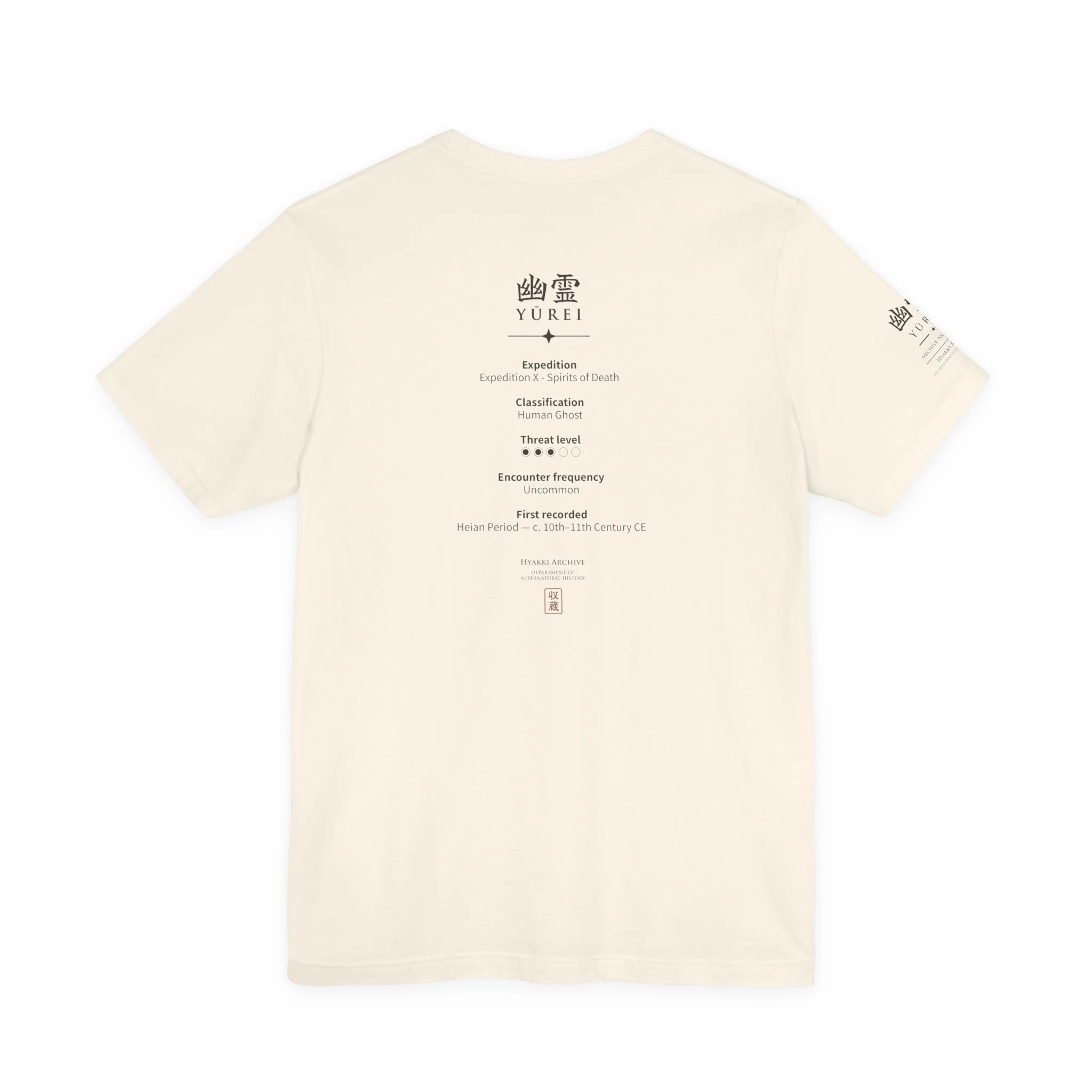
Beneath the illustration, 幽霊, YŪREI, and Archive No. E10-009 complete the composition in the established Hyakki archive format.
The result is elegant, sorrowful, and unmistakably spectral.
The Entity Behind the Design
Yūrei is one of the broadest Japanese terms for the ghost of the dead.
Unlike more specific categories, Yūrei does not describe a single supernatural species with one exact origin or behaviour. It refers more generally to the dead returning to the world of the living, often because something has not fully settled. That unresolved condition may come from resentment, grief, attachment, longing, memory, or unfinished obligation.
Because of this, Yūrei occupies a central place in Japanese ghost tradition.
It is not simply one being among many.
It is one of the clearest and most enduring ways the Japanese imagination has pictured the returning dead.
Known For
Yūrei is especially known for lingering after death.
Some appear to loved ones.
Some return to places tied to their lives or deaths.
Some seek revenge.
Others simply remain because something emotional or spiritual still binds them to the human world.
Over time, Yūrei also became associated with one of the most iconic visual forms in Japanese supernatural art: the pale ghost in white robes, with long black hair and an appearance shaped by funerary and theatrical convention.
That image became so influential that it now defines “Japanese ghost” for many viewers.
But the wider idea is older and broader than the visual formula alone.
A Yūrei is not only a white-robed apparition.
It is the dead made present again.
From Folklore to Design
This design leans directly into the classic Yūrei image, and that is exactly the right choice.
The pale face, long loose hair, white robes, and drifting lower silhouette place the figure firmly within the most familiar visual language of Japanese ghost culture. The small white headcloth is especially important, since it helps reinforce the funerary and posthumous identity of the spirit without needing any dramatic effects.
The figure’s posture also matters.
She is not lunging, twisting, or attacking.
She appears suspended in quiet stillness.
That makes the design feel more haunting, because Yūrei is often most effective when presented not as a monster in motion, but as a presence that should not be there and yet remains.
The red sash is a subtle but effective detail. It breaks the field of white and grey just enough to keep the composition visually grounded, while also adding a faint emotional tension to an otherwise softened palette.
This is not just “a ghost woman.”
It is a carefully shaped interpretation of the canonical Yūrei form.
From the Hyakki Archive
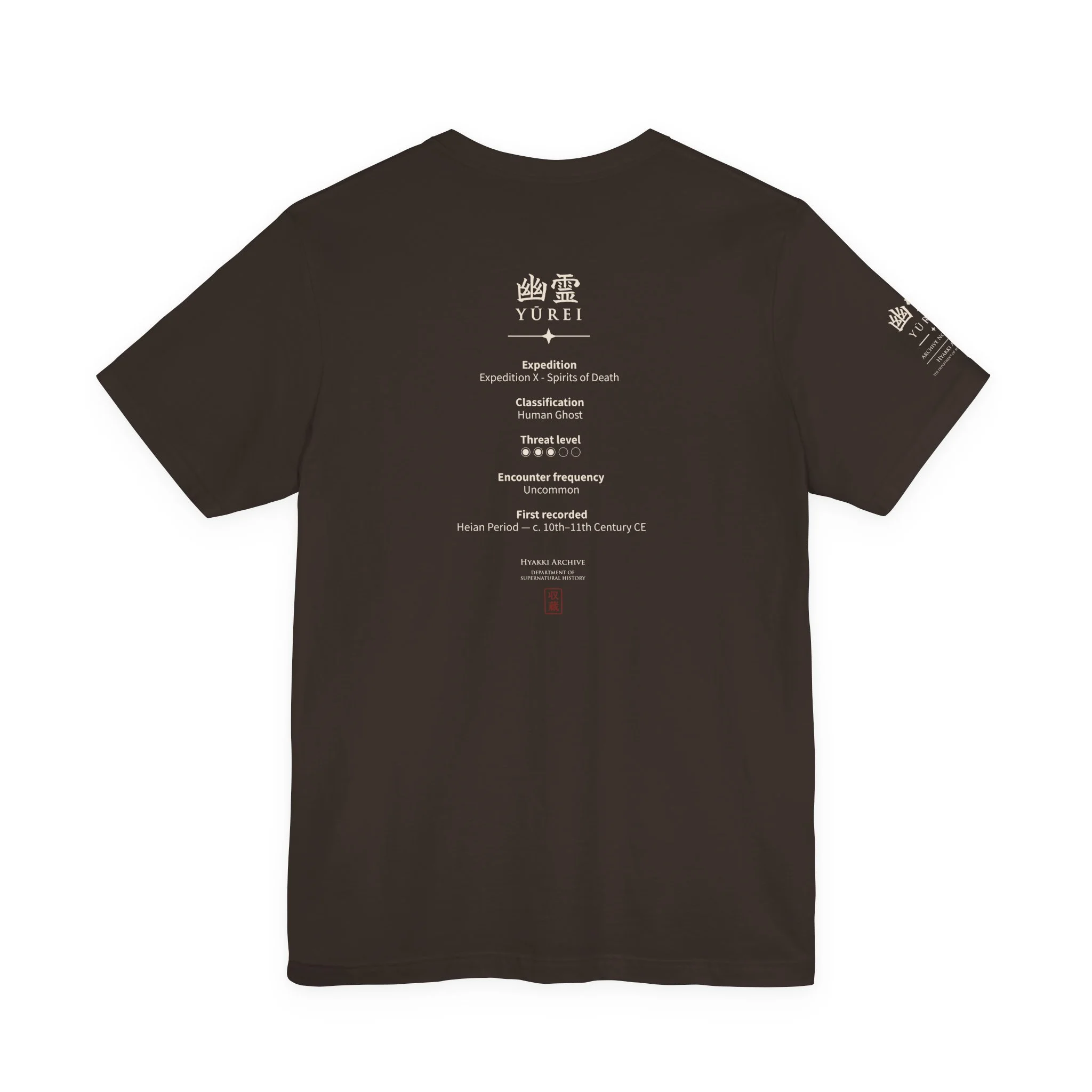
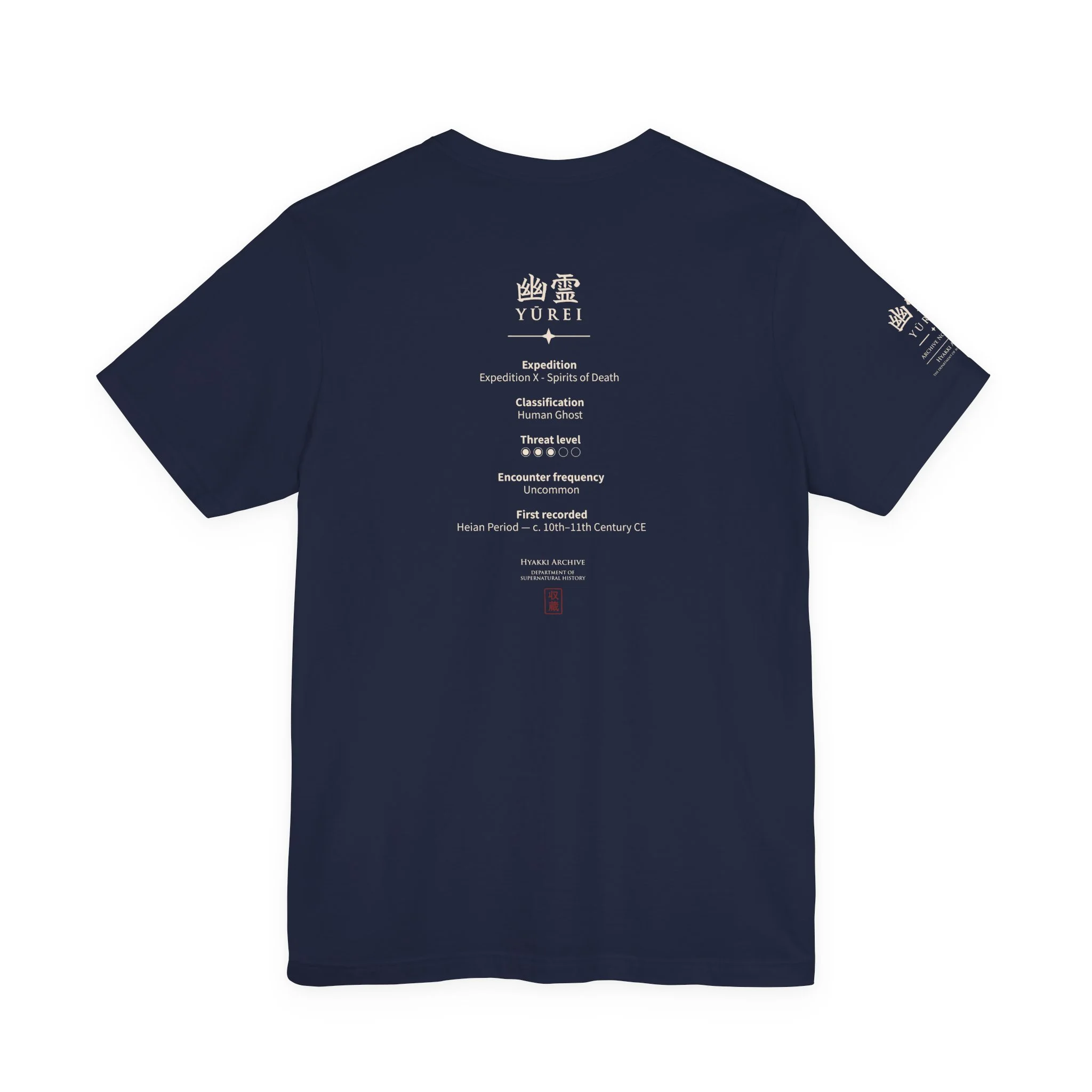
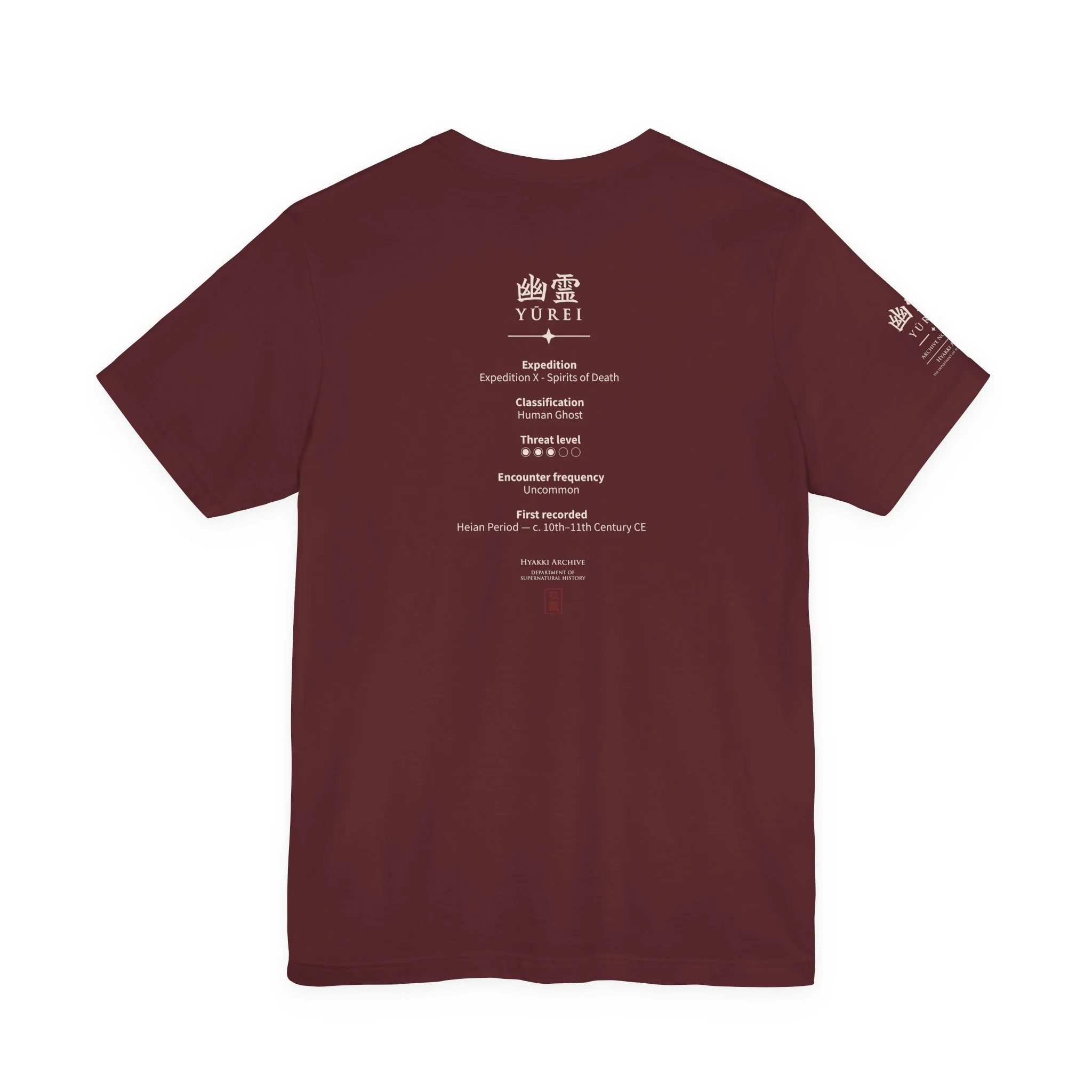
Archive File E10-009 closes Expedition X — Spirits of Death with perhaps the most enduring image of all: the dead who return not as beasts, not as judges, not as corpse-thieves, but as memory made visible.
Yūrei does not always need spectacle.
A room grows quiet.
A figure appears at the threshold.
A familiar face seems to have crossed back from where it should no longer be.
Nothing may happen immediately.
And that is exactly what makes the presence so unsettling.
This design captures that feeling well. It does not push the spirit into theatrical horror. Instead, it preserves what has always made Yūrei powerful: sorrow, stillness, and the sense that the bond between the living and the dead has not fully broken.
What does the dead return to say when it cannot fully leave?
収蔵
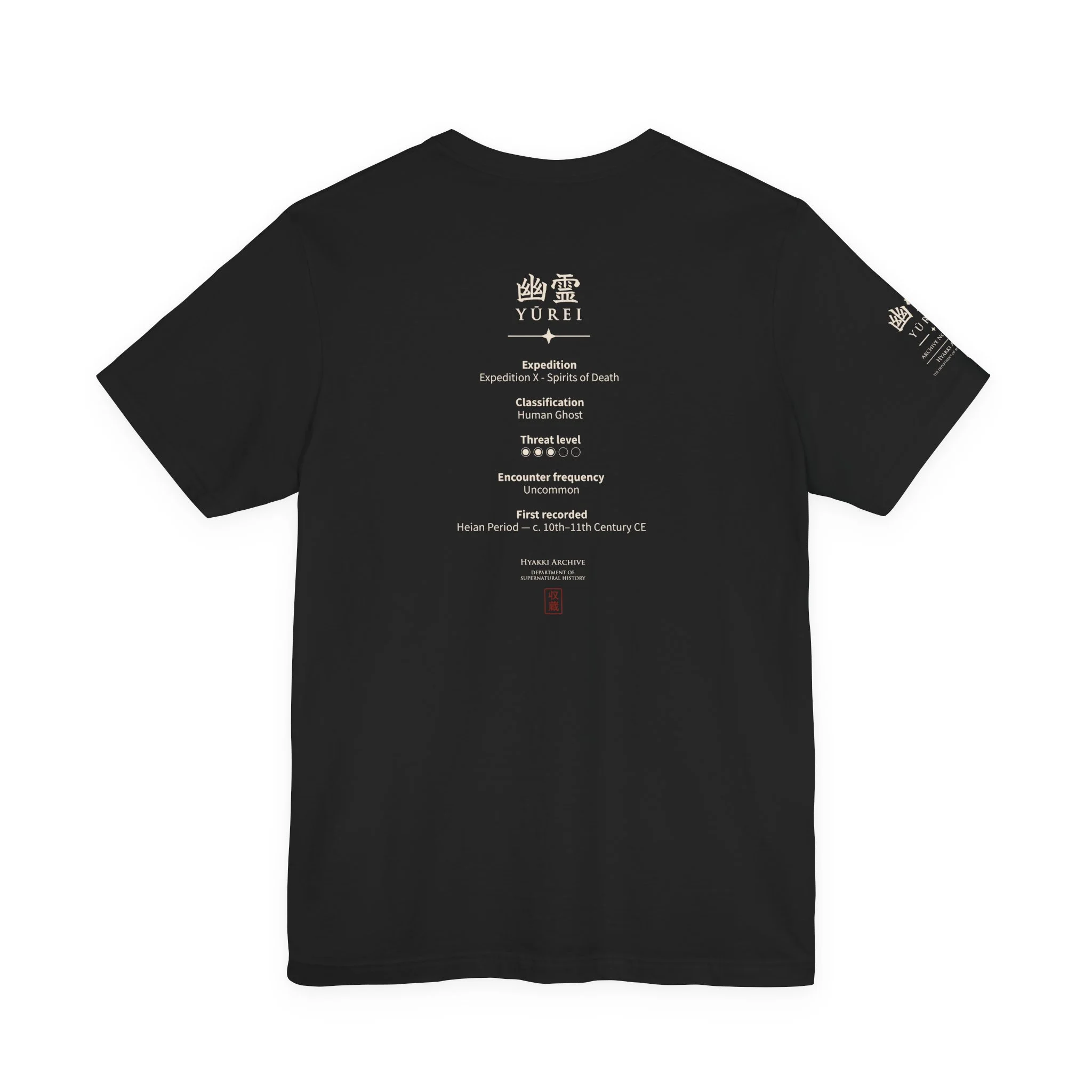
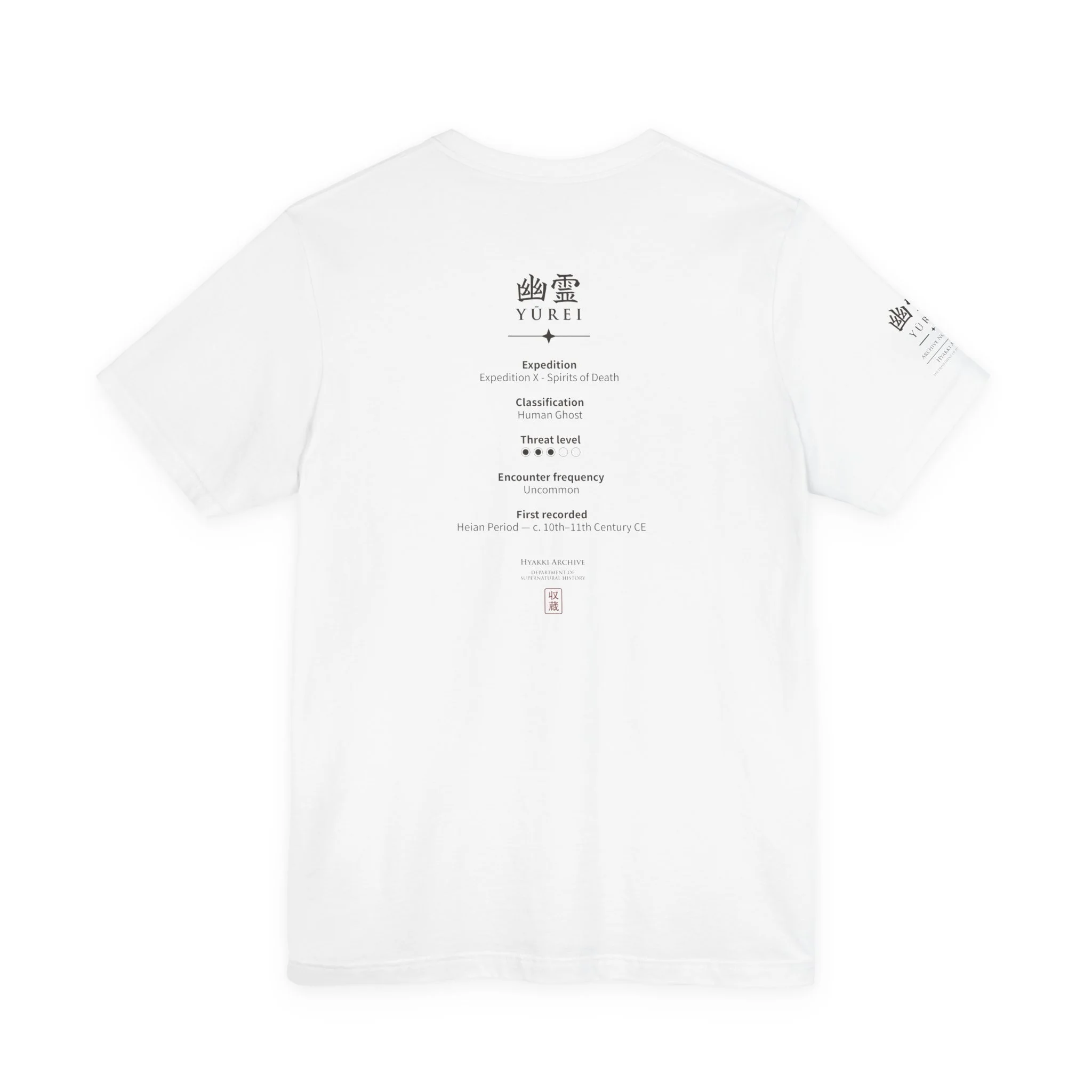
| Temperament |
Variable • Mournful • Potentially Vengeful |
| Activity |
Associated with Night, Death and Unfinished Attachment |
| Encounter Frequency |
Rare |
| Habitat |
Unfixed • Homes • Roads • Bridges • Watersides • Death Sites |
| Known Variants |
Vengeful Ghosts • Returning Dead • Regional Ghost Traditions |
01 · What Is It?
Yūrei is a broad Japanese term for the ghost or spirit of a dead person.
Major Japanese dictionaries define the word first as the soul of the dead, and then more specifically as a spirit that appears in this world because it cannot attain release and wishes to express resentment or lingering attachment.
That means Yūrei is not one single entity with a fixed personality.
Some return because of anger. Others because of grief, love, obligation, or attachment to a person or place. Some appear only briefly. Others persist.
This makes Yūrei broader than categories such as Onryō, which emphasizes vengeance.
The defining fact is simpler:
the person is dead, but their presence is still perceived among the living.
02 · Historical Record
The word 幽霊 has a long documentary history.
The Nihon Kokugo Daijiten cites an example from the Chūyūki in 1089, where the term refers to the spirit of a deceased person. A later example from the Noh play Funa Benkei, around 1516, uses Yūrei more clearly for a dead person appearing in visible form.
This distinction is useful.
Earlier usage could simply mean the soul of the dead. Over time, the word increasingly developed the familiar meaning of a ghost that manifests before the living.
By the Edo period, ghost stories, theatre, illustrated books, and popular entertainment had made Yūrei one of the most recognizable supernatural categories in Japan.
The term is therefore genuinely old, but the standard visual image most people recognize today developed later than the word itself.
03 · Appearance
Yūrei has no single historically universal appearance.
The now-famous image of a pale woman with long black hair and white robes became especially influential through Edo-period theatre and visual culture. White clothing naturally carried funerary associations, while loose hair and an indistinct or absent lower body helped separate the ghost visually from the living.
But these features are conventions, not mandatory anatomy.
Regional accounts describe Yūrei in many ways. Some appear as recognizable relatives. Others are barely visible, heard but not clearly seen, or known only through the sense that someone has entered a room, boarded a boat, or crossed a threshold. The Nipponica entry preserves examples of ghosts appearing in human form, including regional stories in which they visit relatives or ask to be ferried across water.
A Yūrei is therefore defined more by identity and return than by costume.
04 · Behaviour & Encounters
Yūrei encounters vary enormously.
Some spirits appear to family members or loved ones. Others return to places connected with their death. Still others seek revenge, make requests, attempt to communicate, or simply repeat an action associated with the circumstances of their death.
Regional examples collected in Japanese reference works include spirits visiting familiar homes, remaining silent, or asking to cross rivers and waterways.
Not every Yūrei is hostile.
This is important because modern horror often reduces the category to the vengeful female ghost.
A Yūrei may indeed be dangerous, especially when resentment is involved, but many traditions are quieter.
The dead return because something connects them to the living world.
That connection may be anger.
It may also be love, grief, memory, or unfinished responsibility.
05 · Belief, Ritual & Meaning
Yūrei belongs to a much wider Japanese history of beliefs about death, memorialization, ancestral relationships, and spiritual attachment.
The return of the dead often implies that something has not settled properly.
That may mean resentment remains unresolved, burial or memorial treatment is incomplete, or emotional attachment continues after death.
Buddhist ideas about release from worldly attachment strongly influenced later interpretations of ghost stories, while household and ancestral practices created other ways of understanding the continuing relationship between living families and the dead.
The Yūrei therefore occupies an unstable position.
The deceased may belong to the world of the ancestors, but the ghost has not fully entered that settled state.
Something still pulls it back.
That makes the central question less about fear than about separation:
What prevents the dead from becoming completely absent?
06 · Regional & Historical Variations
Yūrei traditions vary by region, period, and medium.
Early written usage can refer broadly to the soul of the deceased. Medieval literature and theatre increasingly show ghosts appearing visibly before the living. Edo-period kabuki, kaidan literature, and painting then helped standardize a highly recognizable ghostly image.
Regional folklore remained more diverse.
In some areas, Yūrei visit homes. Elsewhere they appear near rivers, roads, boats, or places of accidental death. Some speak. Others remain silent. Some are recognizable relatives, while others appear as anonymous dead.
Later popular culture increasingly emphasized the long-haired female ghost, especially through theatre, cinema, and modern horror.
That image is culturally important, but it should not be mistaken for the totality of Yūrei tradition.
The category is much older, broader, and less visually fixed.
07 · What We Actually Know
| Yūrei can mean the spirit or ghost of a dead person |
DOCUMENTED |
| The term 幽霊 is documented in Japanese sources by 1089 |
DOCUMENTED |
| Later sources use Yūrei for the visible return of the dead |
DOCUMENTED |
| Resentment and lingering attachment are common explanations for a Yūrei’s return |
DOCUMENTED |
| Some regional Yūrei traditions involve visits to relatives or familiar places |
DOCUMENTED |
| Every Yūrei is a vengeful female ghost |
INCORRECT |
| Every Yūrei must wear white robes and have long black hair |
UNSUPPORTED |
| The familiar modern Yūrei appearance was shaped strongly by later theatre and visual culture |
INTERPRETATION |








Reviews
There are no reviews yet.